







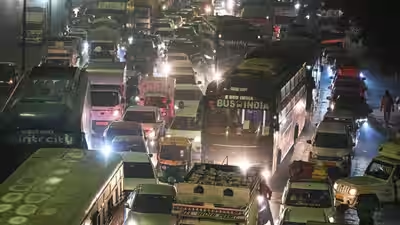
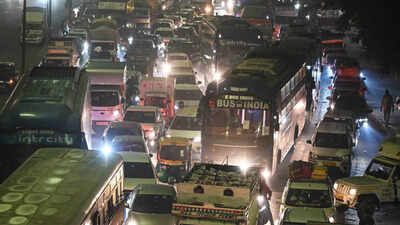
NEW DELHI: It took me about 45 minutes to cover 650 metres from the Ghazipur round-about to the flower market crossing Friday midnight. That’s less than 1kmph on India’s widest expressway, NE3. It has 6 expressway lanes and 8 highway lanes.Like many other places in the capital, Delhi-Meerut Expressway has become a bus terminal. Buses stopped on highway lanes to pick up passengers and load luggage.
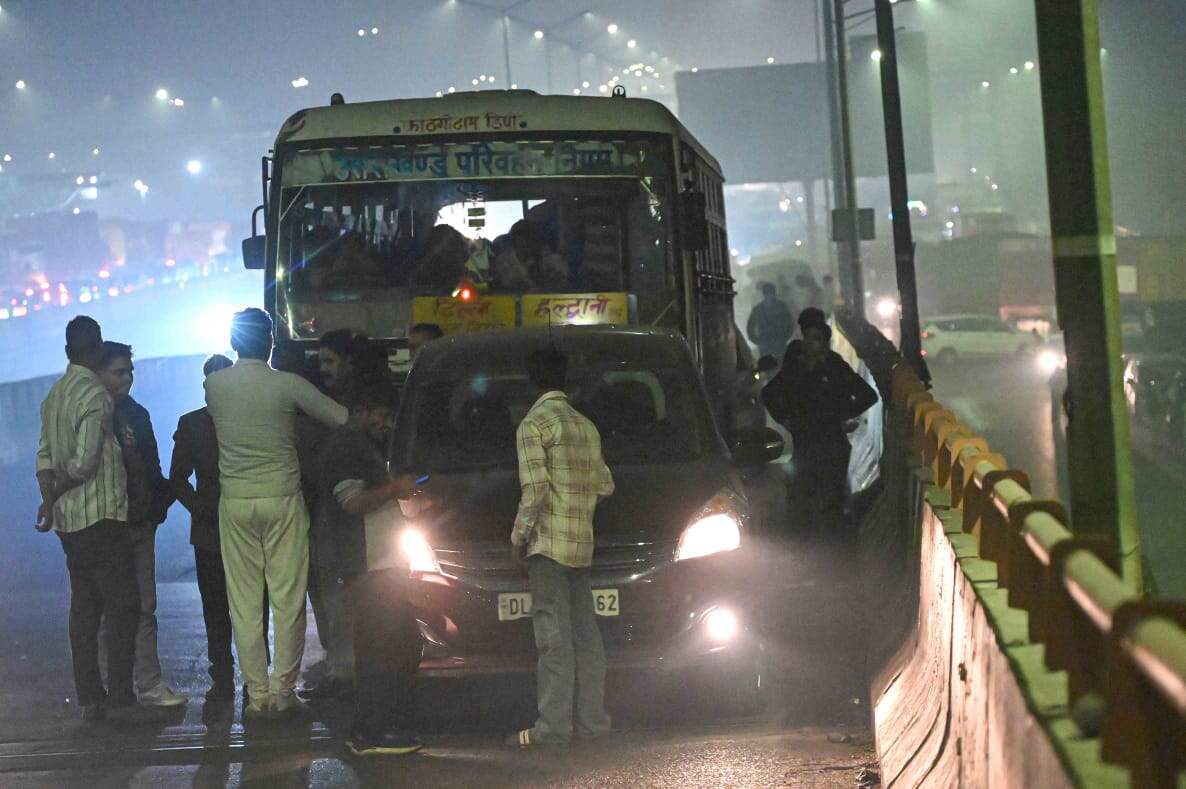
Bus right in the middle of expressway, car pulled up to drop passengers. More awaiting their bus (Photo credit: Anindya Chattopadhyay)
State and private operators use this stretch for services to Uttar Pradesh, Bihar and Uttarakhand, turning road space into boarding points while commuters struggle through the road left available.Pradeep Rawat, travelling to Uttarakhand, had waited three hours for his bus. His operator had been informing him of the delay due to traffic. Around him, passengers waited in the open, relying on messages from operators for updates.
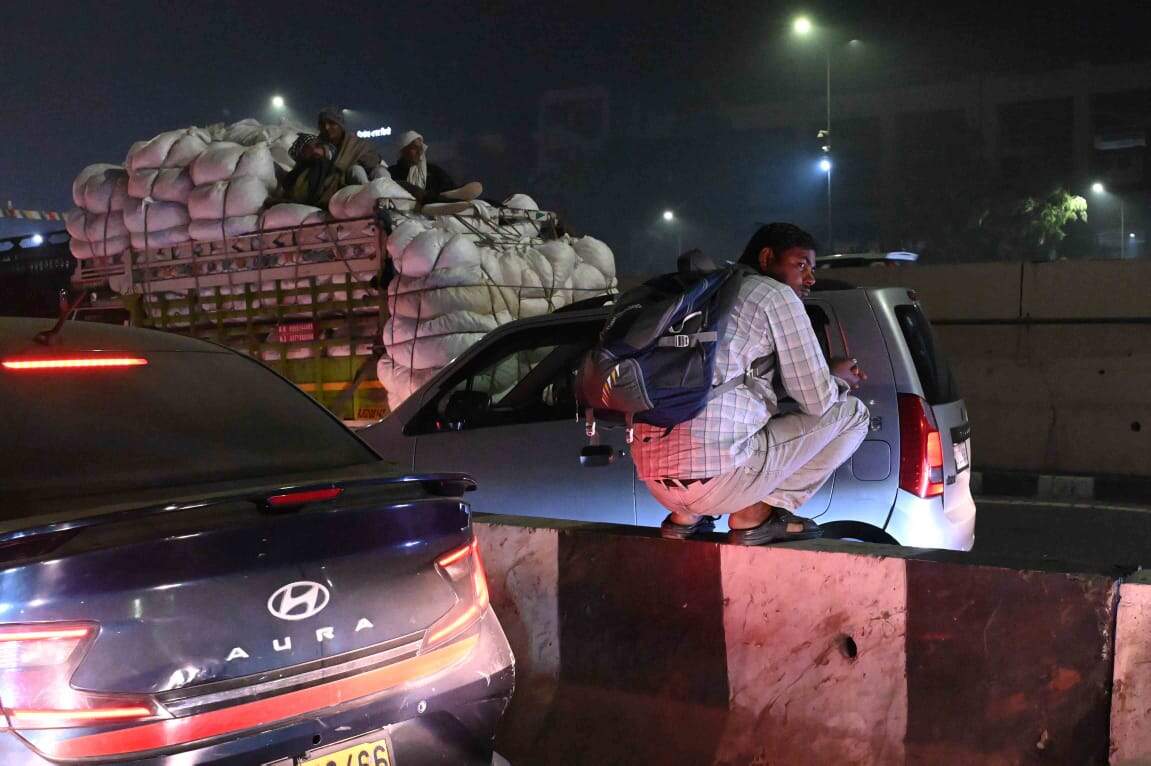
A passenger negotiates a concrete divider amid traffic to reach his bus— risking life (Photo credit: Anindya Chattopadhyay)
The pre-Diwali rush at Ghazipur flower mandi added to the squeeze. Wholesale buyers, delivery tempos, and roadside vendors crowded the service lanes, compounding the congestion.For commuters travelling between Delhi, Ghaziabad and Noida, most heading home, the result was an excruciating journey. Delhi has three designated interstate bus terminals.
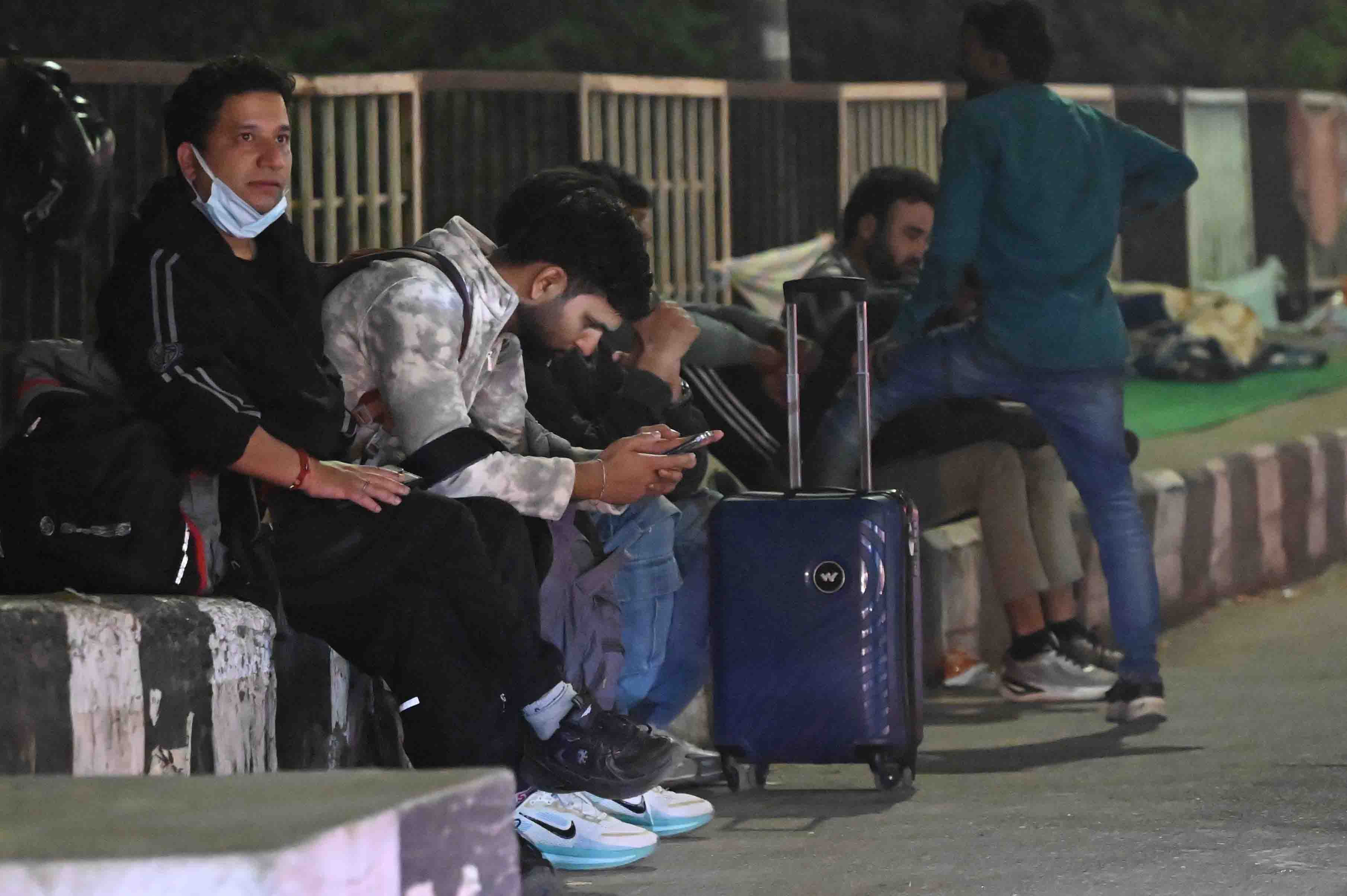
Passengers wait under the open sky beside the expressway. Text messages from bus operators keep them informed of status (Photo credit: Anindya Chattopadhyay)
Here, the highway was doing their job. And law enforcement was nowhere to be seen.