









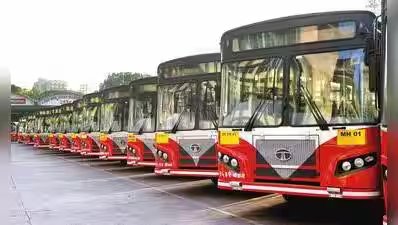
Mumbai: Concerned over passenger and road safety, and allegations by committee members on defective BEST buses on roads resulting in mishaps, the undertaking’s general manager Sonia Sethi on Wednesday mooted for higher penalties for defective vehicles as a deterrent. The panel members demanded faster repairs to vehicles which sometimes were lying at depots for nearly a month. Sethi said she will bring a proposal in this connection at the next meeting in a few days.Sethi admitted that the existing penalty structure for defective buses failed to act as a deterrent. The penalties are too low compared to the revenue operators earn by keeping buses on the road. “The penalty we currently impose is not a deterrent for wet-lease operators. It is often more viable for them to continue operating the bus and earn rent on a per-kilometre basis. We need to examine whether penalties can be increased or the rectification period shortened. This is in the interest of road safety,” she said.The issue was highlighted by Shiv Sena (UBT) member Nitin Nandgaonkar, who alleged that some contractors delay repairs to avoid losses. “Instead of rectifying defects, some operators run buses for fewer kilometres while still being assured payment for 180 km a day under the contract. This is dangerous for commuters and some defective buses have been involved in mishaps in the recent past,” he said.According to data shared by Nandgaonkar, as many as 774 buses were found with defects a 4-5 months back, ranging from minor faults to serious issues such as steering and brake failures. Members pointed out that fines of Rs 1,000, Rs 1,500 and Rs 3,000 for various defects are too small to influence operator behaviour.Committee members also expressed concern over buses remaining idle in repair workshops for nearly a month. A senior official from the engineering department said that at present, all buses have been repaired and they are running on the road. BEST committee chairperson Trushna Vishwasrao said she had repeatedly raised the matter, including with Chief Minister Devendra Fadnavis. She questioned the contract provision under which operators are paid for 180 km daily even when actual operations are only 140-150 km. “The undertaking is paying for kilometres that are never run. This benefits operators but causes losses to the cash-strapped BEST,” she said, calling for contracts to be revised so payments are linked to actual kilometres operated.Senior committee member Sunil Ganacharya said several clauses in wet-lease contracts require review. He cited instances where operators charged BEST despite buses remaining off the road because conductors were unavailable. “These conductors are full time employees from BEST,” he said.With wet-lease buses forming the backbone of Mumbai’s bus services, committee members stressed that tougher penalties, quicker repairs and revised contracts are essential to improve safety and prevent financial losses.