









Jaipur: Tourists visiting Jaipur’s iconic Jal Mahal are increasingly being greeted by the foul smell of polluted water instead of the lake’s scenic beauty, with floating garbage and dead fish along the edges of Man Sagar Lake raising fresh concerns over the condition of one of the city’s best-known landmarks.The lake has been battling pollution for years, with untreated sewage and contaminated water from nearby drains continuing to flow into it. Wastewater from Brahmpuri and Nagtalai drains enters the lake directly, while polluted industrial discharge has further degraded water quality. Besides damaging the ecosystem, the pollution has affected aquatic life, with dead fish regularly found floating near the banks.The issue has previously come under judicial scrutiny. In Feb last year, Supreme Court criticised Jaipur Municipal Corporation over the deteriorating condition of the lake, observing that it was surprising a city aspiring to be “smart” had allowed such extensive damage to Jal Mahal. The court also noted that no expert committee had been appointed for the lake’s restoration and conservation and directed the civic body to engage National Environmental Engineering Research Institute (NEERI) to prepare a comprehensive plan to control pollution and restore the lake.
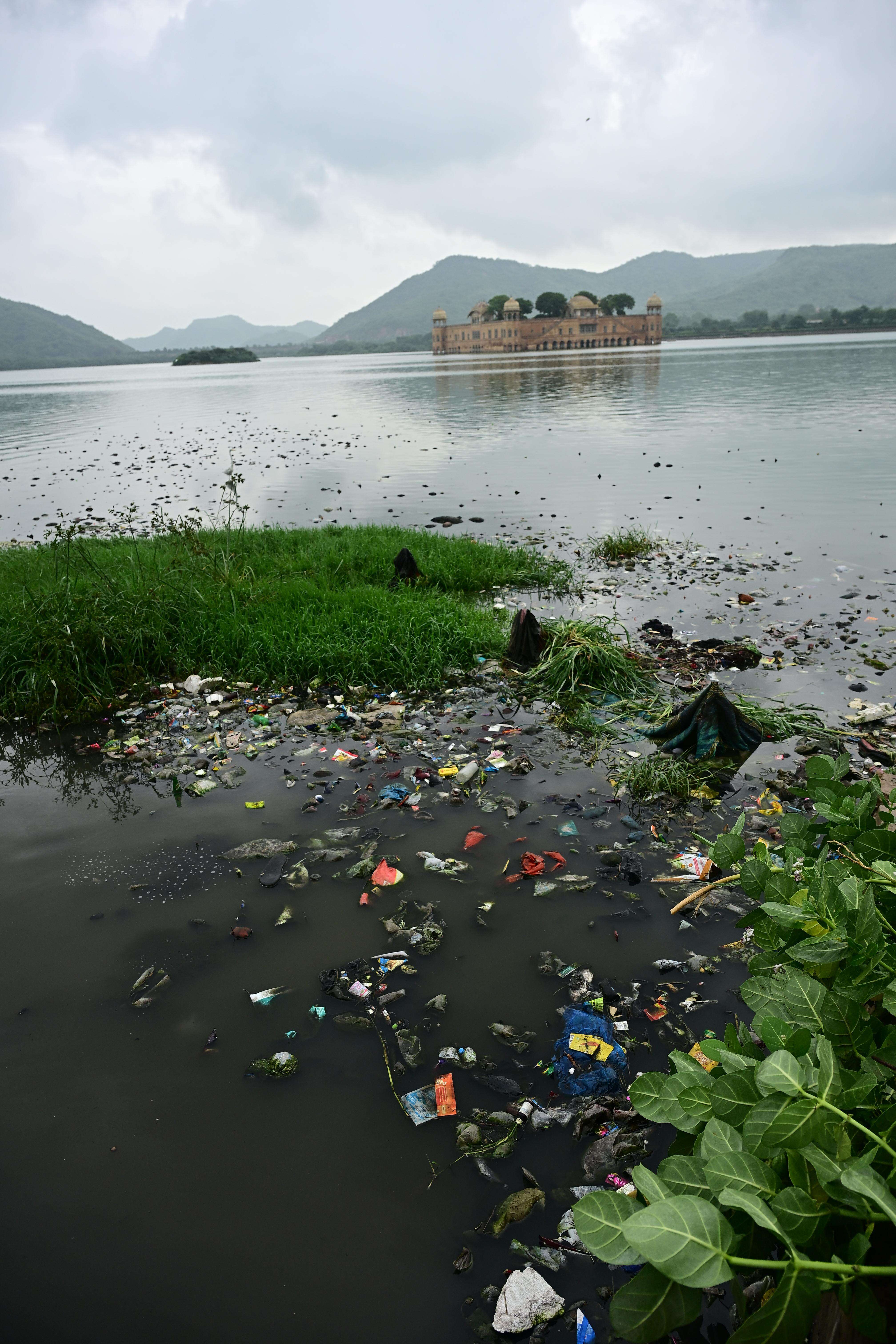
Jal Mahal garbage floating on Man Sagar lake in Jaipur, Rajasthan on 03 August 2026
For many visitors, the reality falls short of Jal Mahal’s postcard image.Heena Gaur, who was visiting Jaipur for the first time, said, “All the tourist attractions in Jaipur are beautiful, and Jal Mahal is no exception. But it is difficult to stand here for long because of the strong smell from the dead fish. If the water were clean, the view would be even more beautiful.”Another tourist, Sanjeev Sharan, said he was disappointed by the lake’s condition. “I was excited to see Jal Mahal, but I felt disappointed. It is hard to imagine that such a magnificent structure, built with so much care centuries ago, is not being looked after properly today. Heritage sites deserve much better protection,” he said.Resident Farooq Ahmed, who has been visiting Jal Mahal since childhood, said watching the lake deteriorate is painful. “This is part of Jaipur’s identity and history. We take pride in our UNESCO-recognised heritage, but if we cannot protect landmarks like this, it raises serious questions about how we value them,” he said.Responding to the issue, Hawa Mahal Zone executive engineer Lokesh Kumawat said preliminary observations suggested floating waste was being carried by water currents and accumulating along the corners of the lake. “To remove it effectively, we first need accurate measurements of the water depth at these locations. That assessment is currently underway,” he said.With pollution continuing despite repeated judicial intervention, residents and visitors say preserving Jal Mahal is no longer only about maintaining a tourist attraction but also about protecting one of Jaipur’s most important natural and cultural landmarks.