






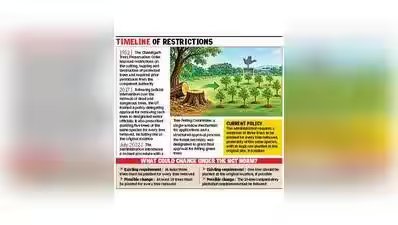
Chandigarh: When a tree is cut to make way for development, is planting three saplings enough to compensate for its loss? Raising this question on the tree cutting policy of Chandigarh, the National Green Tribunal (NGT) has called for a review of existing compensation norms. According to the Tribunal, at least 10 trees must be planted for every tree removed — a move that could significantly change how the city undertakes projects involving tree removal.Hearing a petition on felling of trees for the Bulk Market project in Sector 56, the tribunal noted that the environmental clearance (EC) condition requires compensatory plantation of at least 10 trees for every tree removed. It directed the chief secretary to examine the issue and consider appropriate modifications to the Tree Felling Policy, bringing the issue beyond the disputed project to future tree-felling cases across the city.The UT administration’s existing policy provides for planting a minimum of three trees for every tree removed, with at least one to be planted at the original location immediately, if possible. It also calls for preferably planting the same species that has been removed, in keeping with the city’s urban planning and heritage considerations.The case is related to allegations of illegal felling of 332 trees for the Bulk Market project. While UT authorities did not dispute the removal of 305 trees, their counsel told the Tribunal that permission for felling had been granted under the policy and 920 trees had been planted as compensatory plantation.The Tribunal sought details of approvals at various stages, including the final order of the secretary, forests, granting permission for the felling. The UT counsel sought time to place on record that due consideration had been given to the necessity of tree removal and compensatory plantation, along with the final approval.The order also brings the approval mechanism under focus. The Tree Felling Committee is only a recommendatory body. Its recommendations are routed through the department head concerned and the chief conservator of forests/forest department before final sanction is granted by the secretary, forests.NGT said the 10-tree plantation requirement should be followed not only in the Sector 56 case but also in other such cases in Chandigarh. It granted four weeks to respondents to file a further affidavit, with the matter listed for March 5, 2027.BOX1: Restricted felling to formal approval1952: Chandigarh Trees Preservation Order laid down restrictions on cutting, lopping and destruction of protected trees, requiring prior permission of the competent authority2017: Following judicial intervention over the removal of dead and dangerous trees, UT framed a policy delegating approvals for removing such trees to designated senior officials. It also prescribed planting five trees of the same species for every tree removed, including one at the original location.July 2022: Administration introduced a revamped procedure with a Tree Felling Committee, a single-window mechanism for applications and a structured approval process. The forest secretary was designated to grant final approval for green-tree fellingCurrent policy: Compensatory plantation was prescribed at a minimum of three trees for each tree removed, preferably of the same species, with at least one to be planted at the original site, if possibleNov 2026: NGT called for the 10:1 plantation norm to be followed and asked the chief secretary to consider changes to the existing policyBOX2: What Could Change With NGT Norm?Existing requirement | NGT’s guidelineMinimum three trees for each tree felled | At least 10 trees for every tree removedOne tree at original location, if possible | 10-tree compensation requirement to be followedPreferably the same species | Plantation should meet compensatory requirements under EC conditionsWhat this means: Any future project requiring tree removal could face a significantly higher plantation obligation if Chandigarh revises its policy in line with the Tribunal’s observations