









Hyderabad: Rows of grapevines once stretched across vast vineyards on Hyderabad’s outskirts, from Rajendranagar and Maheshwaram to Tukkuguda and Shamirpet.Today, many of those vineyards end at the compound walls of gated communities, logistics parks and warehouses. The area under grape cultivation around Hyderabad, once estimated at nearly 15,000 acres, has shrunk to barely 400-500 acres.As urban expansion steadily consumes agricultural land, the city once celebrated as ‘Angooron ka Shehar’ is losing the vineyards that defined its identity. Farmers say the decline is being driven not just by real estate, but also by soaring cultivation costs, acute labour shortages, weak marketing support and stiff competition from Maharashtra, making grape cultivation increasingly unviable.For decades, Hyderabad was synonymous with sprawling grape gardens, particularly the Anab-e-Shahi variety that made the erstwhile Rangareddy district famous. Grapes from the city’s outskirts found markets across the country, and visitors often carried them home as a seasonal speciality.Today, only a handful of growers continue to cultivate grapes, driven more by passion than profit.SOARING COSTS, SHRINKING RETURNS“The economics have changed dramatically over the past decade and a half,” says Anji Reddy Kommireddy, who cultivates grapes on 10 acres in Tukkuguda.
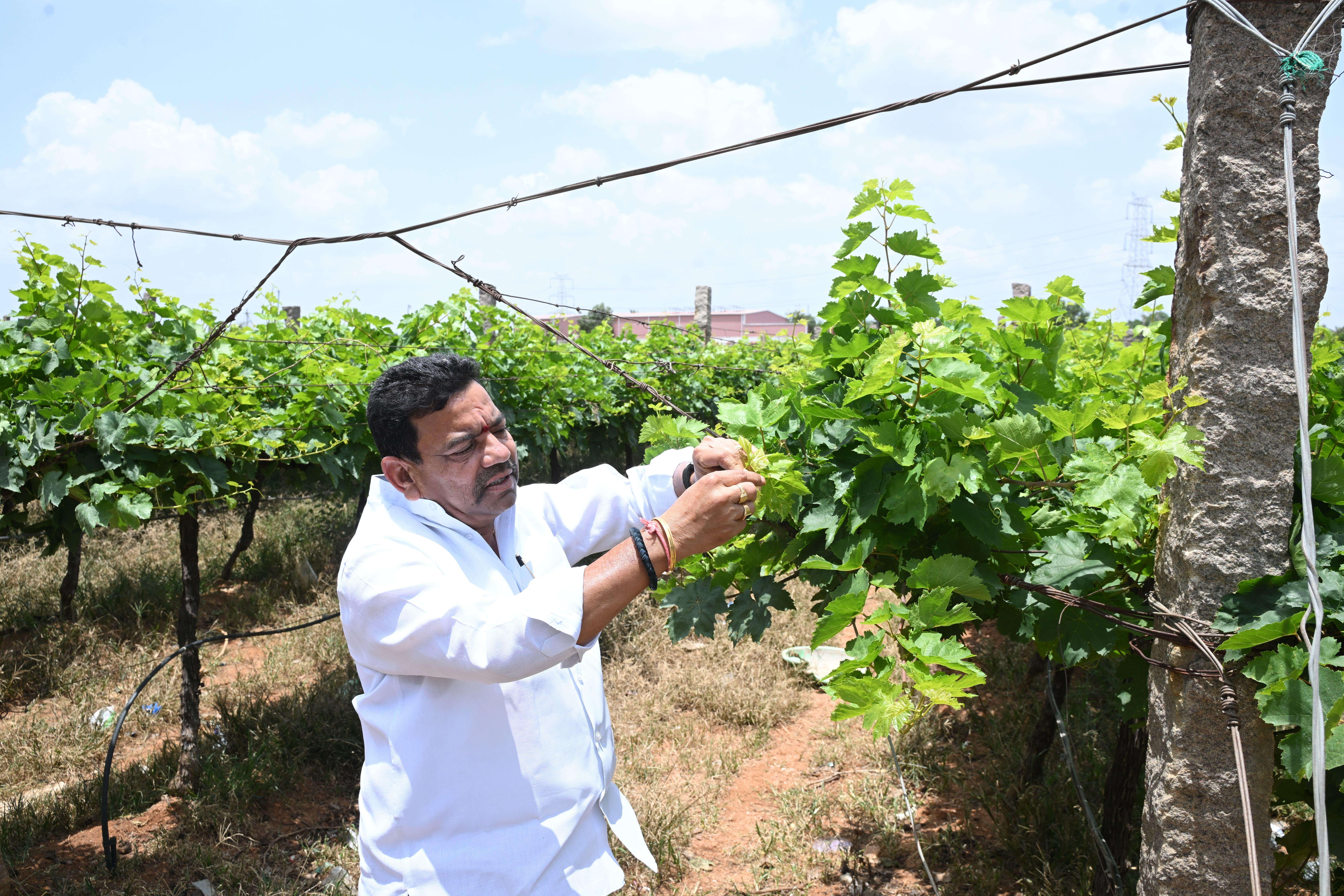
He says the cost of cultivating one acre has risen from around Rs 60,000 about 15 years ago to nearly Rs 4 lakh today, while farmgate prices have failed to keep pace.According to him, growers who once received around Rs 40 per kg now get Rs 60-70 per kg in a good season. The modest increase has been overwhelmed by rising expenditure on labour, fertilisers, irrigation, plant protection and maintenance, sharply eroding profit margins.LABOUR-INTENSIVE CROPUnlike many seasonal crops, grapes demand year-round attention. Vines must be pruned, trained, irrigated and protected from pests and diseases through different stages of growth. Even brief neglect can damage an entire crop.“Grape farming needs constant labour. For every acre, at least two workers are required throughout the year,” says grower Ch Raja Narsimha Reddy. “It has become very difficult to find local workers. We now depend heavily on labourers from West Bengal and other states.”The shortage has pushed up wages and made vineyard management increasingly unpredictable and expensive.Farmers say dependence on migrant labour has also made them vulnerable to disruptions during critical operations such as pruning and harvesting.MAHARASHTRA’S EDGECompetition from Maharashtra has compounded the challenges. Growers say the neighbouring state enjoys a longer harvesting season, better post-harvest infrastructure, stronger farmer networks and well-organised marketing systems, enabling it to dominate markets in Telangana for much of the year.“Grapes from Maharashtra remain available for a longer period and corner much of the market here,” says Anji Reddy. “Their supply chain is strong. We are unable to compete with that kind of organisation.”Farmers also point to changing consumer behaviour. Hyderabad’s grapes once enjoyed a loyal following among visitors from neighbouring Andhra Pradesh, many of whom bought them to take back home.“Earlier, people travelling from Andhra would make it a point to buy Hyderabad grapes. That connection with the city has weakened,” says Anji Reddy. “Consumption patterns have changed among both visitors and local residents.”PESTICIDE CONCERNSSome growers believe concerns over pesticide residues have further dampened demand.“Many consumers now think grapes contain excessive pesticides. That fear has reduced consumption over the years,” says a farmer in Tukkuguda.He adds that experienced buyers can usually distinguish between responsibly grown grapes and produce cultivated with indiscriminate use of chemicals.REALTY TAKES OVERWith returns declining and land prices soaring, many farming families chose to sell their vineyards rather than continue cultivation.As Hyderabad expanded, vineyards across the outskirts gave way to residential layouts, warehouses and commercial developments.Farmers also say younger generations are reluctant to remain in a labour-intensive occupation that offers uncertain returns.CAN THE VINEYARDS BE REVIVED?Experts believe grape cultivation in Telangana can still be revived with stronger institutional support, improved technology and better marketing.Padma Shri awardee Chintala Venkat Reddy, former president of the Grape Farmers Association in united Andhra Pradesh and one of Telangana’s largest grape growers, says adopting modern cultivation practices is essential.“Labour costs are undoubtedly high, but growers have to embrace modern techniques and diverse cultivation practices to protect grape farming,” he says.Sri Konda Laxman Telangana Horticultural University vice-chancellor Raji Reddy says Maharashtra’s success stems as much from its institutional support as from favourable growing conditions.“Maharashtra’s cooperative and marketing network is extremely strong. Farmers there are able to flood markets across the country because they work through organised systems,” he says.He believes Telangana can significantly expand its grape acreage if farmers receive stronger support in production, marketing and supply-chain development.“The present area under cultivation can be increased substantially if farmers receive adequate support in marketing and production,” he says.For now, the surviving vineyards of Tukkuguda stand as reminders of an older Hyderabad, when acres of grapevines were an integral part of the city’s landscape and identity.But as urbanisation encroaches on agricultural land and cultivation costs continue to rise, the legacy of Angooron ka Sheher is steadily fading.