










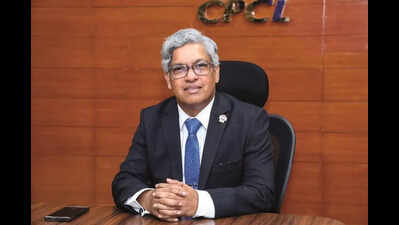
Chennai: Chennai Petroleum Corporation Ltd (CPCL) delivered a strong performance in FY26, as a combination of record throughput, improved operating efficiencies and supportive product cracks more than offset a volatile crude environment. The refining arm of Indian Oil Corporation reported a sharp surge in net profit to Rs 3,062 crore in FY26, from Rs 174 crore in FY25. Gross refining margins (GRMs) more than doubled to $9.28 a barrel, with momentum accelerating in the March quarter as GRMs climbed to $13.75 a barrel, lifting quarterly profit to Rs 1,400 crore—more than three times the year-ago level.Unlike earlier cycles, the gains were not driven by discounted crude. “There are currently no discounts in the market. All crude is priced based on prevailing spot tenders,” H Shankar, MD of CPCL, told TOI, signalling a shift away from arbitrage-led profitability. So, the improvement stemmed from a sharper focus on throughput and efficiency. CPCL processed 11.71 million metric tonnes (MMT) of crude in FY26, significantly above its 10.5 MMT nameplate capacity, implying utilisation of 112%. This compares with 10.45 MMT in FY25. Stable product cracks for most of the year further supported earnings. “Except for the first quarter, when price conditions were less favourable, crack spreads remained healthy,” Shankar noted, highlighting a relatively benign refining environment despite global volatility. Operational gains further strengthened the performance. Fuel and loss levels were reduced to 7.7%, from the typical 8%-plus range. Management estimates that every one percentage point improvement can translate into annual savings of Rs 500 crore to Rs 600 crore. At the same time, distillate yields—already among the highest in the industry—were sustained at around 80%, aided by tighter control of process losses and improved recovery of middle distillates. The March quarter highlighted how these operational levers translated into profitability. While revenue remained largely flat at Rs 20,455 crore, a sharp reduction in total expenses helped expand margins.Backed by sourcing support from its parent IOC, CPCL has been able to secure and optimise feedstock from multiple regions, including West Africa and the Red Sea, while continuing to process Russian grades where available. This flexibility has strengthened over the past year, with the refinery processing six new crude grades, including supplies from Gabon, Libya and Ghana, as well as Sudan and the US. “With the help of IOC, we seek to secure specific feedstock requirements at short notice and optimise our crude mix. This allows us to maintain an optimal balance across our three key operational areas: fuel production, and our unique product mix of lube oils and wax,” he said.In the near term, CPCL continues to maintain strong physical performance, though external uncertainties remain. “As a standalone refiner, we focus on two key aspects: improving operational efficiency and maintaining cost leadership,” Shankar said.