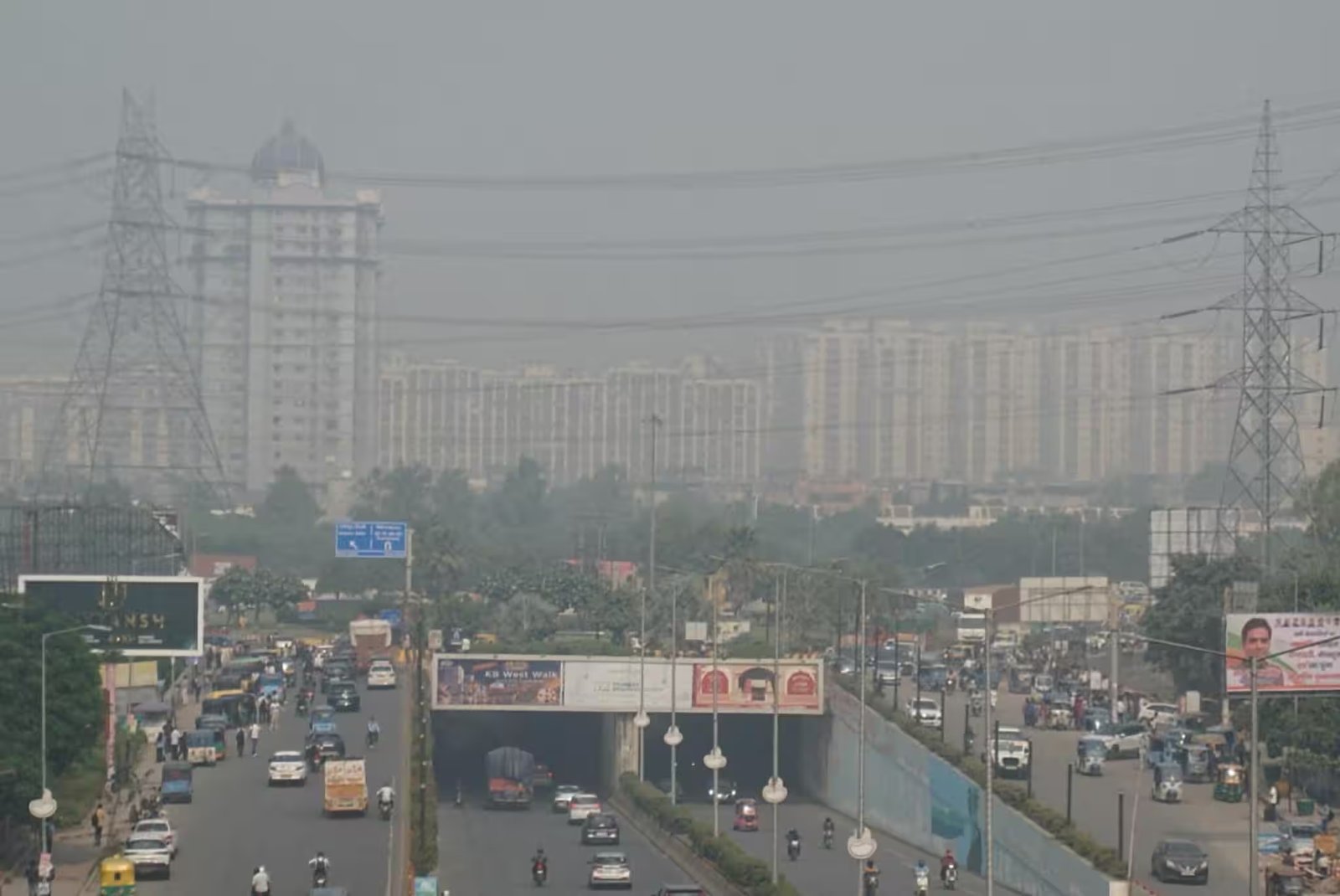
Noida: On the first day of the CAQM-mandated fortnight of construction halt, it was business as usual in NCR. Cranes, earthmovers, workers and cement mixers operated through the day, both at public projects and private construction sites. At many sites, construction work picked up pace out of fear of further restrictions being clamped, as contractors and builders fear losses, but dust mitigation measures remained virtually non-existent, enveloping major stretches of NCR in a grey haze.
In Gurgaon, work continued across Udyog Vihar, Sector 23, Sushant Lok-1, DLF Phase 2 and Sector 28. TOI found sand and gravel lying exposed, and material was stacked along roadsides at DLF Phase 2, Sushant Lok 1 and Sector 28. At Udyog Vihar Phase 3, work was underway on the upper floors of a building with the approach road covered in dust.
In Noida’s Sector 62, home to multinationals such as Samsung, Ericsson, Nokia and IBM, the AQI was ‘severe’ (above 400) for the third day running. It stood at 412 on Thursday, against 39 in Suwon, South Korea, where Samsung is headquartered. Honeywell International’s India office in Ghaziabad recorded an AQI of 263, against 32 at its base in North Carolina in the US.
A software engineer with IBM who had refused an offer for an offshore posting last year said that she now feels she made a wrong choice. “I had been in Delhi during my college days, and the air quality was poor even then, but we considered Noida as a safe place in terms of air quality back then. Maybe with awareness and more monitoring stations coming up, the real picture is visible now,” she said.
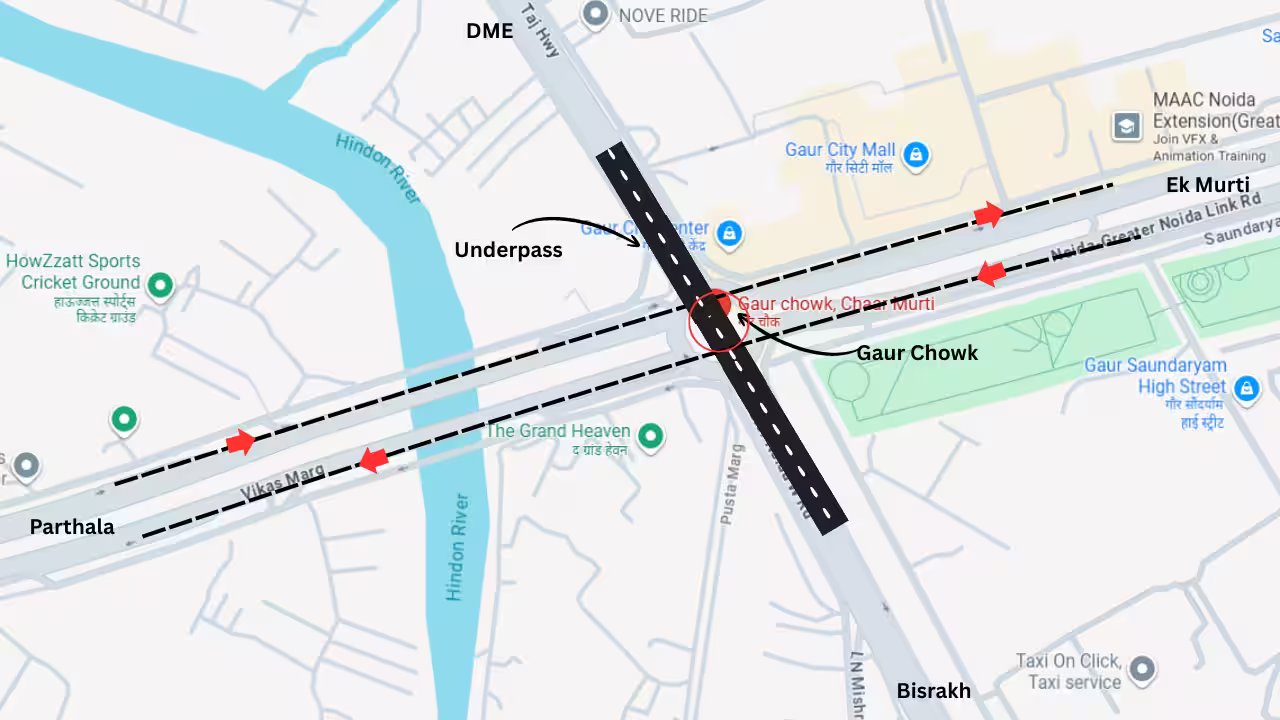
While Sector 62 struggles with tailpipe emissions from heavy traffic from DME and NH-9, adjacent Khoda colony, with dug-up pavements and poor drainage, adds dust and PM10 particles.
Vaishali and Indirapuram in Ghaziabad fare no better. Roadsides dug up by Ghaziabad Municipal Corporation to mend sewer lines are fenced by four-foot green nets, yet loose soil has covered the roads and every passing vehicle throws up a cloud of dust. Rajendra, who owns a stationery shop in Vaishali Sector 3, keeps his door shut to protect his goods.
Ramjeevan, a security guard for 20 years who hails from Siwan in Bihar, said conditions had worsened over the past five-six years. “But we can hardly understand the difference when restrictions are announced. Everything continues at the same pace, from construction to DG sets or the regular increase in the number of vehicles on the roads,” he said.
In Sector 126, where Sunny IT Infrasoft is building a multi-storey building, smog guns and sprinklers are installed but hardly operate. “Dust is normal here. Sprinklers will hardly mitigate the situation,” said Ravindra Singh, a shopowner across the road.
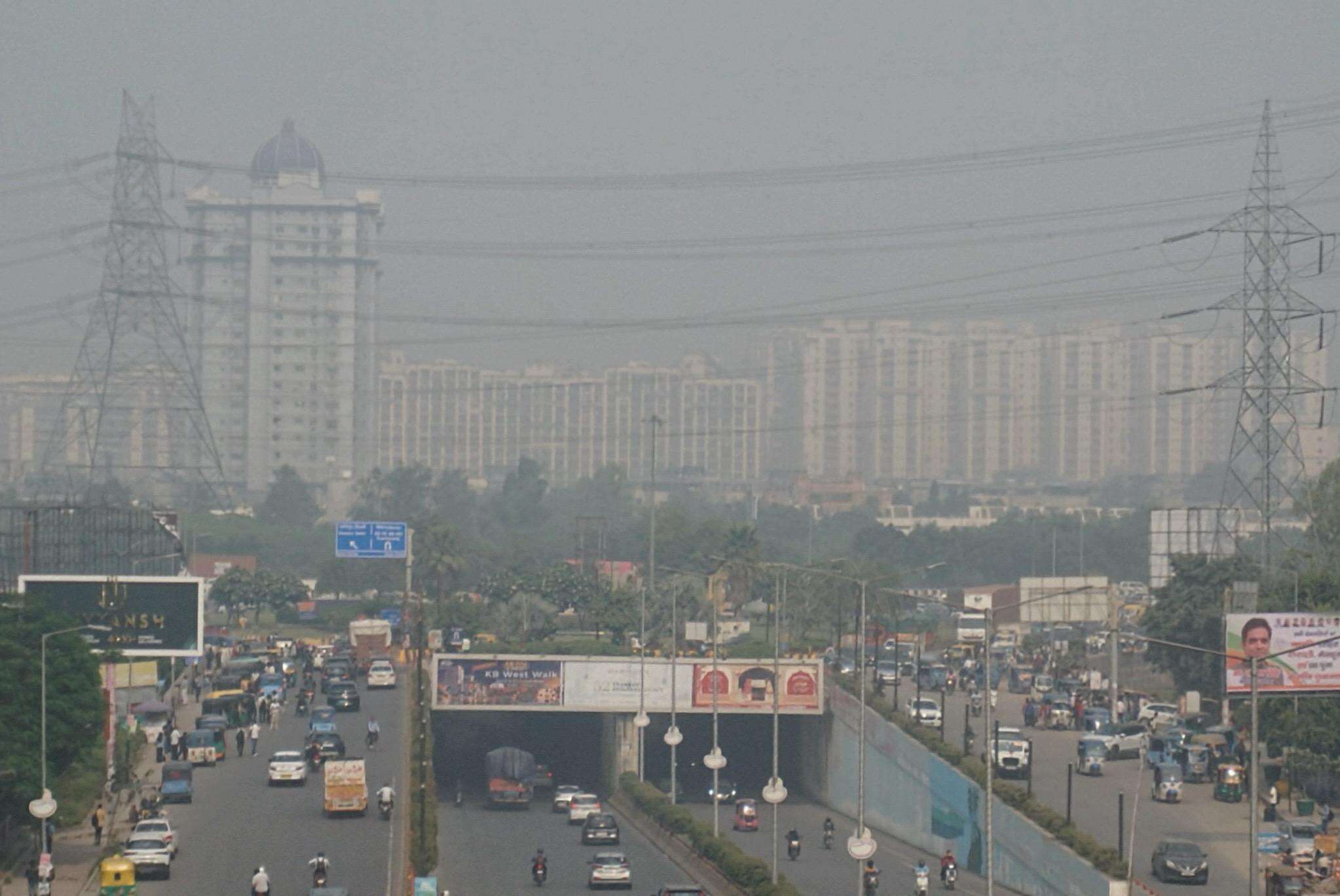
In Noida’s Sector 62, home to multinationals such as Samsung, Ericsson, Nokia and IBM, the AQI was ‘severe’ (above 400) for the third day running
On Oct 30, Commission for Air Quality Management (CAQM) announced a pause on construction and demolition activities across Delhi-NCR from Nov 5 to 20 in view of the pollution situation that begins in the national capital with the onset of winter. The order prohibits demolition and construction work on highways, roads, flyovers and pipelines. However, construction activities related to railways, metro services, airports, inter-state bus terminals, hospitals, water supply and sanitation, national security and defence-related activities and ‘projects of national importance’ were exempted from the pollution control measures. The order also limits physical attendance at govt and private offices to 50% of staff, with the rest working from home.In Gurgaon, an order issued by deputy commissioner Uttam Singh required sub-divisional officers and Haryana State Pollution Control Board (HSPCB) regional officers to conduct daily inspections and submit reports by 5 pm. “We have been monitoring and taking action against any sites which do not follow the norms,” an official said.Haryana govt’s principal adviser on urban development DS Dhesi on Thursday directed officials to strictly enforce the CAQM measures. He said construction sites spread over more than 500 square yards must be registered on the designated portal and equipped with air quality monitoring devices. He also asked petrol pumps to supply fuel only to vehicles with valid pollution under control certificates.To tackle road dust, Dhesi asked Municipal Corporation of Gurugram (MCG) to monitor mechanical sweeping regularly. Gurgaon Metropolitan Development Authority (GMDA) chief executive officer PC Meena said it would hire five mechanised sweeping machines for major roads. Road repairs will begin after Graded Response Action Plan (GRAP) restrictions are lifted.Uttar Pradesh Pollution Control Board (UPPCB) regional officer (Ghaziabad) Ankit Singh said sprinklers and mechanical sweeping were used regularly and logged daily. The claims were, however, dismissed by the shopkeepers in Vaishali, who asked how sweeping can help prevent pollution when almost the entire road shoulder is dug up at intervals.