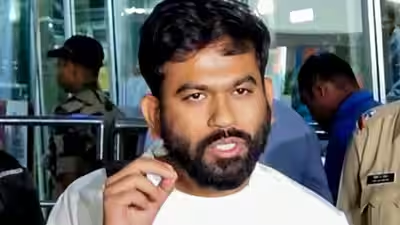










NEW DELHI: An executive magistrate in Delhi Sunday ordered the release of CJP members Abhijeet Dipke, Ashutosh Ranka and Saurav Das after they furnished surety bonds of Rs 50,000 each, undertaking to “maintain peace and good behaviour” for one year, report Koushiki Saha & Abhinav Garg.Placed under preventive arrest under BNSS sections 126 and 170, they were produced before special executive magistrate Sanghamitra at Delhi Cantonment police station.Their counsel Soutik Banerjee, said, “This was an arrest under preventive detention provisions… The ground was that, as per police, these persons could ‘commit’ a crime if not detained. Police could give no grounds of further detention, so they were released.”A procedural hearing took place where we sought release on personal bonds and without any deposit by surety,” he added.The three CJP members had been detained by Delhi Police from an aircraft at IGI Airport Saturday upon arriving from Mumbai to lead a protest against the CEC. Police had denied permission for the protest.Banerjee said the executive magistrate accepted the defence’s submissions and prayers, including the request for the release of devices seized from the three CJP members during their detention.On Saturday, a Delhi court dismissed a plea by CJP legal affairs head Ratna Singh seeking registration of an FIR against police personnel over her alleged wrongful confinement and a direction for her immediate release.While Section 170 empowers police to arrest without a warrant to prevent a cognisable offence, subject to statutory conditions, under Section 126, an executive magistrate can require a person likely to breach the peace to execute a bond to maintain peace for up to one year.An undertaking after preventive detention is a formal legal promise made to a magistrate to maintain public order and good behaviour.Unlike judicial magistrates, the executive magistrates are officers appointed by the state govt to perform administrative and law and order duties.Under the 2023 BNSS, Section 14 empowers govt to appoint govt officials with magisterial powers to ensure public peace, safety and order. In each district, the district magistrate oversees the executive magistrates.