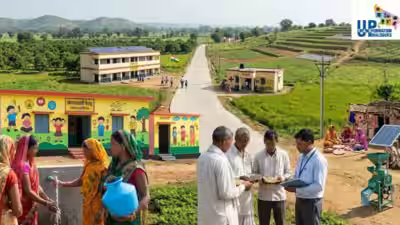









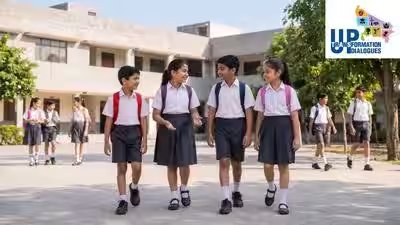
Education, Health, Environmental Awareness and Cleanliness- all rolled into one. This idea of Yogi government in Uttar Pradesh has a long way since it was conceptualised some time ago.The concept of a clean and green school goes far beyond keeping classrooms tidy or planting trees on school premises. It seeks to transform schools into healthy, safe, resource-efficient and environmentally responsible spaces where children learn not only through textbooks but also through everyday practices. From sanitation and waste management to water conservation, energy efficiency, biodiversity and climate awareness, the approach connects education with the practical challenges facing society.In Uttar Pradesh, the Swachh Evam Harit Vidyalaya Rating (SHVR) 2026–27 is an important mechanism for encouraging schools to adopt these practices and assess their progress. The scale of participation reported as of October 5, 2026, is significant: 1,62,054 schools have completed participation, representing 60.83 percent of the state’s 2,66,408 schools. With participation spread across districts, the initiative offers an opportunity to make environmental responsibility an integral part of school education.The larger significance lies in creating a generation that understands cleanliness not merely as a government responsibility, but as a shared civic duty, and views environmental protection not as an occasional campaign, but as a way of life. From cleanliness to environmental citizenshipThe idea behind clean and green schools rests on three interconnected goals: protecting children’s health, improving the quality of the learning environment and cultivating responsible citizens.The Government of India’s SHVR programme, administered by the Department of School Education and Literacy under the Ministry of Education, links water, sanitation, hygiene and environmental sustainability with the objectives of the National Education Policy 2020. It also promotes citizenship values, resource conservation, behaviour change and activities under Mission LiFE.This makes the concept much more comprehensive than a cleanliness drive. A school may look clean on inspection day, but a genuinely clean and green institution maintains functional toilets, safe drinking water, regular handwashing, responsible waste disposal and healthy surroundings throughout the year. It also encourages children to conserve water and electricity, protect plants and avoid wasteful consumption.The ultimate aim is to make these habits part of everyday life. Children who practise responsible waste segregation in school may carry the habit home. Students who learn to conserve water can influence family practices. Those who participate in gardening, composting or biodiversity activities gain a practical understanding of the relationship between human activity and the natural environment.In this way, a school becomes a centre of environmental learning not only for its students but also for their families and the wider community.How clean and green schools benefit children1. Better hygiene and protection against illnessA clean school environment can reduce children’s exposure to unhygienic conditions and support healthier routines. Functional toilets, handwashing facilities, safe water and proper sanitation are especially important in primary schools, where children are still developing basic personal hygiene habits.Regular handwashing with soap, safe drinking water and clean food areas help reduce the risk of infections associated with poor hygiene. Clean surroundings also discourage the accumulation of waste and stagnant water, which can contribute to pest and mosquito problems.For Uttar Pradesh, where schools serve communities with widely differing access to sanitation and public services, a common assessment framework can help identify shortcomings that might otherwise remain unnoticed.However, a rating alone cannot guarantee better health. The actual benefits depend on whether facilities work reliably, water is available, toilets are maintained and students consistently practise good hygiene.2. Improved attendance, dignity and participationA safe, clean and well-maintained school is more welcoming to children and their parents. Toilets that are functional, private and adequately maintained are particularly important for adolescent girls. Access to water, soap and appropriate menstrual hygiene facilities can help create an environment in which girls participate in education with greater comfort and dignity.Children with disabilities also benefit when sanitation facilities and school pathways are accessible and usable. A school should therefore assess cleanliness alongside inclusion, accessibility and the needs of different age groups.When children feel safe and comfortable at school, the environment becomes more conducive to regular attendance and participation. Clean and green practices can thus complement the broader goals of universal enrolment, retention and equitable education.3. Better conditions for learningEnvironmental quality influences how children experience their classrooms. Well-ventilated rooms, shaded outdoor areas, trees, gardens and appropriately maintained premises can make school spaces more comfortable.In hot regions of Uttar Pradesh, shade trees, green spaces, ventilation and, where feasible, measures such as reflective or cool roofs can help address heat inside and around school buildings. Rainwater harvesting and efficient water systems can also make campuses more resilient to water stress.Gardens and outdoor learning spaces offer additional educational value. Children can observe plant growth, understand soil health, study insects and birds, and learn about seasonal changes. Waste segregation and composting can become practical lessons in science and resource management.These measures do not automatically raise examination scores. Their contribution is more fundamental: they help create a healthier, more engaging environment in which learning can take place.4. Environmental awareness through everyday practiceOne of the most important benefits is the transition from theoretical environmental education to practical responsibility.Children may learn about climate change, pollution and natural resources in textbooks. A green school allows them to experience these issues directly. They can measure water use, monitor electricity consumption, maintain a kitchen or medicinal garden, separate wet and dry waste and observe how organic waste can be converted into compost.Such activities help students understand that environmental protection involves everyday decisions rather than only large government projects.The approach also encourages teamwork, leadership, problem-solving and a sense of shared responsibility. When students help develop a school garden or monitor waste disposal, they participate in maintaining their own surroundings instead of treating cleanliness as the exclusive responsibility of support staff.5. Water conservation, waste reduction and lower operating costsA green school can also become a model of responsible resource management. Rainwater harvesting, repairing leaking taps, monitoring water consumption and reusing wastewater where safe and permitted can help schools use water more efficiently. Solar lighting, energy-efficient appliances and switching off unused electrical equipment can reduce electricity consumption. Composting biodegradable waste can reduce the amount of waste sent for disposal while producing manure for school gardens.These measures are particularly relevant in water-stressed and heat-prone areas. They can also demonstrate to students that environmental responsibility and financial prudence often go together.The savings will depend on the school’s infrastructure, the cost of installation and the quality of maintenance. Schools should therefore begin with simple, affordable measures before investing in more expensive technologies.Uttar Pradesh: Turning school participation into measurable changeThe scale of Uttar Pradesh makes the clean and green school initiative particularly important. According to the figures supplied for SHVR 2026–27, the state has 2,66,408 schools, of which 1,86,196 had initiated the process, 1,79,793 had registered and 1,62,054 had completed participation as in October, 2026.Schools registeredThe district figures supplied with the report show Kanpur Dehat leading with an 83.17% completion rate, followed by Muzaffarnagar at 82.24%, Bhadohi at 77.62%, Kaushambi at 75.22% and Lalitpur at 73.78%. Barabanki, Rampur, Mau, Bulandshahr and Saharanpur also feature among the reported top ten.These figures demonstrate the reach of the assessment process, but participation and completion should not be confused with proof that every school has achieved high environmental standards. The next stage is to translate assessment into improvements on the ground.The national SHVR framework is designed to help schools assess their performance, identify deficiencies and develop school-level Swachhata Action Plans. It also provides for star-based recognition and coordination with local bodies, government agencies and civil society organisations.For Uttar Pradesh, this creates an opportunity to connect school-level improvements with local development efforts. Panchayats and urban local bodies can support waste collection, drainage, water supply and sanitation. Education officials can help schools identify infrastructure gaps. Teachers can integrate environmental activities into lessons, while parents and school management committees can participate in monitoring and upkeep.The objective should be to ensure that a school in a remote village has the same commitment to basic hygiene and environmental responsibility as a well-equipped urban institution, even if the measures needed to achieve that standard differ.A common framework for school hygiene and sustainabilityThe Union government’s Swachh Vidyalaya Puraskar provided an earlier nationwide mechanism for assessing school sanitation and hygiene. The Ministry of Education reports that approximately 8.23 lakh schools participated in 2021–22. The programme subsequently evolved into SHVR, with 10.47 lakh schools participating in 2025–26, according to the ministry’s programme information.This national framework offers Uttar Pradesh a way to assess schools against common standards, identify gaps and encourage improvement through recognition. The examples should not be taken as a direct ranking of state performance. Their value lies in demonstrating different ways of turning environmental goals into practical school activities.What Uttar Pradesh can do to strengthen the initiativeFor SHVR to become a lasting success, participation must be followed by action, verification and maintenance. Five priorities deserve particular attention.First, convert ratings into school-level action plans. Each participating school should know precisely what it needs to improve, whether that means repairing toilets, ensuring a regular supply of drinking water, installing handwashing stations, managing waste or improving green cover. Plans should prioritise essential health and sanitation requirements before optional enhancements.Second, establish a maintenance culture. New facilities provide little benefit if they stop functioning after a few months. Schools need clearly assigned responsibilities for cleaning, toilet maintenance, water-system repairs, garden care and waste disposal. Local authorities should be involved wherever infrastructure or services fall outside the school’s direct control.Third, make students active participants. Eco-clubs, student committees, nature walks, kitchen gardens, composting demonstrations and water audits can make sustainability part of daily school life. Participation should be educational and age-appropriate, without transferring essential cleaning duties from trained staff to children.Fourth, ensure independent verification. Self-assessment is useful for identifying gaps, but physical inspections and evidence-based checks are important for validating performance. A school should not receive recognition merely for completing an online form or uploading photographs. Functional facilities, consistent practices and actual improvements should determine its rating.Fifth, measure outcomes, not just registrations. Progress should be tracked through indicators such as functional toilets, availability of soap and safe drinking water, waste segregation, water consumption, tree survival, energy savings and regular student participation in environmental activities. Such measurements would show whether the initiative is producing lasting benefits.Financial support should also be directed towards schools with the greatest infrastructure deficits. A rating system must encourage improvement rather than penalise schools simply because they serve disadvantaged communities or lack resources.The larger vision: Schools as centres of sustainable developmentThe clean and green school concept brings together education, public health, environmental protection and community development. Its success cannot be measured solely by the number of trees planted, cleanliness drives organised or schools registered on a portal. The real test is whether children have access to safe and hygienic facilities and whether responsible environmental behaviour continues after the campaign ends.For Uttar Pradesh, SHVR 2026–27 provides an opportunity to extend these principles across a vast and diverse school network. The participation of more than 1.62 lakh schools, as reported on October 5, is an encouraging starting point. The challenge now is to convert that participation into verified improvements, reliable maintenance and meaningful environmental learning.Ultimately, a clean school protects health, a green school encourages environmental responsibility, and an actively engaged school helps children understand their role in society. When these three objectives work together, schools become more than places of academic instruction: they become the starting point for healthier communities, more responsible citizenship and a more sustainable future.