






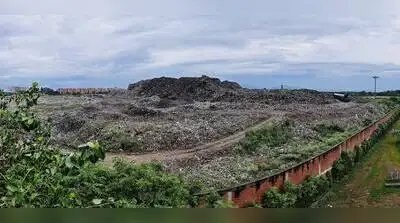
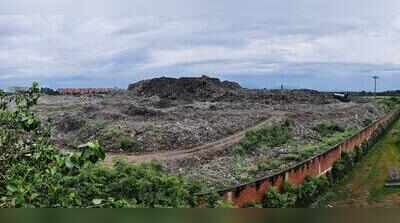
Chandigarh: The city’s claim of achieving zero gaps in solid waste management has come under scrutiny before the National Green Tribunal (NGT). The amicus curiae has flagged discrepancies in official data, inadequate documentation of waste disposal and potential environmental risks at former dumping sites.Amicus curiae questioned several claims made by the Chandigarh administration in its compliance affidavit, particularly its assertions of complete legacy waste remediation and adequate sewage treatment capacity.The submission points out that the city generates 512 tonnes of municipal solid waste daily, 12 tonnes more than in April 2026. Of this, 65 tonnes is mixed waste, down from 70 tonnes in nearly seven months, despite 10,363 challans issued for non-segregation between Jan and Oct.The amicus also questioned the administration’s claim of 100% door-to-door collection in four waste categories, pointing out that its own affidavit acknowledges the need to extend collection services to areas where households still contribute mixed waste.The legacy waste remediation claim has also come under scrutiny. While the administration reports processing around 15.4 lakh metric tonnes of legacy waste, the amicus cited an IIT Ropar environmental quality report identifying glass fragments, plastic, rubber, e-waste and battery residues in bio-soil used to fill low-lying sites at Sector 50 and Sector 47.The Sector 50 site, adjoining a civil dispensary, is a particular concern because children, elderly people and pregnant women frequent the area. IIT Ropar warned that weathering could release metals towards the aquifer if the fill remained uncapped. The amicus pointed out that no groundwater sample had been collected and that the administration had not established whether recommended safeguards had been implemented.Sewage management presents another contradiction. While the administration claims all 2,41,171 households are connected to the sewer network and treatment capacity exceeds requirements, it acknowledges blocked, silted and collapsing pipeline outlets discharging untreated sewage into Sukhna Choe. The amicus also flagged ammonia-standard breaches at two sewage treatment plants and a sharp Oct rise in faecal coliform levels at three others.The submission has proposed daily weighbridge-based accounting of waste at processing facilities, ward-wise mapping of mixed waste, monitoring of all four choes and implementation of IIT Ropar’s recommendations.What The Roadmap SuggestsWeighbridge audit: Daily weighing of all waste entering and leaving Dadumajra facilities, with data published on the MCC websiteTrack mixed waste: Ward-wise mapping of the 65 TPD mixed waste and GPS/RFID tracking on all 522 collection vehiclesCap & fence dumpsites: Immediate clean soil capping (20 to 30 cm at Sec 50, 15 to 20 cm at Sec 47),Set up buffer: Turfing, fencing and a green buffer next to the Sec 50 dispensaryMonitor choes: Monthly CPCC testing across all four choes and microbial source-tracking within four months