






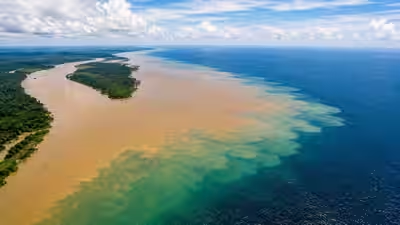
The Amazon River pours 28 billion gallons of freshwater into the Atlantic Ocean every minute, making seawater less salty more than 100 miles offshore |

The Amazon River is one of the world’s largest and most powerful river systems, carrying an extraordinary volume of freshwater across South America before emptying into the Atlantic Ocean. Its immense flow is closely connected to the vast Amazon basin, which receives water from rainfall, tributaries and sources in the Andes. The river carries approximately…

Read More

24×7 eye on China, Pakistan borders: Why EOS-05 launch on ‘Naughty Boy’ is key to India’s security

In this image posted on Sept. 1, 2026, The Geosynchronous Satellite Launch Vehicle (GSLV-F17) stands integrated on the Second Launch Pad at the Satish Dhawan Space Centre (SDSC-SHAR), in Sriharikota, Andhra Pradesh. Scheduled for liftoff on September 4, the 19th GSLV flight will place the Earth Observation Satellite EOS-05 into a Sub-Geosynchronous Transfer Orbit. (Image…

Read More

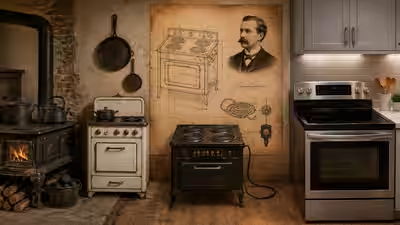
In 1896, William Hadaway patented an electric stove, helping transform cooking from wood, coal and gas to modern electric appliances |

In 1896, American electrical engineer William Hadaway received the first patent for an electric stove, marking an important step in the development of electric cooking. His patent came just four years after Canadian executive Thomas Ahearn put together the first electric range in 1892, as cooking technology was moving beyond wood, coal and gas. According…

Read More

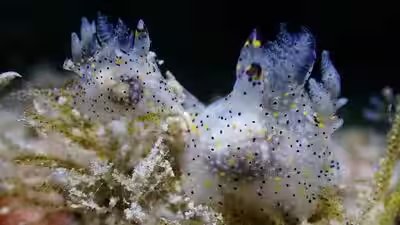
Meet Ho-Yeung Chan, the student who accidentally discovered a new sea slug smaller than a grain of rice |

Thecacera sesama. Image Credit: Ho-Yeung Chan An accidental encounter by a student during a recreational dive has led to the formal description of a ‘tiny new sea slug’ from the waters of north-eastern Taiwan. ‘Ho-Yeung Chan’ first noticed the animal while diving and later helped establish that it belonged to a species previously unknown to…

Read More

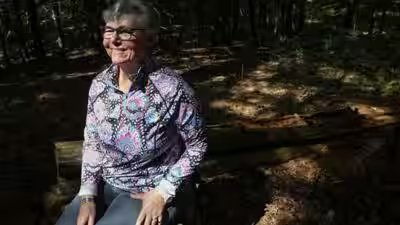
A retired Kodak finance worker picked moss from a New York log and found an animal no one had seen before; a year later, scientists confirmed it as a new tardigrade species

Judy Dobles collected moss near Cumming Nature Center that led to the discovery of a new tardigrade species. (Photo: Finger Lakes Public Radio) Judy Dobles, a retired worker from Kodak’s finance department, was walking a trail at the Rochester Museum & Science Center’s Cumming Nature Center in Naples, New York, when she made a discovery…

Read More

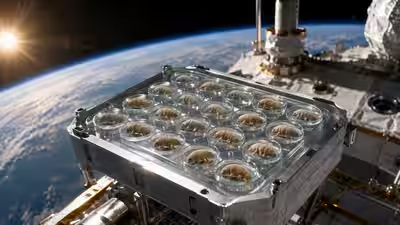
In 2007, ESA exposed 3,000 tardigrades to space vacuum and solar UV radiation in low Earth orbit; 68% revived when the microscopic animals were rehydrated |

In September 2007, the European Space Agency launched roughly 3,000 tardigrades into low Earth orbit aboard the Biopan-6 platform on the FOTON-M3 mission. Known as water bears, these microscopic animals were dried into a dormant state before being exposed directly to the vacuum of space, alongside doses of solar and cosmic radiation, for ten days…

Read More

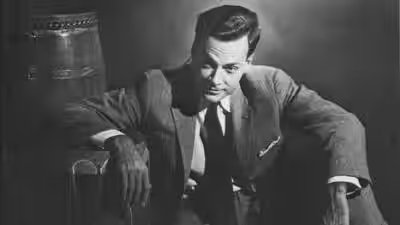
Quote of the day by Richard Feynman: “I don’t feel frightened by not knowing things…” |

Quote of the day by Richard Feynman (Image: Wikipedia) Not knowing the answer to a question can often feel like a weakness. In school, at work and even in everyday conversations, people may feel pressure to appear knowledgeable and confident, even when they are uncertain. American physicist Richard Feynman viewed uncertainty very differently. Known for…

Read More

In 1999, scientists dropped 45 tons of wollastonite over a 29-acre New Hampshire watershed to replace calcium lost to acid rain; by 2013, it was exporting 30 times more inorganic nitrogen than nearby watersheds

In 1999, scientists dropped 45 tons of wollastonite over a 29-acre New Hampshire watershed A large-scale effort to restore an American forest damaged by acid rain had an unexpected environmental effect when added nutrients caused a huge increase in nitrogen flowing into nearby streams. In October and November 1999, researchers spread about 45 short tons…

Read More

In 1921, a young Canadian doctor experimented with starving dogs; one dog’s dramatic reaction helped lead to the discovery of insulin |

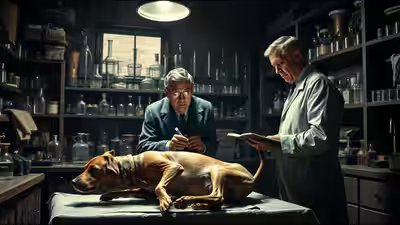
Representative Image of Frederick Banting and Charles Best conducting early diabetes research in a laboratory with dogs (AI-generated image) In May 1921, Frederick Banting arrived at the University of Toronto with an idea about diabetes and little laboratory experience. Professor John J.R. Macleod gave him space in the physiology department, several dogs and Charles Best,…

Read More

Meet Kaia Minn, the 13-year-old Massachusetts inventor who turned discarded orange peels into biodegradable seed pods for reforestation |

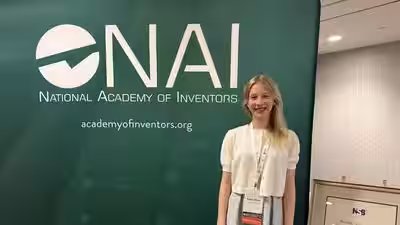
Kaia Minn at the National Academy of Inventors conference. Image Credit: kaiaminn.com A discarded citrus peel is not the sort of thing most people would associate with restoring forests. But for 13-year-old Massachusetts inventor ‘Kaia Minn,’ it became the starting point for a simple idea with potentially far-reaching environmental uses. Minn has developed a ‘biodegradable…

Read More