



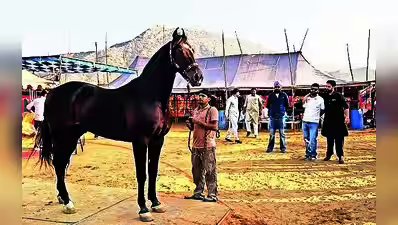
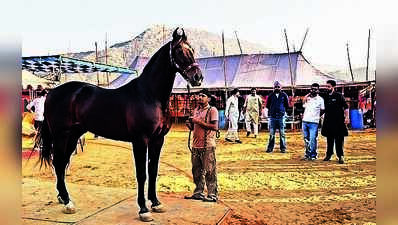
PUSHKAR: They once travelled to Rajasthan to buy horses. Today, many return to the Pushkar Mela with animals of their own, looking for buyers, showcasing bloodlines and exchanging breeding knowledge. For Punjab’s horse enthusiasts, the annual fair has emerged as a platform where they have established their presence, replete with prized horses and elaborate enclosures.The change is reflected in the experiences of breeders whose association with Pushkar spans generations. Some inherited the passion from their families, while others have spent decades building their presence in the equine trade. Their elaborate tents, often set up on multiple plots, have also become a feature of the Punjabi contingent.For Manu Sharma, who has been attending the fair regularly since 2010, the fascination with horses began with his maternal grandfather, who was fond of them but could not pursue the interest because of his employment. His father was a teacher, and Sharma remembers watching a wealthy horse owner’s mare in their village.Today, he has brought five horses, including Senapati, a combination of Marwari and Punjab bloodlines. He said Punjabi breeders were among those who introduced lavish tents at the fair, with exhibitors combining multiple plots to create larger enclosures. His own tent has been created by combining three plots with those of fellow breeder Sandeep Sekhon.“The business is growing and social media has played a big role in it. Horses and breeders are getting much more visibility now,” Sharma said. However, he also flagged a downside to the increased attention. “Many people who do not intend to buy horses also come and participate. Some do not have adequate knowledge, and they sometimes end up giving the trade a bad name.”On the high prices associated with some horses, Sharma said purchasing power varied from buyer to buyer. “Someone may have Rs 100 crore in surplus, someone else may buy a car, while another person may choose to buy a horse. It depends on what a person can afford and what he is interested in,” he said.The economics of breeding are also reflected in covering fees. Sharma said some breeders charge Rs 1.2 lakh or even 2 lakh, while he has kept his own horse’s fee at Rs 31,000.Forty-year-old Sandeep Sekhon, from Alamwala village near Malout, has been coming to Pushkar for 25 years. He has brought 15 horses and other equines this year, with Gajraj carrying an asking price of Rs 3.5 crore.“There was a time when there were no elaborate tents or proper arrangements. The fair used to be held on the sand dunes. Earlier, people from Punjab would come here to buy horses. Now, many of us come to sell them,” he said.For Nishandeep Singh, 40, from Bhagsar village, the association with Pushkar goes back to 2008. He has brought 11 horses and mares this year, including Khajana, a Marwari horse he considers his prized possession.He believes the fair has become an important platform for improving horse breeds, with breeders exchanging knowledge about bloodlines and breeding practices.“The quality of horses is improving. People come here with knowledge and experience, and there is a lot of learning and exchange among breeders,” he said.However, the growing participation has also brought logistical challenges. Nishandeep said the online plot allotment system had made securing adequate space difficult. The portal opened at noon on Oct 31 but, according to him, remained accessible for only around three minutes, by which time most plots had been booked.He said exhibitors bringing 10 to 15 horses often find a 50×50-foot plot inadequate, particularly when a tent itself occupies around 50×25 feet. He had sought three plots but was allotted two, both towards the rear of the fairground.