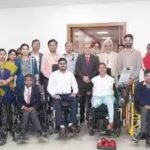





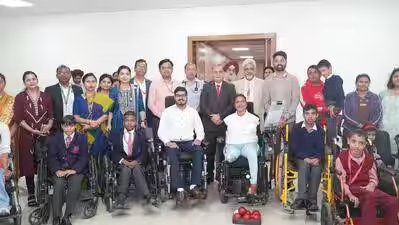
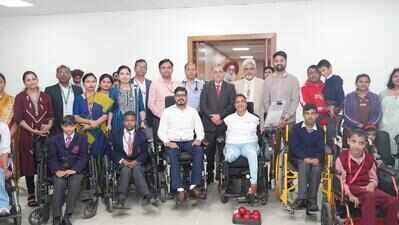
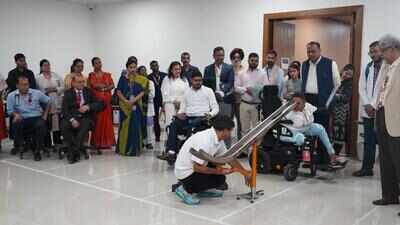
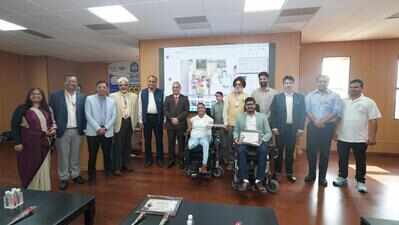
Lucknow: Rehabilitation at Ram Manohar Lohia Institute of Medical Sciences (RMLIMS) is expanding beyond conventional physiotherapy with the introduction of Boccia, a Paralympic sport designed for people with severe physical disabilities.The institute held its first Boccia awareness session-cum-exhibition match on Monday to familiarise patients recovering from neurological injuries and those living with major movement limitations with the sport. Officials said the initiative could potentially benefit around 300 patients each year.Boccia involves throwing or rolling coloured balls towards a white target ball. The game is adapted for players with conditions such as cerebral palsy and spinal cord injuries. Participants who cannot release a ball independently can use a ramp, with assistance permitted under specific rules.Prof V S Gogia, head of the Physical Medicine and Rehabilitation (PMR) department, said the sport can support controlled movement, hand-eye coordination, concentration, decision-making and social interaction. He added that Boccia is not a substitute for clinically prescribed physiotherapy but can complement medical rehabilitation by widening opportunities for participation and inclusion.Boccia athletes Jatin Kushwah and Sarita Dwivedi spoke about competing despite significant physical limitations, describing how sport helped build confidence and shift perceptions from patienthood to competitive identity.RMLIMS director C M Singh said inclusion must translate into accessibility, sensitisation and meaningful opportunities across academic, professional, recreational and sporting spaces.Dr Amit Rajan of the PMR department said the initiative aligns with growing use of assistive technology, citing a recent RMLIMS workshop where specialists demonstrated hydraulic ankle-foot systems aimed at improving balance and mobility for artificial-limb users, particularly on stairs and uneven terrain.