








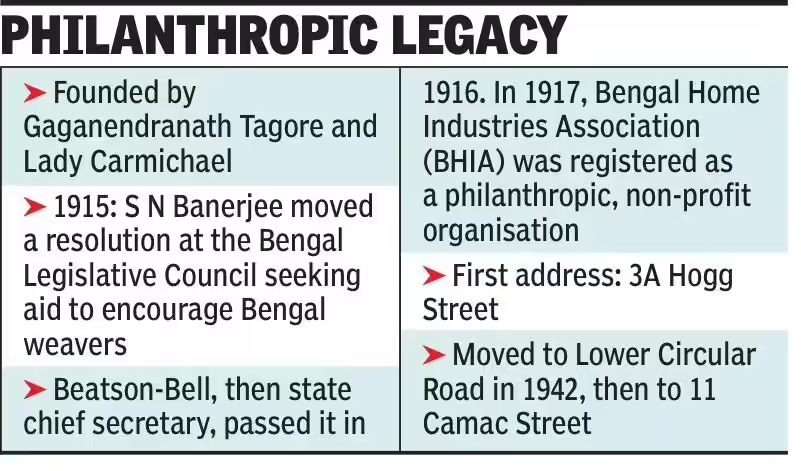
Kolkata: The Bengal Home Industries Association, founded by Rabindranath’s nephew Gaganendranath Tagore and Lady Carmichael (wife of the then governor), has turned 110, surviving the test of time, multiple changes of address and stiff competition from the cottage industry market across India and abroad.On Tuesday, to celebrate a century and a decade of its existence, Bengal Home Industries Association, said to be Bengal’s first handloom and handicraft store, organised a workshop of the artisans whose creations have been adorning its shelves. “I have never visited a store like this, which has been promoting West Bengal’s cultural heritage for more than a century,” said Barbara Voss, German consul-general in Kolkata. “I especially like the idea and the efforts so that the crafts and works of people of West Bengal do not die. Never before have I seen how artisans make it,” the consul-general said.Lady Carmichael, wife of the then governor, Thomas David Gibson-Carmichael, also supported the project, which explains the “Carmichael Duck” logo on the signature pottery or clay craft items on the shelves.G M Kapur, president, Bengal Home Industries Association, said, “BHIA, founded in 1916-1917 in Kolkata (then Calcutta) by leading citizens like Gangendranath Tagore and Lady Carmichael, aimed to revive and support cottage industries and Bengal handicrafts in Bengal, offering fair prices to artisans. All these years, BHIA has been promoting Bengal’s crafts, including handlooms, dokra, terracotta, and Tangail, Dhaniakhali, Phulia weaves from regions like Hooghly, Midnapore, Birbhum, Bankura and other Bengal districts. We are now into exchange agreements with Indian states and showcasing traditional art and craft.”The genesis of the heritage store, which showcases creations of artisans from all districts of Bengal, started in 1915 at the Bengal Legislative Council, when Surendranath Banerjea moved a resolution seeking aid to encourage Bengal weavers. Beatson-Bell, then state chief secretary of the British-ruled govt, passed the resolution in 1916. Subsequently, Bengal Home Industries Association was registered as a philanthropic, non-profit organisation. Housed at several rented places over the last 110 years, it has found its permanent home at the junction of Rashbehari Avenue and Lake Road.In the aftermath of the Partition of Bengal, which revealed the plight of the artisans like never before, on the sidelines of their respective professions, Surendranath as the founder of the Indian National Congress and Gaganendranath Tagore, whose creative contributions defined Bengal’s cultural history, agreed that something constructive needs to be done. On the same page was Abanindranath Tagore, pioneer and leading exponent of the Bengal School of Art.