








Hundreds of snakes are removed from backyards, homes and other urban areas and released into reserves and bushland each year, yet little has been known about what happens to them afterwards. Since 2021, the Canberra Snake Tracking Project, led by Australian National University researcher Gavin Smith, has tracked relocated snakes and resident ones. According to ABC News, early findings show that relocated snakes are very disoriented, move erratically, sometimes cross roads, face predators and lose weight and condition over time. One snake, Titan, travelled about five kilometres over 100 days to return to the general area near where he was caught.
How does snake translocation affect their movement and survival
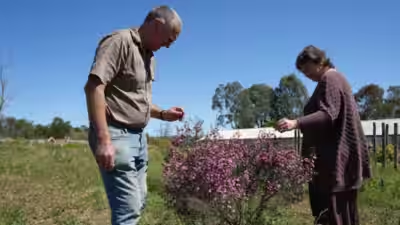
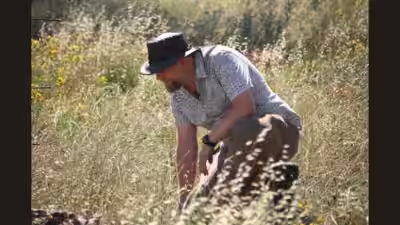
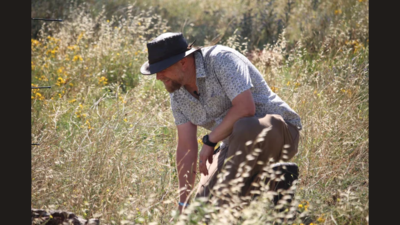
The Canberra Snake Tracking Project was started in 2021 by ANU Associate Professor Gavin Smith. Its purpose is to investigate the effects of translocation on snakes caught in urban areas. Much of the fieldwork takes place at the Ginninderry Conservation Corridor on the outskirts of Canberra. The report describes a morning there when it was already 30 degrees just after 10 am, and researchers followed a soft beeping from a radio transmitter to a log where Bandit, an eastern brown snake fitted with a tracker, was sheltering from the heat.The team follows two groups: snakes caught in Canberra homes and backyards and then relocated into reserves, and snakes that already live in those reserves. Comparing the groups lets the researchers examine differences in movement activity and survivorship, as well as changes in body condition over time. The work is supported by volunteers. One of them, John Shelton Agar, has tracked for 18 months and told ABC News that it is not often you see the tracked snakes, although you might see other snakes that carry no tracker.
Why do relocated snakes struggle to find their way home
The initial findings show relocated snakes move in more erratic and unpredictable ways than resident snakes. The report adds that they face a much higher burden of risk after being moved out of their home ranges, where they have an acute awareness of where key resources are. ANU PhD student Hannah Gerke told ABC News that the translocated snakes are “very disoriented”, and compared their behaviour to that of a lost person trying to work out how to navigate an unfamiliar place.Ms Gerke explained that these snakes are trying to find their way home, and so spend much more time moving on the surface than they normally would. According to ABC News, she said this exposes them to risks such as predators, and that they sometimes cross roads. The report quotes Dr Smith as saying the common assumption is that snakes adapt quickly, are resilient and can make use of anywhere, but that the project is finding this is not the case.
How does snake relocation affect their ability to hunt and survive
Two individual snakes that show the contrast. Titan was caught in the Canberra suburb of MacGregor and released into the Ginninderry Conservation Corridor. Over 100 days, he travelled about five kilometres, passing through a new suburb development and reaching the general area near where he was first captured. He is the only translocated snake to attempt and complete such a journey, and the team wants to understand what prompted him to navigate back and how he managed it. Kawase, a resident male, was different: ABC News says his movement patterns were stable and fairly predictable over time, and he used only key parts of his home range.The translocated snakes lose significant body weight and condition over time because they move more and struggle to hunt as effectively. Ms Gerke told ABC News that the snakes arrive in the project very healthy and, by the end, are not looking good, and she described the decline as sad to see. ABC News notes that this is a key insight into the impacts of translocation.
Why is human-snake conflict increasing in Australia’s growing cities
Dr Smith asked whether moving snakes is really working, and whether it serves the interests of the animal or only those of the homeowner. The report states that as Canberra and other Australian cities expand and become more populated, conflict between snakes and humans will keep increasing. Ms Gerke said Canberra, with its growing urban area, is one of the best places in Australia to research human-snake conflict.The ANU researchers hope the findings lead to a better understanding of how important snakes are to the ecosystem, in Canberra and across the country. Dr Smith said that although some local species are highly venomous, snakes are generally timid, sensitive and secretive, and keen to avoid confrontation with people and pets. Ms Gerke described snakes as “underdogs” and said they deserve respect, not necessarily fear. The report adds that the data will be compiled over the coming months, with findings due to be published later in the year.