









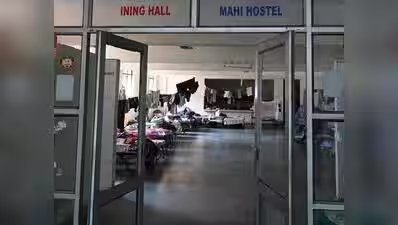

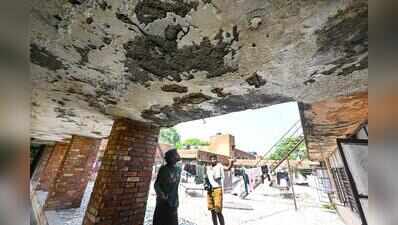
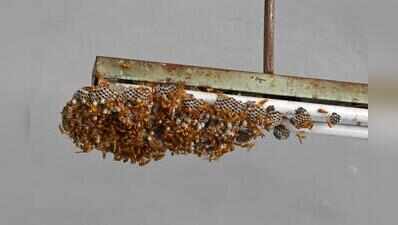
New Delhi: Folding beds with thin cotton mattresses, students sleeping in rows in a packed hall. Clothes hanging from makeshift ropes strung across the room. Suitcases, buckets and personal belongings squeezed into whatever little space is left around the beds. There are no almirahs, no study tables and no washroom around.This is what a new student’s first few weeks at Jawaharlal Nehru University (JNU) can look like.Newcomers at the university are being housed in messes and kitchens converted into makeshift common dormitories — arrangements that have effectively become permanent amid a shortage of hostel rooms. For many, these spaces remain home for months and, in some cases, an entire semester before they are allotted a hostel room.During a recent spot check, TOI found such arrangements at Mahi-Mandavi and Chandrabhaga hostels. At Mahi-Mandavi, the mess hall, including the kitchen area where food is prepared, has been turned into a dormitory. Beds occupy the space meant for meals, while clothes hang across the room and belongings are stacked beside them. At Chandrabhaga, a mess has similarly been converted into a dormitory for female students, with beds lined up across the hall.Students said similar arrangements exist in several other hostels, with students from different batches allotted beds until a regular room becomes available. The wait, they said, can range from a few days to six months.A postgraduate student from Varanasi, sitting on his bed with his backpack still on his shoulders after completing his admission formalities, said: “I just arrived on campus, completed the formalities and was sent here to stay. I didn’t expect this kind of facility in JNU. I am disappointed, but I have no option but to adjust. Rooms outside are very expensive.”He had left some of his suitcases at a friend’s hostel room because, he said, “there is no place to keep them here and I fear my belongings may be stolen.”An undergraduate student from Madhya Pradesh, who had spent weeks in the mess, said: “There were no rooms available, so they sent me here. Seniors and officials have told me it can take a semester also. It depends on when a room gets empty.”Both students did not wish to be identified, fearing it could affect their accommodation.JNU lists 19 hostels or hostel complexes under its inter-hall administration, with a total capacity of 5,500. Its latest NIRF submission records 7,807 students across UG, PG/integrated PG and PhD programmes. While not all students require hostel accommodation, the figures underline the pressure on residential facilities.Senior students who have lived in the messes jokingly call the experience a “test” — a lesson in how to survive. “For a new student here, the first challenge is not finding a classroom or a library seat, but finding somewhere to sleep,” a resident said.Getting a room, however, does not necessarily end the problems.In hostels checked by TOI, rooms shared by multiple students showed seepage, damaged plaster and cracks, while washrooms had broken fixtures and damp ceilings. At Mahi-Mandavi, peeling plaster and exposed sections were visible across corridors, windows, balconies and common areas, with rusting reinforcement steel showing through. Students pointed to portions they said had fallen, particularly after rains.An official confirmed that rooms where severe seepage was found had been closed and declared unfit for living, and said an infrastructure audit of the hostel is planned.The deterioration extends beyond the hostels. At Teflas, which houses the students’ union office and the old Teflas canteen, TOI found loose ceiling plaster and rusting fans and tube-light fittings. The drama room, once used for nukkad nataks and rehearsals, had a large beehive, raising safety concerns, while broken window panels at the tennis court allowed pigeons into the building.Even newer accommodation is showing signs of wear. At Barak hostel, TOI found peeling wall putty and seepage marks. Students said its mess is yet to become operational, forcing residents to depend on nearby messes.The concerns come against the backdrop of JNU’s ageing residential infrastructure. In 2025, TOI reported that an university panel flagged CPWD for slow and poor-quality hostel repair work despite crores being spent. It reviewed works under a Rs 56-crore UGC grant and approved another Rs 13.6 crore for urgent repairs.University officials acknowledged that several hostel buildings are old and need repairs, but said the university currently does not have sufficient funds to address all requirements.TOI contacted dean of students Sudhir Pratap Singh for details of the latest safety audit, steps being taken on hostel infrastructure and funds available for repairs. Queries on the last and next structural audits and the latest repair funding remained unanswered till publication.