









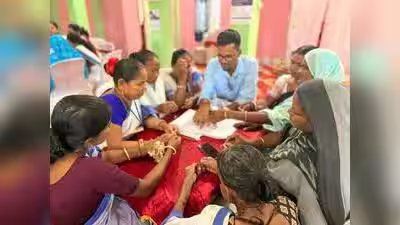
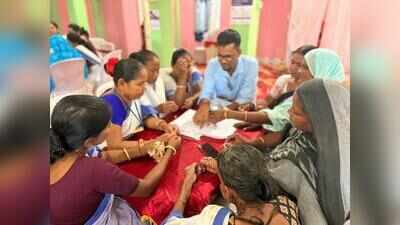
Guwahati: Around 100 accredited social health activists (Ashas) are helping design AI tools to strengthen cervical cancer screening and counselling in rural Assam.The George Institute for Global Health India, in collaboration with Cachar Cancer Hospital and Research Centre (CCHRC), Assam, held a two-day co-design workshop in Silchar that concluded on Thursday.Ashas’ inputs will shape an AI-enabled training platform and multilingual voice chatbot. The content will undergo clinical review and repeated testing with ASHAs before rollout.Dr Anita Gadgil, principal investigator of the project and co-director, WHO Collaboration Centre for Emergency, Critical and Operative Care, said, “This workshop starts with a simple principle: technology for Ashas should be designed with Ashas. Their experience of explaining screening, responding to concerns and finding answers in real time will guide the language, content and functions of this AI platform. We aim to develop clinically validated support that fits their work, rather than adding another digital burden.”The workshop brought together Ashas, doctors, trainers, programme coordinators, researchers and technologists. Participants discussed challenges in counselling women, explaining screening procedures and connecting them to care.The Ashas reviewed 155 common questions on cervical cancer and screening and used a bindi-based voting system to identify the issues they encounter most often among women, husbands, families and others in the community. The findings will inform a chatbot knowledge base combining priority health information with practical questions raised during household visits.“The workshop is part of a three-year pilot study called Leveraging Artificial Intelligence for Strengthening Cervical Cancer Screening Through Capacity Building, funded by the Indian Council of Medical Research (ICMR). Running from Nov 2025 to Nov 2028, the project aims to build and test an AI-based learning platform for Ashas, along with a chatbot that can answer questions by voice in multiple languages,” read a release issued on Thursday.The workshop also assessed Ashas’ digital skills. While younger and middle-aged workers said they regularly used mobile phones for reporting, communication and accessing information, some older Ashas found digital tools and technical language more challenging but were willing to learn.One participating Asha said, “Even the questions about cervical cancer — what is important and what is not — were explained through an exercise using bindis. It felt like a fun and interactive way of learning, almost like a game.”