








Ghaziabad: Sanjay Kumar was headed home to Lohiya Nagar from Meerut on Aug 25 when a kite string that he could barely spot slit his hand near Harmukhpuri Colony. Left bleeding profusely, Kumar lost control of his bike, which skidded and fell on the road. Passersby later took him to hospital for tertiary care. A week before that, on Aug 14, 25-year-old delivery agent Raviraj was killed on the Delhi-Meerut Expressway near UP Gate as a kite string slit his throat.In both cases, the kite strings, or manjhas, were the same — made of nylon and coated with glass powder.Commonly called Chinese manjha, these strings have been banned by courts, National Green Tribunal and various govt orders over the danger they pose to motorists and birds. Yet they continue to be sold openly in several parts of the city, including Khoda, Pratap Vihar, Vijay Nagar and Muradnagar, and on e-commerce platforms and social media under aliases such as Monokite, Cobra and Monofiled.A review of online listings by TOI found that the glass-coated manjha reels were selling for anywhere from Rs 600 to Rs 3,000, mostly through private sellers offering cash on delivery straight to the buyer’s door. Many of these sellers have anonymous social media profiles, where they post videos of fresh reels and share screenshots of buyers praising the string’s sharpness. One listing described its product as “super sharp, father of Chinese manjha sky king, strong grip, zero slip,” with the tagline “yeh hai original janwar” repeated to underline its lethal edge.
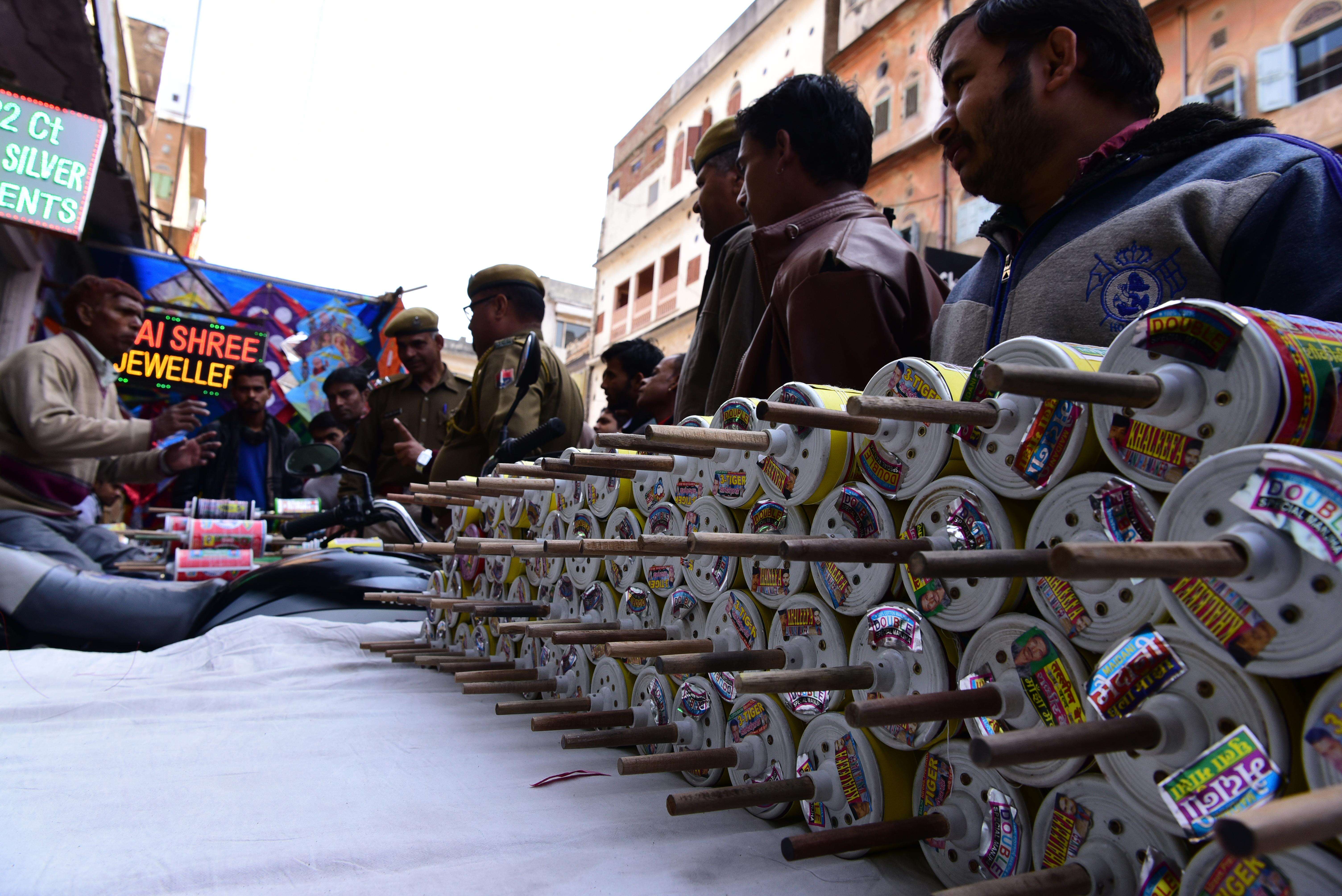
Despite Delhi High Court ban, Chinese ‘manja’ being sold by shopkeepers
When TOI approached a kite-string seller in Delhi Gate area, he denied dealing in Chinese manjha at first. Moments later, he asked how many rolls were needed. He said his stock cost Rs 550 to Rs 2,000, and that anyone buying the cheaper string had to take at least five rolls. Delivery within Delhi-NCR cost an extra Rs 250, he said, though buyers could also collect the string in person. He also warned that if the buyer turned out to be a police informant, the consequences would be severe.In Delhi’s Sadar market too, the trade runs on trust. When a TOI staffer asked one shopkeeper for the banned string without offering a reference, he was turned away and told the shop stocked nothing illegal.
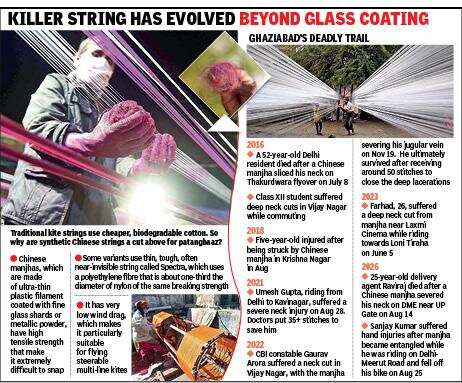
According to traders, kite and manjha prices usually spike around Makar Sankranti, Republic Day, Independence Day and Raksha Bandhan — the peak kite-flying season when the sky is clear and there is a steady draft. While a Monokite string usually sells for Rs 400-800, a Monofighter fetches Rs 800-1,500, Allout Rs 400-500 and Cobra Rs 1,000-1,500. The costliest variant, Monofiled, sells for Rs 3,000.What’s the drawWhile a traditional Indian manjha, cotton thread coated with powdered glass, can cause minor cuts but breaks down naturally, a Chinese manjha is built differently, spun from synthetic nylon or plastic fibre and coated with glass or metallic powder, which makes it sharper, tougher and far slower to decay.Left stretched across roads, trees and electric poles long after a festival ends, the thin, near-invisible string can become a hazard that outlives the season that produced it. At speed, it can wrap around a rider’s neck or face, tearing deep wounds and, at times, cutting the throat outright.Some traders also use a high-strength, low-stretch synthetic fibre called Spectra because it is very thin — about one-third the diameter of a nylon line with the same breaking strain — yet strong and creates less wind drag compared to nylon or cotton strings.Spectra or glass-coated kite strings appeal to flyers simply because they are harder to snap in a duel, giving an edge in the cut-throat sport of patangbaazi, say sellers.Rules tightenedUnder Section 15 of Environment (Protection) Act, 1986, anyone caught manufacturing, selling, storing, or using banned synthetic or glass-coated kite strings, like Chinese manjha, can face up to five years in prison, a fine of up to Rs 1 lakh, or both. Violators can also face up to 3 years in jail, a fine of up to Rs 10,000, or both under BNS Section 125 for negligent acts that endanger human life or public safety.Earlier this year, chief minister Yogi Adityanath directed officials to treat any death caused by banned Chinese kite strings as murder. He also ordered strict surveillance of online platforms, social media groups and informal channels through which the banned kite string is allegedly being sold.In July, UP govt informed the Lucknow bench of Allahabad high court that it was in the process of introducing a new legislation titled the Uttar Pradesh Hazardous Manja (Prohibition of Manufacture, Sale and Use) Act to strengthen enforcement against the dangerous kite string.Gaurav Gupta of People For Animals said his organisation has supported more than 40 raids across Delhi-NCR over four years, working alongside police, with eight to nine raids completed so far this year. Investigations, he said, traced the supply chain to manufacturing hubs in Gujarat, Rajasthan, West Bengal and Rohtak in Haryana, from where small Delhi-NCR shopkeepers stock up.On May 25 this year, police caught a Delhi resident, Vaibhav, with 60 rolls of Monokite fighter string, who told investigators he had bought the banned rolls from Karan Nagar, a Rohtak resident Gupta described as one of the region’s major suppliers.
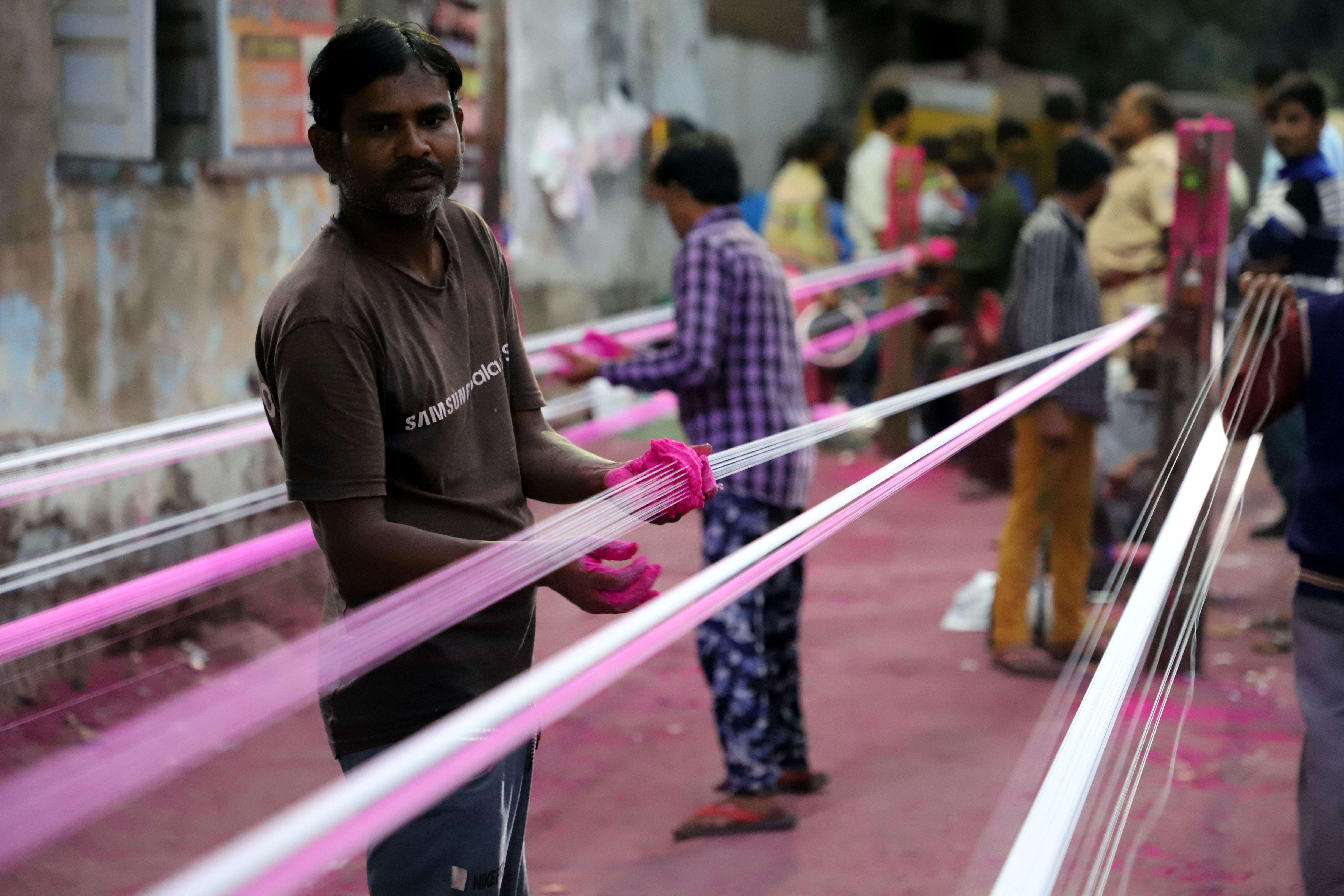
Under Section 15 of Environment (Protection) Act, 1986, anyone caught manufacturing, selling, storing, or using banned synthetic or glass-coated kite strings, like Chinese manjha, can face up to five years in prison
In Aug 2024, a tip about a warehouse led Delhi Police to Rohini, where they seized more than 12,000 rolls of Chinese manjha allegedly brought in from Gujarat and arrested a man named Dheeraj Nagar, Gupta said.Cops have run more than 15 raids in Ghaziabad over the past three years, with seven arrests this year across three operations. On July 29, police arrested three people, including a shopkeeper, after finding 522 rolls of Chinese manjha stored inside a house in Indira Market in Loni, following a tip about sales in Indirapuram market. On Aug 12, another raid on an Indirapuram shop yielded 167 rolls and three more arrests. On Aug 23, a 53-year-old man was arrested in Kaushambi with two rolls of the banned string.Additional CP Raj Karan Nayyar said there is “zero tolerance for Chinese manjha” and has directed all police stations, including beat officers, to act against sellers. “From July 29 to Aug 23, we arrested seven people in three different raids who were selling the Chinese manjha,” he said, adding that police have also engaged shopkeeper associations and trade bodies to flag illegal activities.