







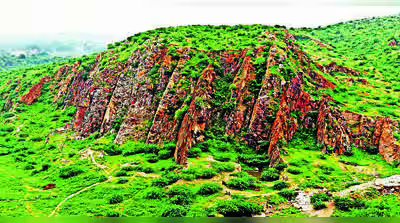
Gurgaon: What if a classroom had no walls, its ceiling was the sky and lessons came from identifying a bird’s call, spotting animal footprints or recognising a native tree? Haryana is looking to take govt schoolchildren beyond textbooks and into forests, wildlife habitats and nature trails through a proposed environmental education programme.Under the initiative, ‘Haritima: Hariyali Ka Rang, Haryana Ke Sang’, students of Classes VI to X will be taken on educational visits and one-day nature camps during the 2026-27 financial year. The programme aims to give children practical exposure to forests, wildlife, biodiversity and environmental conservation.Aravalis, with their rocky hills, scrub forests, seasonal water channels and rich biodiversity, could provide a particularly meaningful outdoor classroom. For children growing up amid the expanding urban landscape of the NCR, the hills offer an opportunity to learn about ecosystems that are often difficult to understand through textbooks alone.“A walk through the Aravalis could introduce them to the difference between a forest and a plantation, the ecological importance of scrub vegetation, the role of native trees and the wildlife that survives in fragmented habitats close to some of India’s fastest-growing urban centres,” said Raj Kumar, conservator of forests, south Haryana.The landscape could also help children understand the links between forests, water and urban survival. Aravalis and their natural drainage systems play an important role in the region’s ecological balance. Students could learn how vegetation and hill systems contribute to groundwater recharge, how wildlife depends on connected habitats and how mining, construction and urban expansion affect these ecosystems.Aravali Biodiversity Park in Gurgaon, developed on a former mining site, could be one of the locations for such learning activities. Its restoration offers an opportunity to explain how degraded landscapes can be revived and why native vegetation matters, officials said.The initiative also comes amid growing pressures on the Aravalis from urbanisation, mining, encroachment, habitat fragmentation and invasive species. Familiarising children with these landscapes could help them understand both their ecological value and the threats they face.To conduct the activities, the department also plans to develop a pool of master trainers with practical knowledge of forestry, wildlife, trees and plants, birds, biodiversity and conservation. They will accompany students on nature walks and guide them through educational activities.Haryana has drawn inspiration from Madhya Pradesh’s Anubhuti programme, which has turned forest visits into a structured environmental education exercise. Launched in 2016, the programme takes schoolchildren into forests for guided nature walks, biodiversity identification and interactive conservation activities.During 2025-26, Madhya Pradesh organised 938 nature camps, reaching 1,15,949 govt school students and 5,573 teachers. Children and teachers learn to identify trees, birds and animal footprints, understand forest ecosystems and engage with subjects such as wildlife conservation and human-wildlife coexistence.The programme shows how forests can become learning spaces through sustained engagement, trained master trainers and the participation of frontline forest personnel, rather than serving merely as destinations for occasional school excursions.In Haryana, divisional forest officers are currently identifying suitable locations for the activities. These could include eco-tourism sites, forest areas, nature education centres and wildlife sanctuaries.