









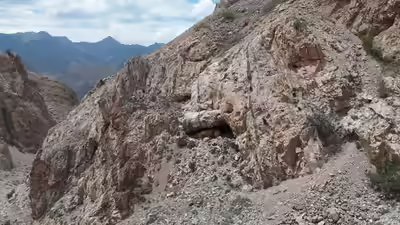
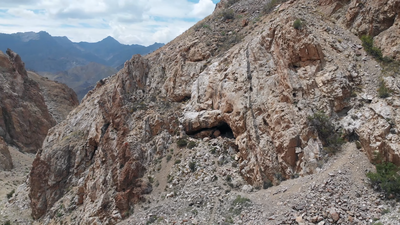
U.Sudhakarreddy@timesofindia.comHyderabad: Skeletal remains recovered from a cave in Ladakh have yielded the first ancient DNA evidence of the varied populations that moved through the high-altitude region during the Middle Ages, revealing maternal genetic links to East Asia, Central Asia and South Asia.Scientists from city-based Centre for Cellular and Molecular Biology (CCMB), Birbal Sahni Institute of Palaeosciences, Lucknow along with researchers from institutions across the country and Archaeological Survey of India, reconstructed six complete mitochondrial genomes from seven skeletal remains found in the Old Lady Spider cave at Chitkan village in Kargil.Radiocarbon dating placed the individuals between AD 536 and 585. The genetic evidence indicates that most were migrants or had maternal ancestry connected to distant regions, while one individual appeared to have deep local roots.The study, ‘The Old Lady Spider Cave Skeletons in Ladakh Have Diverse Maternal Genetic Origin’, was published in the journal ‘iScience’ on June 19.Cave used by people of varied ancestryThe Old Lady Spider cave, also known as the Lady Spider cave, is believed to have served as a dwelling, rest stop or landmark for caravan traders travelling through Ladakh. Located between the Karakoram and Himalayan ranges, the region connected South Asia with East and Central Asia through routes associated with the Silk Route.The researchers — Lomous Kumar, Richa Rajpal, Aparna Dwivedi, Pankaj Kumar, Nagarjuna Pasupuleti of CCMB, Sachin Kumar, Sonam Spalzin, Stanzen Rabyang and lead contact Niraj Rai — found that the people who occupied the cave did not belong to a single homogeneous population. Their mitochondrial DNA, inherited through the maternal line, represented lineages associated with several regions.One individual carried the C4a1 lineage, linked to populations in Siberia and China. The researchers said this lineage could reflect movement along the Silk route. Another carried the H2a1a lineage, indicating a connection with Central Asia, particularly Tajikistan.The U7a lineage identified in a sample showed links with the Hazara population of Pakistan and Afghanistan. The M52 lineage clustered with North Indian Muslim populations, although some analyses also indicated a possible Southeast Asian connection.The results point to multidirectional migration rather than movement from a single source. The cave appears to have brought together people with maternal ancestry connected to East Asia, Central Asia, South Asia and areas now forming parts of Pakistan and Afghanistan.One individual had deep local rootsWhile most of the analysed individuals showed signs of migrant ancestry, sample LD38, belonging to the M65a haplogroup, was identified as a predominantly local resident. The lineage had ancestral roots in the region extending back about 9,657 years.The contrast between the individual and other cave occupants indicates that locally rooted communities interacted with people arriving through long-distance migration and trade networks.The study also found that the ancient individuals lacked some mitochondrial lineages common among present-day Ladakh populations. These included the Tibetan A21 and East Asian M9 haplogroups.According to the researchers, their absence suggests that parts of Ladakh’s present genetic composition might have been shaped by migrations that occurred after the 6th century. Modern genetic patterns, therefore, might not fully represent the population structure of the region during the Middle Ages.The findings also suggest an amalgamation of Buddhist, Muslim and Central Asian cultural influences, reflecting the movement of people through the Trans-Himalayan Corridor.Ancient DNA fills gap in archaeological recordArchaeological evidence, including petroglyphs and inscriptions, had earlier pointed to settlement, trade and cultural change in Ladakh. However, genetic evidence from its ancient inhabitants was not available.Previous studies had largely examined present-day populations, whose genetic composition has been shaped by later mixing and genetic drift. The new study sought to overcome this gap by directly examining DNA preserved in ancient human remains.The scientists used ancient DNA analysis to reconstruct six high-quality mitogenomes from the seven skeletal remains. They employed phylogenetic and evolutionary analyses, including Bayesian evolutionary analysis, Maximum-Parsimony trees and haplotype networks, to determine maternal relationships and estimate when the lineages diverged.Bioinformatics pipelines, including EAGER, were used to process the raw genetic data. Schmutzi was used to estimate contamination and verify that the mitochondrial DNA was ancient.The age of the remains was established through accelerator mass spectrometry radiocarbon dating of bone samples at the Isotope Laboratory of the Birbal Sahni Institute of Palaeosciences.The study provides genetic support for Ladakh’s historical position as a meeting point of populations moving across the Himalayan region. It also offers the first ancient DNA evidence to complement archaeological records of migration and cultural exchange along the Trans-Himalayan Corridor.Apart from CCMB and Birbal Sahni Institute of Palaeosciences, Lucknow, researchers from Academy of Scientific and Innovative Research, Ghaziabad; Inter University Accelerator Centre, New Delhi; National Centre for Biological Sciences, Bengaluru; Archaeological Survey of India’s Mini Circle in Leh; and Sonam Norboo Memorial Hospital in Leh were part of the study.