









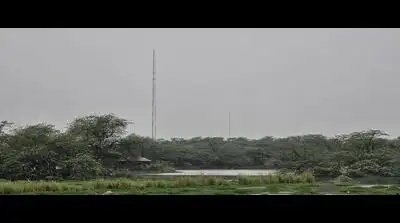
Gurgaon: Work has begun on Haryana’s first technology-driven bird census at Sultanpur National Park, with two watchtowers already equipped for AI cameras that will monitor bird movements, migration patterns and habitat changes across the wetland.The project marks a shift from traditional bird counts that rely on observations made over a few hours or a day. Wildlife officials said the new system will generate continuous data through cameras mounted on watchtowers and drone surveys conducted across the sanctuary. It is expected to be operational before peak winter migrants arrive at the Ramsar site.Gurgaon divisional forest officer (wildlife) RK Jangra said the watchtowers, strategically located to overlook both water and terrestrial habitats, will serve as platforms for the AI-enabled cameras. “The drone surveillance will help enable a more accurate census,” he said.Sultanpur attracts more than 250 bird species annually, including over 100 migratory species — among them northern pintails, bar-headed geese, shovelers, spoonbills, storks and several raptors.Recent counts have shown fluctuating numbers. The 2025 Asian Waterbird Census recorded 2,593 migratory birds from 48 species, compared with 2,686 birds from 43 species in 2024 and 9,026 birds from 51 species in 2023. Officials said the new system will help build a long-term database to assess how climate variability, shifting rainfall patterns and habitat pressures are influencing bird populations. It will also allow managers to detect habitat stress and environmental threats earlier.From Oct, the census will track year-on-year shifts in species composition and numbers to fine-tune habitat management, water levels, vegetation and visitor zones.The initiative comes amid growing concern over changing migration trends. Delayed monsoons, warmer winters, shrinking wetlands and rising human disturbance are increasingly being linked to shifts in the timing and movement of migratory birds across north India.Bird expert Pankaj Gupta, who led this year’s Big Bird Day at Sultanpur, welcomed the move but said monitoring should extend beyond the park. “This is a good initiative, but the area needs to be expanded to Chandu as well to understand migration patterns more precisely. Technology can help authorities respond before it’s too late. It will be helpful to birders if the department can share live streaming — if we can get access, we can also analyse migration patterns and other issues,” he said.