








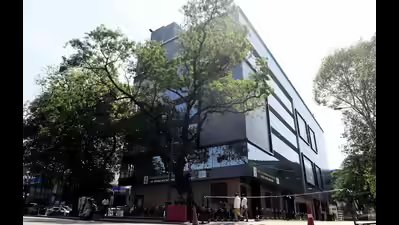
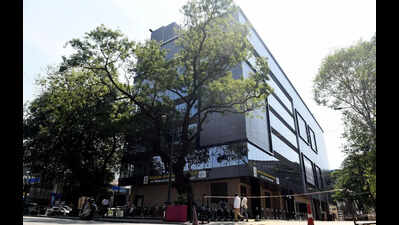
Chennai: The multi-level car parking facility at T Nagar, inaugurated in 2021, is set to be revamped by Greater Chennai Corporation (GCC) so that all designated floors can be used with revised parking charges. The maintenance work at the facility will include replacing ropes and carrying out engine work.GCC commissioner Dr G S Sameeran, who inspected the facility on Sunday, told TOI that a tender has been floated following criticism that the maintenance was poor and the facility was underutilised as some floors became defunct. It also failed to provide a long-term solution to the on-street parking at T Nagar.Although the automated parking structure was designed to accommodate 222 cars and 513 two-wheelers, only a portion of the facility is now in use. Once the work is completed, the six upper floors will be designated for cars, while two-wheelers can park in the two basement levels and the seventh floor.“To improve parking infrastructure and traffic congestion as well as pedestrian safety, two new multi-level parking facilities at Tiruvottiyur and Kodambakkam are coming up,” Sameeran added.. These two facilities are coming up under a public-private partnership model.“The one in Tiruvottiyur will come with a theatre, while the one in Kodambakkam will have a shopping complex. Both will generate revenue for the civic body,” an official said.Experts, however, say their success depends on-street parking management in the surrounding areas, to be implemented as part of a broader area-level parking management strategy adopted by Chennai Unified Metropolitan Transport Authority.“Parking structures alone are unlikely to reduce on-street parking unless accompanied by strong enforcement against parking in no parking zones, and improved last-mile connectivity. The aim should be to manage parking demand and ensure more efficient use of the limited street space,” said Shivani B, senior associate, Institute for Transportation and Development Policy India. “When planned well, these facilities can help reduce road encroachments, improve traffic flow, and create more space for walking, public transport and other people-centric improvements,” she added.