









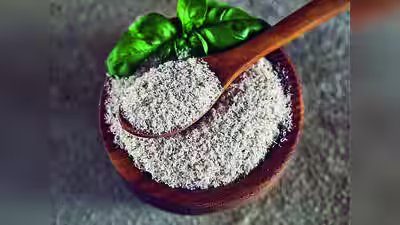
Jaipur: After losing the Geographical Indication tag for cumin to Gujarat despite being the largest producer, Rajasthan’s isabgol (psyllium husk) processors fear a similar setback if the state govt does not intervene over the levy of 5% GST.The Rajasthan Isabgol Processors Association (RIPA) Thursday said they have written to the chief minister urging him to raise the issue at GST Council meeting on Sept 12.“The tax differential is diverting isabgol trade to Gujarat, where raw isabgol seeds have been classified as ‘fresh’ and exempt from GST, while Rajasthan’s Authority for Advance Ruling (AAR) has held that seeds stored in mandis or warehouses can be treated as ‘dried’ and attract 5% GST,” said Vibhor Goyal, general secretary of RIPA.The contrasting rulings came within two months. Gujarat’s AAR issued its ruling on May 29, while Rajasthan’s AAR ruled on July 27. Processors contended that the distinction was artificial since isabgol seeds naturally absorb moisture and remain raw without any artificial drying process.The industry’s concern is rooted in Rajasthan’s recent gains in processing. The state accounts for nearly 75% of India’s isabgol production, with around 45,000 of the estimated 60,000 farming households dependent on the crop. Gujarat once handled nearly 90% of isabgol processing, but Rajasthan has gradually developed its own ecosystem, with 18 processing units now operational.RIPA president Sandeep Kumar said the 5% GST could undermine this progress by encouraging traders to procure and route the commodity through Gujarat. Farmers in Rajasthan, he said, would also face additional transportation costs if they have to move produce to Gujarat to avoid the tax.Processors said their repeated requests to meet Principal Commissioner (GST) Harmeet Singh Narang were declined without giving them a chance to explain the issue. RIPA has now decided to move Appellate Authority for Advance Ruling to seek a uniform zero-GST regime, arguing that different tax treatment for the same commodity across states undermines the principle of “One Nation, One Tax”.