





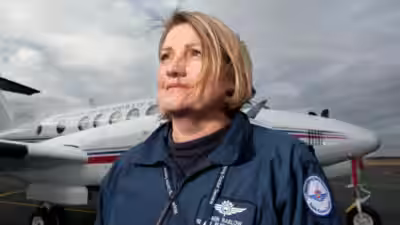
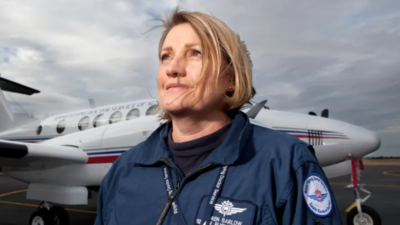
We often associate hospitals and treatment with doctors. While they are the heroes who help us recover, we sometimes forget the other people who make our experience a little easier. Nurses work day and night, often putting their own needs aside to care for patients, comfort worried families and help with the little things we might otherwise overlook. They are there during some of the most frightening and vulnerable moments of our lives, and their kindness can stay with us long after we leave the hospital.One such unsung hero is Australian nurse Karen Barlow, who is preparing to retire after spending 27 years with the Royal Flying Doctor Service (RFDS), bringing medical care to people living in some of Australia’s most remote communities. While her career has taken her across thousands of kilometres, introduced her to royalty and given her experiences most people can only imagine, she says it is not the grand moments she remembers most. Instead, it is the sight of parents holding their sick children’s hands, reassuring them through difficult journeys.
A career that took nursing to the skies
For most nurses, a typical day might involve working in a hospital ward, attending to patients or helping doctors with treatments. But Barlow’s workplace was a little different. As a senior flight nurse with the RFDS, she spent nearly 3 decades providing medical assistance to people who could be hundreds of kilometres away from the nearest major hospital.The Royal Flying Doctor Service plays an important role in Australia, particularly for people living in rural and remote areas. When someone needs urgent medical attention and cannot easily reach a hospital, the service brings healthcare to them. Its work includes emergency air retrievals, remote medical clinics and telehealth services, ensuring that distance does not become a barrier to receiving treatment.Barlow was a founding member of the service’s Dubbo base in New South Wales. Before joining the aeromedical team, she had already built experience in midwifery, acute care and emergency medicine. Having grown up on the land herself, she understood the realities of life in rural communities and the importance of having medical assistance close at hand.The scale of the service is quite remarkable. The NSW division operates 14 aircraft, covering approximately three million kilometres every year and providing around 90,000 instances of care through its various services. Across Australia, RFDS crews made contact with approximately 345,000 patients in 2023-24, with around 33,000 people flown for treatment. Barlow is one of the nurses who have contributed greatly to this cause.
The moments that stay with us
When someone spends 27 years in a profession, they are bound to have some interesting stories. For Barlow, some of her most unforgettable memories have little to do with medical emergencies or the number of lives she may have helped.One incident involved a little boy who had broken his arm after jumping on a bunk bed with his brothers. He was travelling with his foster father from their remote town to Dubbo for treatment. The family was in the process of adopting him, and during the journey, Barlow noticed something that moved her deeply.The father leaned over and held the little boy’s hand throughout the flight. The child, in turn, could not take his eyes off the man sitting beside him. It was a simple moment, but one that said so much about love, trust and the feeling of being safe with someone.For Barlow, watching the two together was beautiful. After all, sometimes the most reassuring thing a frightened child needs is not a complicated explanation or a grand gesture. It is simply knowing that someone they love is right there.Another memory involved a young girl from a rural community who suddenly fell seriously ill. She had always been happy and healthy, but her condition deteriorated so quickly that she had to be placed on life support during a flight to Sydney.Her father struggled to make sense of how quickly everything had changed. He told Barlow that if someone had offered him a million dollars the previous day to bet that he would be in such a situation, he would never have believed it.It is difficult to imagine the fear that comes with watching your child become seriously ill, particularly when you are far from home and being flown somewhere unfamiliar for treatment. For families like these, the flight nurses are not just medical professionals. They are also the people offering reassurance when everything around them feels uncertain.These are the moments Barlow says she will carry with her as she steps away from the profession.
A few encounters with royalty
Of course, 27 years in the skies also came with a few rather unexpected experiences. Barlow has met royalty, not once but twice!During a 2012 visit to the Longreach base, she met King Charles and Queen Camilla, who were then the Prince of Wales and Duchess of Cornwall. The medical crew had been waiting inside a hot aircraft before meeting the royal couple and were understandably drenched in sweat by the time they stepped out.Queen Camilla even joked that she understood their discomfort, explaining that the humidity had been so bad that she had nearly needed to call the medical team herself. Barlow’s response was that they would certainly have come to her rescue!Six years later, she also met Prince Harry and Meghan Markle when the Duke and Duchess of Sussex visited Dubbo shortly after their wedding. Harry was particularly interested in understanding how the service operated and how it recruited its nurses.While meeting members of the royal family is certainly an unusual career highlight, Barlow’s heart seems to belong to the ordinary people she has encountered along the way.
A job built on trust and kindness
Leaving a profession after nearly three decades is never easy, especially when it has become such an important part of one’s identity. Barlow has described her work as the best job in the world, but she also understands the responsibility that comes with it.Flight nurses often meet people on what could be the worst day of their lives. Some patients have never even been on an aeroplane before, let alone experienced being flown to another city for urgent medical treatment. They are frightened, vulnerable and placing an enormous amount of trust in the people looking after them.For Barlow, being able to reassure them and make them feel better has been one of the most meaningful parts of her work.As she prepares to retire, there will undoubtedly be plenty of people who remember the nurse who helped them through a frightening journey. Perhaps some will remember her medical expertise, while others will remember a comforting conversation or a reassuring smile.But her own memories will remain with those families, too. The father holding his foster son’s hand, the little girl fighting for her life and the countless ordinary Australians who came together to support one another.Sometimes, being a hero is as simple as showing up when someone needs you, holding their hand when they are scared and making an unfamiliar journey feel a little less frightening. After 27 years of doing exactly that, Karen Barlow may be leaving the skies, but the kindness she has brought into so many lives will continue to travel much further.