








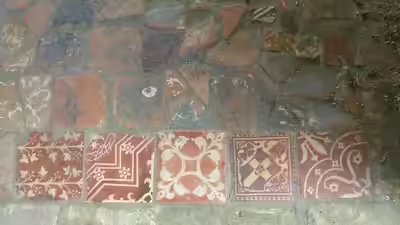
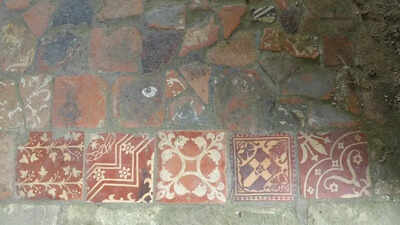
Not many people can boast about how a biscuit tin led to an ethical awakening. Yet, there was one anonymous person from England whose metallic tin was carrying much more weight than the biscuits inside. For sixty years, a part of his house was storing a secret that contained items dating back to before his time. In this story, right out of the pages of a historical drama, is the former schoolboy who finally decided to make amends with his history by returning items he had illegally taken more than half a century ago.These objects were not simple rocks but well-preserved medieval floor tiles from the ruins of Wenlock Priory in Shropshire. When he was a young child exploring the premises in the 1960s, he observed the decorated ceramics and took them home as a souvenir. What seemed like an innocent childhood mistake turned into a burden of guilt that would persist for sixty years before he returned the stolen tiles to their rightful owner, English Heritage.The buried heritage of the Cluniac monksThere is no doubt that Wenlock Priory is an archaeological treasure trove steeped in history since its inception in the eleventh century. In returning the tiles, he restored some pieces of a puzzle that historians have attempted to reconstruct over many centuries. It was a significant religious establishment within an extensive network of monastic establishments. According to The Cluniac Sites in Europe, a project of the Council of Europe, Wenlock Priory was part of a massive network of over 1,000 locations spread throughout Europe, all tied to the Great Abbey of Cluny in France.Tiles can be seen as a window to the artistic criteria of the time in which they were produced. For example, during the medieval period, such floor decorations adorned the most important places in a monastery – the lady chapel and the high altar, whose geometric pattern and heraldic designs symbolised the status of the priory in the Cluniac Order hierarchy. By sending the stolen tiles back, the thief provided a much better idea of their relevance in relation to the general aesthetic principles of the order. Oddly enough, it was the storage in a box of cookies that saved the artefacts from weather conditions.
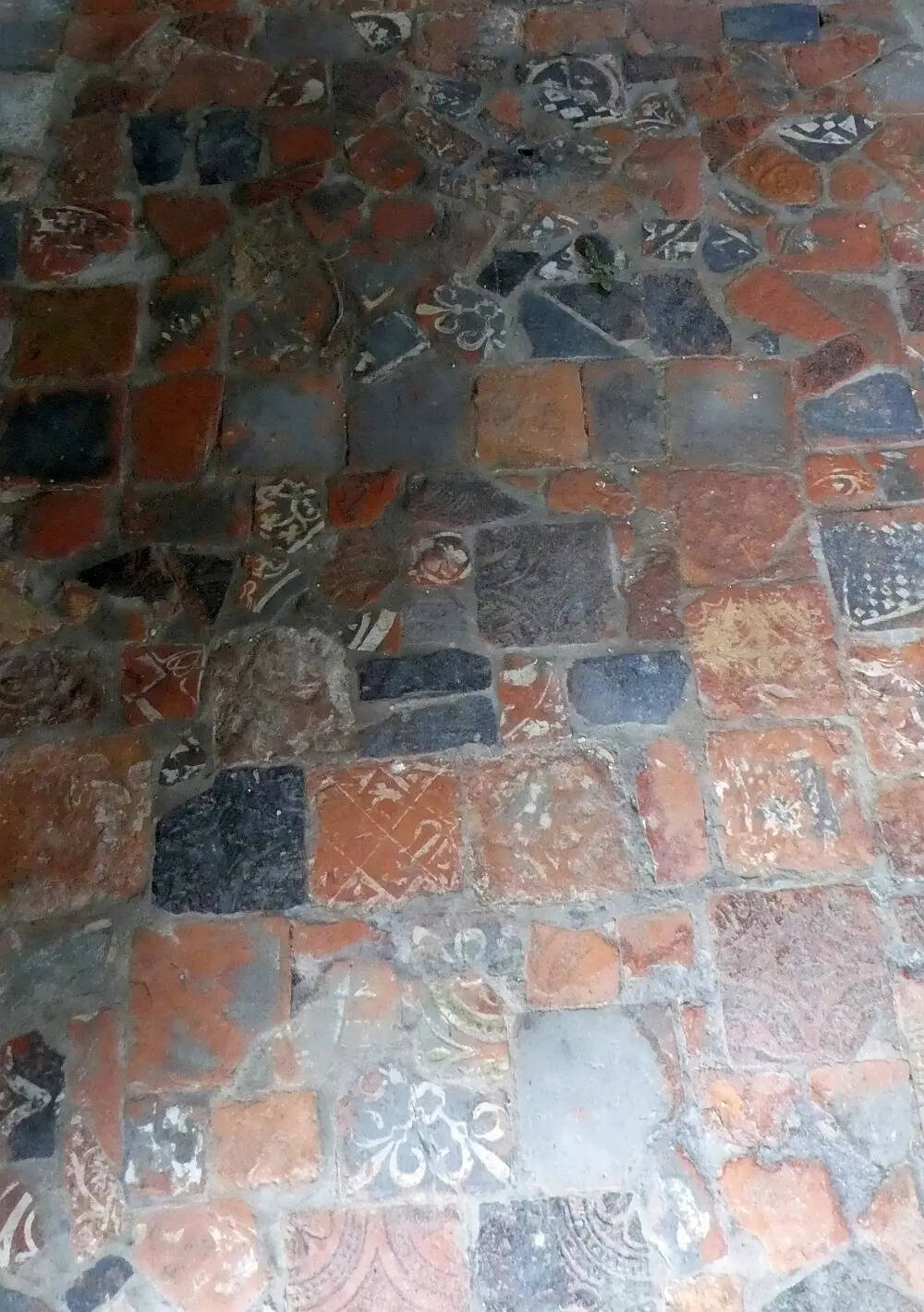
His act of repentance, driven by persistent guilt, has provided English Heritage with well-preserved artefacts, offering new insights into the history of Wenlock Priory and the Cluniac Order. Image Credits: via Wikimedia Commons
A lesson learned in modern timesThe restoration of the stolen tiles raised new questions regarding the protection of the common cultural heritage. The identity of the culprit remained unknown to everyone, but his gesture of repentance won him recognition from experts in this field. The explanation of English Heritage concerning Wenlock Priory states that the monument is considered to be under threat due to the fact that each tile and stone contains valuable historical information necessary to restore life, activities, and worship of the monks.The man who returned left a note, stating that he had intended to do so for years. There was a sense of relief on his part in knowing that the items had found their way back to their rightful place. The practice of return by mail or drop-off seems to be gaining popularity among people nearing the end of their lives as they try to alleviate their guilt. From pieces of the Parthenon to tiles from British priories, the weight of history becomes increasingly heavy the longer it remains in personal possession.The staff at English Heritage noted that the tiles are in remarkably good condition. Because they were kept in a dry biscuit tin, they avoided the erosion that many of the tiles still at the priory have suffered over the centuries. There is now a plan to study the tiles in detail to see if they match existing patterns found in the priory’s infirmary or the prior’s house. It is a rare case where a childhood mistake actually resulted in a well-preserved piece of history being saved for future generations to enjoy.The ruins of the Wenlock Priory continue to be an example of how medieval architecture can coexist with an oppressive burden of guilt to this day. Tourists come from far and wide to admire the high arched windows and cloisters, but there is another narrative in this place now. It demonstrates how even after the fall of civilisations and destruction of monasteries, a strong moral compass may last for half a century in a simple biscuit tin.