









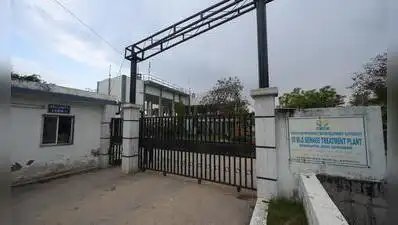
Gurgaon: Sewage treatment plants (STPs) act as the last barrier preventing untreated sewage from entering rivers, environmental experts have maintained. However, across Haryana, more than 2,700 samples of treated sewage — collected from STPs between 2021 and May 2026 — failed to meet prescribed water quality standards.This indicates that wastewater released into rivers and drains was repeatedly found to contain pollutants above permissible limits despite undergoing treatment. Among districts with identifiable records in an analysed dataset, Hisar recorded the highest number of failed samples at 183, followed by Gurgaon with 76 and Faridabad with 59.The analysis of monitoring records maintained by Haryana State Pollution Control Board (HSPCB) found that nearly one in every three treated sewage samples tested at STP outlets was categorised as “non-complying” before discharge. The records cover monthly laboratory testing of treated wastewater from STPs across the state. Palwal and Nuh also recorded a high proportion of non-complying samples despite fewer inspections, suggesting recurring operational issues at some treatment plants.Under the prescribed norms, treated wastewater should have biochemical oxygen demand (BOD) below 10 mg/litre, chemical oxygen demand (COD) below 50 mg/litre, total suspended solids (TSS) below 20 mg/litre, faecal coliform below 100 MPN per 100 ml, total nitrogen below 10 mg/litre and pH between 5.5 and 9.0. If even one of these parameters exceeds the prescribed limit, the sample is categorised as non-compliant.An environmental engineer of HSPCB said, “Repeated failures usually point to overloaded treatment plants, ageing infrastructure, inadequate maintenance, malfunctioning equipment or interruptions in biological treatment processes. During periods of heavy rainfall, many STPs also receive sewage volumes beyond their design capacity, reducing treatment efficiency .”The highest number of violations was recorded in 2022, when 646 outlet samples, accounting for nearly 44% of those tested that year, failed to meet discharge standards. Although compliance improved thereafter, the problem persisted, with 539 failed samples in 2023, 323 in 2024 and 485 in 2025. Monitoring till May this year has already recorded another 156 non-complying samples.A senior HSPCB official said, “Sewage treatment plants found violating discharge standards are directed to take corrective measures and remain under enhanced monitoring. Persistent violations can invite regulatory action to improve plant performance and ensure compliance with environmental norms .”Varun Gulati, an environmentalist, told TOI, “The purpose of an STP is not just to treat sewage but to ensure that water discharged into rivers meets environmental standards. Repeated non-compliance over several years indicates systemic operational failures rather than isolated incidents. Unless these plants consistently meet prescribed standards, investments in river-cleaning programmes will deliver only limited results.”The standards are intended to ensure that treated sewage is safe enough to be discharged into rivers, drains, ponds and canals or reused for irrigation and industrial purposes. The implications of these failures extend beyond the treatment plants. When treated wastewater fails quality standards, excess organic matter, suspended solids, nutrients and harmful bacteria continue to flow into natural water bodies.High BOD indicates that wastewater still contains substantial biodegradable organic matter. Once discharged, microorganisms consume dissolved oxygen while breaking down this waste, reducing oxygen levels in rivers and making it difficult for fish and other aquatic organisms to survive. Elevated COD suggests that significant quantities of chemical and organic pollutants remain in the treated water.Similarly, high TSS means excessive suspended particles continue to be discharged, making water turbid and causing sludge to accumulate in riverbeds. Elevated faecal coliform levels indicate contamination from human waste and the possible presence of disease-causing bacteria, viruses and parasites, posing health risks where polluted water is used downstream for irrigation or other purposes. Excess nitrogen can trigger algal blooms, degrade water quality and reduce dissolved oxygen, further damaging aquatic ecosystems.This is notable because Haryana has expanded sewage treatment infrastructure over the past decade as part of efforts to improve water quality in Yamuna and other river systems. Most treated sewage generated in the state’s urban centres eventually reaches Yamuna through a network of interconnected drains. Continued non-compliance therefore undermines river-cleaning efforts and limits the safe reuse of treated wastewater for agriculture, industry and groundwater recharge.