




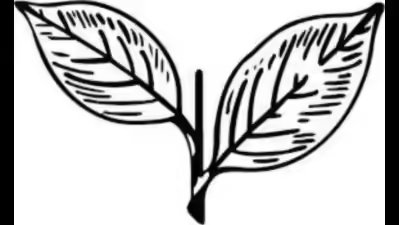

Chennai: A Y-shaped electric pole may blur into two leaves, a whistle may look like a road-roller, and a farmer may just end up ploughing into another party’s votebank. Voters are likely to face a baffling array of similar-looking party symbols on electronic voting machines, especially in constituencies such as Karur with more than 70 candidates.The lookalike symbols have sparked a host of complaints. Janata Party filed a petition in Madras high court saying NTK’s ‘farmer carrying a plough’ symbol was near identical to its ‘chakra haldhar’ (farmer within chakra). There are reports that TVK is unhappy that its whistle looks like a road roller listed among the free symbols meant for candidates of “unrecognized” parties.Some candidates use the similarity as a strategy. Independent candidate K Jeya from Madurai says she has opted for the Y-shaped electric pole symbol, which can be mistaken for AIADMK’s two leaves. It was allotted to the O Panneerselvam faction during the AIADMK split in 2016. “I’m banking on people mistaking the pole for the two leaves,” says the 49-year-old. “If there is too much happening in a small space, it can confuse the viewer,” says G G Ray, former professor at the Industrial Design Centre, IIT-Bombay.At a booth, voters may rely on cognitive heuristics (mental shortcuts based on recognition) to decide among candidates, says a professor at a govt-run design institute. “The brain relies on patterns and does not analyse each symbol. It only retrieves what feels familiar,” he says.In an EVM, symbols have to be recognised within a 2cm space, says the professor. “So, the design needs to be stripped of unnecessary detail. You don’t need to show the veins of two leaves or shading near rising sun. You only need outlines of shapes. Unfortunately, most election symbols are crammed with realistic detail. EVMs need to use professionally designed pictograms to avoid confusion.”The mind sees images as a recognizable whole and not as individual parts, he says. “When the parts are arranged in a familiar way, even if they are not meant to represent that object, the brain fills in the gaps and reinterprets them as such.”A study on ‘election symbols and vote choice’, which analysed TN election in 2016, 2019 and 2021, says that among the free symbols issued by EC, “candidates favoured symbols previously associated with political parties, or visually resembling those of existing parties”. “Of the top 20 symbols chosen by candidates, eight had a previous association with a political party or faction, or were thought to resemble a major party symbol,” says the study published in ‘Political Science Research and Methods’.