









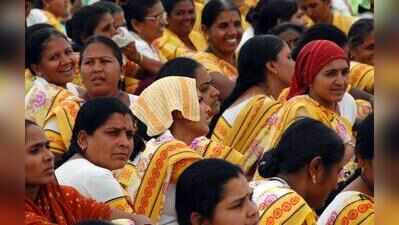
Pune: Women and child development minister Aditi Tatkare informed the legislative council that pending honorarium payments for anganwadi workers and helpers under the Integrated Child Development Services (ICDS) scheme have been cleared up to May. The minister attributed the recent delays to the rollout of a new centralised payment system.Responding to a starred question on Friday, Tatkare said the delay was linked to the mandatory implementation of the Centre’s SNA SPARSH digital platform, designed for centrally sponsored schemes.The issue was raised by legislators who alleged that the Centre’s share of the honorarium had remained unreleased for several months. They highlighted that in Jalgaon district alone, approximately 7,800 anganwadi workers and helpers faced severe financial hardship after going without pay for nearly two months. The members demanded the immediate clearance of all dues and a permanent mechanism to ensure timely monthly disbursements.Tatkare noted that Maharashtra has over one lakh anganwadi workers and helpers. Workers receive a monthly honorarium of Rs13,000, while helpers receive Rs7,500. Of this, the Centre contributes Rs4,500 for workers and Rs3,500 for helpers, with the state govt covering the remaining balance.The minister admitted that the transition to the SNA SPARSH platform—through which all funds for centrally sponsored schemes must now be routed—encountered technical and procedural bottlenecks during its initial phase.“Since ICDS is a centrally sponsored scheme, implementation through SNA SPARSH was made mandatory by the Centre. In the initial period, due to technical difficulties and the novelty of the system, payments were delayed,” Tatkare said. She assured the council that the state has since resolved these issues and released both the Centre’s share and the matching state contribution.However, Anganwadi unions remain critical of the govt’s handling of the transition. Representatives stated that many workers have been forced to visit govt offices repeatedly just to claim their rightful earnings.“These systems should have been tested and corrected before being rolled out. Workers should not be placed in a situation where they are left uncertain for months about when they will receive their payments,” said one Anganwadi worker.