








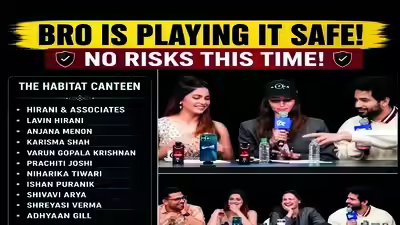
There was a time when a comedy show needed a mic, a stage and an audience. Today, it apparently also needs a small legal department. The revelation that India’s Got Latent reportedly has a battery of lawyers attached to it has prompted the usual lament: Has comedy become too cautious? Perhaps. But it also reflects the reality of creating entertainment in an era where a punchline can trigger FIRs, political outrage, police complaints and expensive court battles.If anyone thought this was an overcorrection, this week offered a reminder that it probably isn’t. A Public Interest Litigation before the Supreme Court, citing the viral ‘Rs 370 biryani’ controversy, has sought a comprehensive statutory framework to regulate stand-up comedy, podcasts, livestreams and user-generated digital content. The petitioner isn’t asking for criminal action against a comedian. Instead, the argument is that algorithm-driven virality has outpaced the law, turning a joke — or even an audience interaction — into a nationwide conversation that can affect dignity, public morality and constitutional rights. That is a remarkable shift. Not too long ago, comedians worried about hecklers. Today, they’re also expected to anticipate constitutional litigation. We’ve watched this evolution unfold for years. Controversies involving Vir Das and Munawar Faruqui, the backlash against various shows, and the legal scrutiny surrounding digital creators have all delivered the same message: if you’re going to push boundaries, expect someone to push back — often through the courts. What’s changing isn’t just the law; it’s the scale. A joke no longer dies in the room where it was told. It is clipped, algorithmically amplified, stripped of context, litigated on social media, and sometimes in actual courtrooms. The legal risk isn’t confined to what the comedian intended, but extends to how millions interpret, share and weaponise it. That’s precisely the concern raised in the latest PIL. Purists will argue that once every punchline has to survive legal vetting, comedy loses its bite. They’re not entirely wrong. Great comedy has always lived in uncomfortable spaces. But neither are the lawyers entirely wrong. In today’s climate, they’re less the villains, more the crash helmets. After all, comedians are no longer just performers with YouTube channels. They’re businesses with employees, sponsors, investors, streaming deals and nationwide tours. One poorly judged joke, or one viral clip taken out from its original context, can cost far more than a few bruised egos.So perhaps the funniest punchline isn’t that comedians now travel with lawyers. It’s that the legal disclaimer is increasingly doing more heavy lifting than the opening monologue. In India’s comedy scene, the standing ovation may still come from the audience, but the standing