








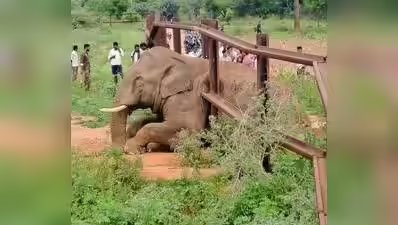
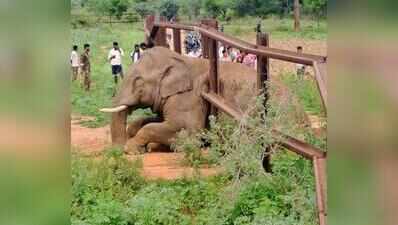
Bengaluru: What began as a routine journey back to the forest after a night of foraging in agricultural fields bordering the forest turned into a nightmare for a wild tusker on Wednesday morning near Arekoppa village in Kanakapura taluk of Bengaluru South (Ramanagara) district. Desperate to return home, the jumbo became helplessly trapped inside a railway track fence along the Cauvery Wildlife Sanctuary, leaving it stranded for hours and triggering a frantic rescue operation involving forest officials, veterinarians and gas-cutting technicians.Sources in the Cauvery Wildlife Sanctuary told TOI that the tusker had ventured out of the sanctuary under the cover of darkness and entered agricultural fields along the forest fringe in search of food. At daybreak, as the elephant attempted to retrace its path back into the sanctuary, it tried to squeeze through a narrow gap in the railway barricade—an opening commonly used by cattle grazing near the forest. However, for the tusker, the gap proved far too narrow.Jagannath N.H., IFS, Deputy Conservator of Forests, Cauvery Wildlife Sanctuary, said, “The elephant may have ventured out from the Boni Hekkalu forest area in the Basavana Waade Beat of the Mugguru Range of the sanctuary. Farmers who arrived at their fields early in the morning alerted us around 6.45 am, and our field staff immediately swung into action.”
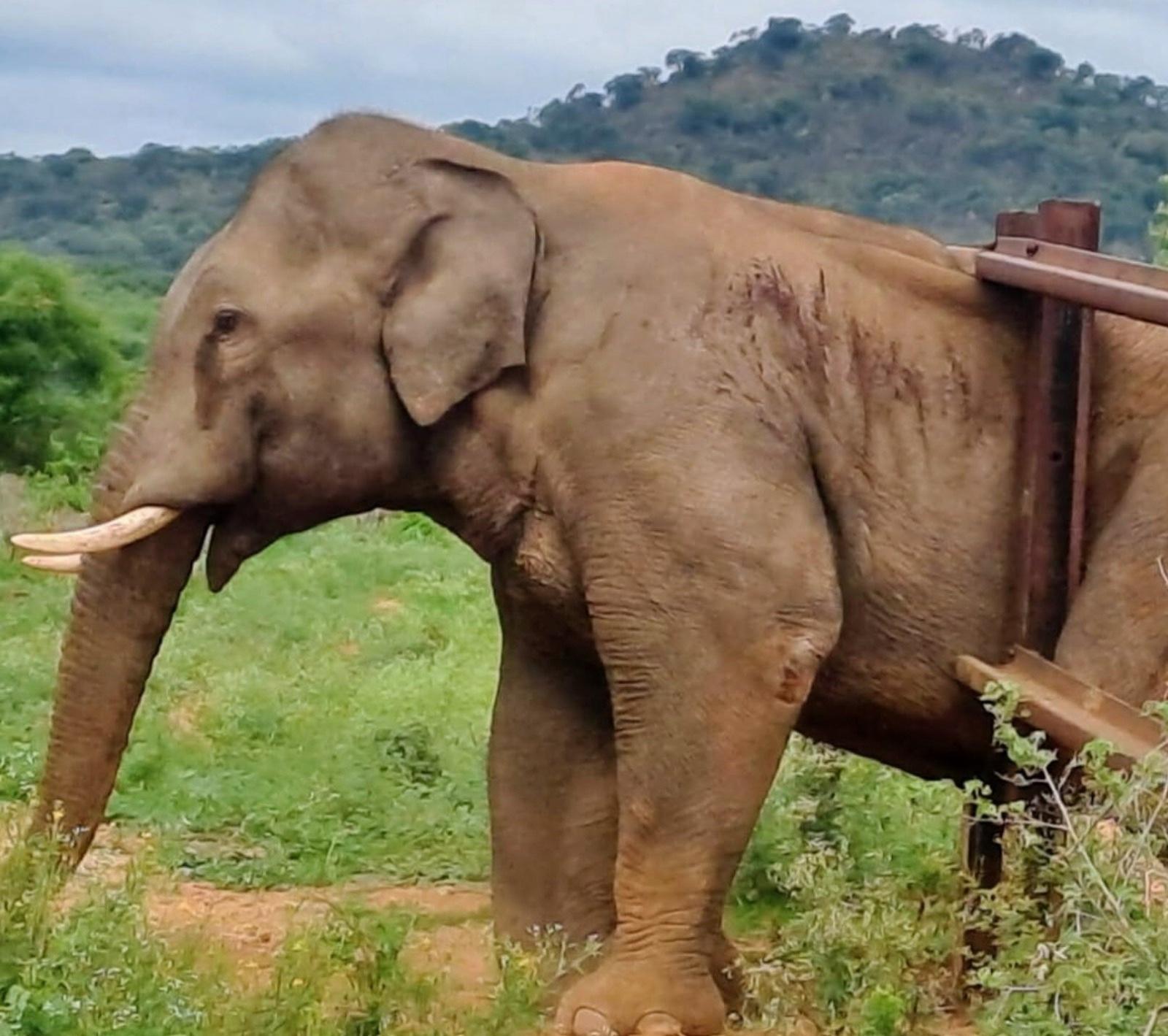
After raiding farms overnight near Arekoppa in Kanakapura, a wild tusker became wedged inside a railway barricade while trying to re-enter the Cauvery Wildlife Sanctuary. After a tense five-hour rescue involving tranquilisation & cutting through the iron barricade using gas cutters, forest officials safely released it back into the wild.
Following the alert, the DCF, who was at Gopinatham on Tuesday night, crossed the Cauvery River and rushed to the Mugguru Range to guide the officials rescue the elephant accoridng to staffers.Nagendra Prasad S., Assistant Conservator of Forests, Cauvery Wildlife Sanctuary, said, “The elephant had managed to push half of its massive body through the gap before getting completely wedged inside the iron barricade. Unable to move either forward or backward, the distressed animal struggled for hours, trumpeting in pain and exhaustion as its escape route turned into a trap.”Given the complexity of the situation, officials mobilised personnel from the Mugguru, Sangama and Halaguru ranges of the sanctuary, along with staff from the Kanakapura Territorial Forest Division. Veterinarians from the Bannerghatta Elephant Task Force, including Dr Kiran and Dr Girish, also rushed to the spot with their trained teams.
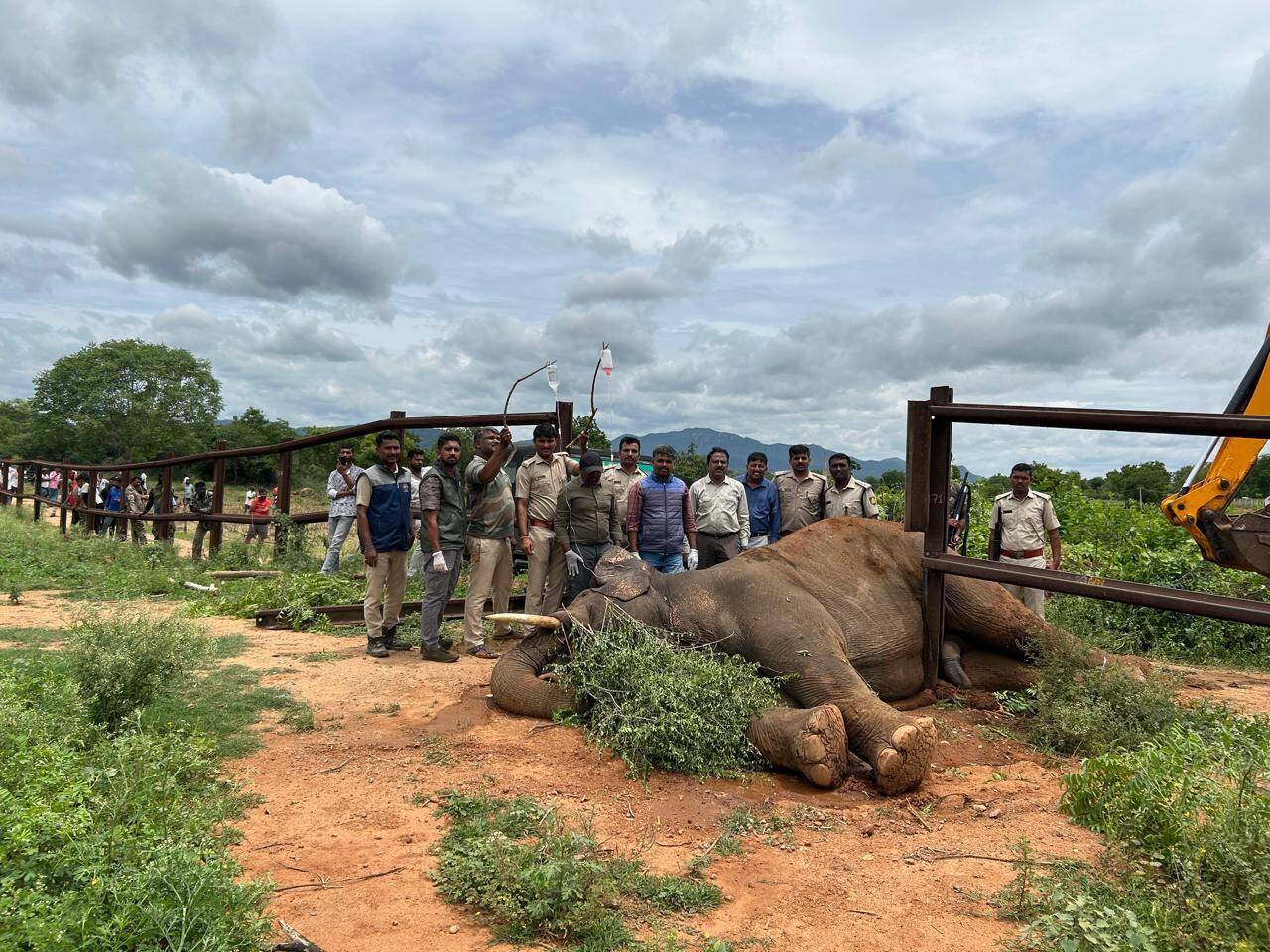
Karnataka Forest Officials and Veterinarians treat a wild elephant for dehydration after it was stuck in a railway barricade while trying to return to Cauvery Wildlife Sanctuary near Kanakapura in Bengaluru South district.
“There was no alternative but to cut open the barricade using gas cutters. Technicians were called in to dismantle the iron fence,” another official said, adding that the rescue operation continued until noon. Before the barricade was cut, veterinarians tranquilised the tusker. “Throughout the cutting operation, the elephant remained sedated and was continuously monitored by the veterinary team. Once the barricade was removed, the elephant was revived using vitamins and hydration supplements before being guided back into the sanctuary. Fortunately, it did not suffer any injuries, despite struggling for several hours to free itself from the narrow gap,” the ACF said.The Kanakapura incident was not an isolated one. Forest records indicate that a tusker had similarly become trapped while negotiating a railway barricade a few years ago. Similar cases have also been reported in the recent past from Virajpet and the Nagarahole National Park landscape. The recurring incidents have rekindled the debate over the use of railway barricades, with wildlife experts arguing that they can endanger elephants attempting to move between forests and farmlands. Forest officials, however, defend the barriers, saying they have significantly curtailed crop raids and human-elephant conflict and remain a relatively inexpensive solution compared to other mitigation measures.