







The industrial landscape of Uttar Pradesh in 2026 is characterized by a robust transition from a traditional agrarian economy to a manufacturing and services powerhouse. As India’s most populous state, UP is strategically leveraging its massive labor force and proactive policy environment to become one of the top industrial hubs in the country. It was in 2017, when Yogi Adityanath took over the reins of Uttar Pradesh, that efforts were initiated to create a new industrial ecosystem. Since then, the state’s industrial trajectory has been on a course of transformation and growth.The state’s industrial strategy rests on several key pillars: MSME Dominance: Uttar Pradesh holds the largest base of Micro, Small, and Medium Enterprises (MSMEs) in India, with over 96 lakh operational units.Sectoral Diversification: While maintaining its strength in traditional sectors like textiles, handlooms, leather, and food processing, UP has successfully attracted modern industries. Significant investments are flowing into electronics manufacturing (with a substantial share India’s mobile component production), data centers, electric vehicle (EV) manufacturing, and aerospace and defense, particularly through the Uttar Pradesh Defence Industrial Corridor InfrastructureTransformation: The state has prioritized connectivity, utilizing its extensive national highway network and growing number of airports to integrate its industrial clusters. Recent policy initiatives, such as the Plug and Play Industrial Shed Policy (2026) and the Private Business Park Development Scheme, are designed to streamline land availability and reduce project gestation periods for investors.Ease of doing business in UPUttar Pradesh has made significant strides in improving its business environment, transitioning toward a “facilitation-driven” ecosystem that emphasizes digital governance, regulatory simplification, and infrastructure development.The cornerstone of Uttar Pradesh’s ease of doing business strategy is the Nivesh Mitra portal. Designed as a single-window system, it serves as a unified digital gateway for investors to obtain clearances, NOCs, and licenses without needing physical touchpoints.Key features include:
- Common Application Form (CAF): Investors fill out one form, which auto-populates relevant sections across multiple government departments.
- Nivesh Mitra 3.0: An advanced iteration that focuses on true digitalisation, using Al and smart dashboards to monitor application timelines, provide real-time status updates, and offer an Al-powered chatbot for 24/7 assistance.
- Know Your Approvals (KYA): A module that assists investors by generating a customized roadmap of required approvals, timelines, and incentive eligibility based on their specific business type.
- Unified Business ID: Investors use a single PAN-based identifier across all government interactions to streamline verification and record-keeping.
Policy reforms and regulatory simplificationThe state has implemented comprehensive policy reforms to reduce compliance burdens:Decriminalization and Deregulation – Approximately 99% of minor criminal provisions across 13 states have been abolished to reduce the burden of “inspector raj” and move toward trust-based governance.
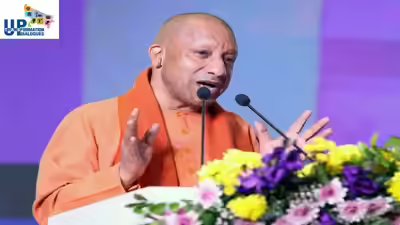
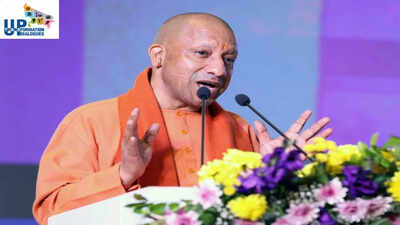
“UP has established itself as one of the fastest-growing states in India. It has succeeded in tripling its economy and per capita income. Once considered a BIMARU state in India’s economy, UP today stands as an engine of the country’s economy. ……come, invest in UP’s safe environment and fulfill your dream of taking your business to new heights. We and our government are ready to welcome you to our state.”
CM Yogi Adityanath during his visit to Japan in 2026
MSMEs in Uttar Pradesh: The backbone of the state economy Micro, Small and Medium Enterprises (MSMEs) are the foundation of Uttar Pradesh’s industrial and employment ecosystem. They operate across manufacturing, services, handicrafts, textiles, food processing, leather, engineering, IT services, and numerous traditional industries. MSMEs are particularly important because they generate employment with relatively low capital investment and help spread industrial development to rural and semi-urban areas.Uttar Pradesh’s MSME Strength:
- Uttar Pradesh has one of the largest MSME ecosystems in India.
- Around 96 lakh MSME units operate in the state.
- UP accounts for nearly 14 percent of India’s MSME base.
- MSMEs provide employment to more than 1.4 crore people.
- MSME-led products contribute significantly to the state’s exports.
- Traditional industries such as handicrafts, carpets, leather goods, brassware, perfumes, textiles, and food processing form a major part of the sector.
- MSME exports from UP were valued at roughly 16 billion dollors and constituted nearly 70 percent of the state’s exports.
Major MSME Clusters in Uttar Pradesh: Handicrafts & Textiles
- Varanasi – Silk sarees and handloom products
- Lucknow – Chikankari and Zari-Zardozi
- Bhadohi – Carpets
- Moradabad – Brassware
Leather Industry
- Kanpur – Leather products
- Agra – Footwear and leather goods
Agro & Food Processing
- Sugar, dairy, rice processing, fruit and vegetable processing units are spread across the state.
Key Government Initiatives for MSMEs One District One Product (ODOP) MSME ODOP (One District One Product) in Uttar Pradesh is a flagship initiative launched by the Government of Uttar Pradesh on 24 January 2018. The scheme aims to identify, promote, and support a unique traditional product from each district of the state, helping local artisans, craftsmen, farmers, and MSMEs increase production, employment, and exports.Objectives of ODOP:
- Preserve and promote traditional crafts and indigenous products.
- Generate local employment and reduce migration.
- Improve product quality through skill development.
- Support branding, packaging, and marketing.
- Increase exports and connect local products with national and international markets.
Examples of ODOP products in Uttar Pradesh: Varanasi – Banarasi Silk SareeLucknow – Chikankari & Zari-ZardoziMoradabad – BrasswareFirozabad – GlasswareGorakhpur – TerracottaSiddharthnagar – Kala Namak RiceAligarh – Locks and HardwareAgra – Leather ProductsSupport provided under ODOP:
- Financial assistance and margin money support.
- Skill development and training programs.
- Common Facility Centres (CFCs).
- Marketing support through exhibitions, fairs, and e-commerce platforms.
- Branding, packaging, and export promotion assistance.
The Uttar Pradesh MSME Promotion Policy provides:
- Capital subsidy
- Interest subsidy
- Stamp duty exemption
- Electricity duty exemption
- Quality certification support
- Patent assistance
- Special incentives for women and SC/ST entrepreneurs
Mukhyamantri Yuva Swarozgar Yojana
- Provides financial assistance and support to young entrepreneurs establishing MSME units.
- Special provisions exist for women and SC/ST entrepreneurs.
PLEDGE Scheme The Promoting Leadership and Enterprise for Development of Growth Engines (PLEDGE) scheme encourages development of industrial parks and infrastructure to support MSMEs.Reforms Since 2017 The state government has focused on:
- Improving Ease of Doing Business.
- Digital approvals through ‘Nivesh Mitra’.
- Expansion of industrial estates.
- MSME One Connect platform.
- Plug-and-play industrial infrastructure.
- Faster land allotment and industrial plot policies.
Global Investors Summit (GIS) and Ground Breaking Ceremonies (GBCs) in Uttar PradeshOne of the most significant economic initiatives of the Uttar Pradesh government has been the organization of investor summits followed by large-scale Ground Breaking Ceremonies (GBCs) to convert investment commitments into actual projects on the ground.Uttar Pradesh Investors Summit 2018 The first major investor summit was held in 2018 and attracted investment proposals worth about ₹4.28 lakh crore. To ensure implementation, the government subsequently organized three Ground Breaking Ceremonies between 2018 and 2022. Projects worth around ₹2.09 lakh crore were materialized through these GBCs.Global Investors Summit (GIS) 2023 The landmark Uttar Pradesh Global Investors Summit 2023 was held in Lucknow from 10 to 12 February 2023. It received an unprecedented response from domestic and international investors, attracting more than 28,000 Memorandums of Understanding (MoUs) with investment intentions of approximately ₹38-40 lakh crore.The summit covered sectors such as:
- Manufacturing
- Electronics
- Data Centres
- Renewable Energy
- Food Processing
- Logistics and Warehousing
- Defence and Aerospace
- Tourism and Hospitality
- MSMEs and ODOP
- Infrastructure Development
Ground Breaking Ceremonies after GIS 2023 GBC 1.0 (2023) The first groundbreaking exercise after GIS 2023 was launched to fast-track implementation of investment proposals. The government shortlisted thousands of MoUs worth nearly Rs 8 lakh crore for immediate execution.GBC 4.0 (February 2024) The largest Ground Breaking Ceremony so far was organized from 19 to 21 February 2024 at Indira Gandhi Pratishthan and inaugurated by Narendra Modi. More than 14,000 projects worth over Rs10 lakh crore were launched during the event. These projects were expected to generate approximately 33.5 lakh employment opportunities across the state.Major sectors represented included:
- Manufacturing
- Renewable Energy
- Information Technology
- Food Processing
- Housing
- Hospitality
- Education
- Logistics
Impact of GIS and GBCs The GIS-GBC model has helped Uttar Pradesh move from investment intentions to actual project implementation.Key achievements include:
- More than 16,000 projects grounded through various GBCs.
- Over 8,000 projects already operational.
- Investments worth more than Rs12 lakh crore brought into implementation.
- Manufacturing accounts for over 62 percent of grounded investments.
- Significant job creation across districts of the state.
Private investment proposals worth over Rs 50 lakh crore were received over nine years; 1.40 crore employment opportunities are set to be created. In line with the mantra of ‘Reform, Perform, Transform,’ 34 sectoral policies were implemented, and the ‘Nivesh Sarathi’ portal — a single-window system — was established.Four ground-breaking ceremonies have been held so far, translating projects worth over Rs 15 lakh crore into reality and creating 60 lakh job opportunities.The investment target of Rs 20,000 crore set for a five-year period under the Uttar Pradesh Electronics Manufacturing Policy 2017 was achieved in just three years.At the World Economic Forum, Uttar Pradesh signed MoUs worth Rs 2,94,255 crore, covering sectors such as AI, data centers, food processing, renewable energy, and defense manufacturing.Pharma Conclave 1.0: MoUs worth Rs 10,000 crore were signed with major companies such as Biojenta, Shukra Pharmaceuticals, Walter Bushnell Enterprises Ltd., and Arna Pharma.The single-window system, ‘Nivesh Mitra 3.0,’ and de-regulation reforms have established Uttar Pradesh as a trusted destination for global investors.To boost ‘Ease of Doing Business,’ approximately 99% of minor criminal provisions across 13 state acts were abolished.Nine Years of Transformation
- For the first time, a state government has announced an incentive policy specifically to attract foreign investment (FDI/FCI) and investments from Fortune Global 500 and Fortune India 500 companies.
- Projects such as IIT GNL in Greater Noida, a Mega Food Park in Bareilly, TransGanga City in Unnao, a Plastic Park and a Garment Park in Gorakhpur, and numerous flatted factory complexes are being developed.
- Facilities including a Film City, Toy Park, Apparel Park, Handicraft Park, and Logistics Hub are being developed in the Yamuna Expressway region.
- Work has commenced on establishing a Pharma Park across 1,472 acres in Lalitpur and Jhansi, alongside the establishment of a Perfume Park in Kannauj and a Medical Device Park in the YEIDA area.
- A Mega Integrated Textile and Apparel Park is under construction in the LucknowHardoi region under the PM MITRA scheme, set to generate 3 lakh employment opportunities.
- Sector-specific projects under construction include a Mega Leather Cluster in Hardoi and Kanpur, a Plastic Park in Gorakhpur, a Perfume Park in Kannauj, and Chemical and Pharma Parks in Ghaziabad, Lucknow, Kanpur Nagar, Gorakhpur, and Hapur.
Foreign Direct Investment (FDI) Rs 3,303 crore between June 2000 and March 2017. FDI worth Rs 17,004 crore received between April 2017 and June 2025.More than a twofold increase in the number of factories.Year 2016-17: 14,169 factories (registered under the Factories Act, 1948).February 2026: The number rose to 31,459 — more than double the previous figure. This achievement stands as a testament to the state’s investment appeal and industrial progress.Gross Value Added (GVA) of Industries A 25% increase in GVA recorded according to the latest Annual Survey of Industries. Ranked first among all major states in the country; more than double the all-India average (11.9%).Defence Industrial Corridor One of the two Defence Industrial Corridors being developed in the country — aimed at making India self-reliant in defence production — is being established in Uttar Pradesh. Approximately 1,649 hectares of land have been acquired to develop a total of six nodes in Jhansi, Chitrakoot, Lucknow, Aligarh, Agra, and Kanpur.So far, 197 MoUs have been signed under the Defence Corridor project. These MoUs are projected to attract investments worth Rs 34,844 crore and generate direct employment for 52,658 people.The project includes several significant ventures, such as the BrahMos Aerospace integration and testing facility at the Lucknow node and a Bharat Dynamics Limited unit at the Jhansi node.Out of the 172 MoUs signed for setting up defence industries, land totaling 977.54 hectares has been allotted to 62 industries; this is expected to result in investments of Rs 11,997.45 crore and create direct employment for 14,256 personnel.Production has already commenced at nine of the allotted industrial units.Khadi and Village Industries
- The growth of Khadi and village industries was another success story of Uttar Pradesh during the last nine years.
- As many as 143 exhibitions organized across all divisions of the state over nine years where participating units set up 10,356 stalls and sold products worth Rs 162.45 crore.
- Employment provided to 463,297 individuals between 2017-18 and 2024-25 through schemes such as the Chief Minister’s Village Industry Employment Scheme, Prime Minister’s Employment Generation Programme, Chief Minister’s Pottery Art (Matikala) Employment Scheme, toolkit distribution program, and others.
- Approval granted for the modernization of the blanket production center (Khajani, Gorakhpur); establishment of 644 units under the Chief Minister’s Pottery Art Employment Scheme.
- First state in the country to grant recognition to the operation of solarpowered spinning wheels (charkhas). Employment provided to 9,354 people through the distribution of solar charkhas to 4,677 beneficiaries.
- Decision taken to establish ‘Sant Kabir Textile Industry Parks’ across 10 districts.
- Target set to generate 30,000 jobs in the textile sector by 2026-27.
- Over 4.63 lakh jobs generated in the Khadi and village industries sector to date.
- Target set for over 55,000 instances of self-employment and toolkit distribution by 2026-27.