








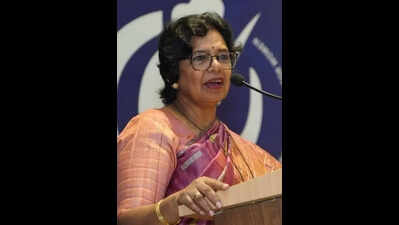
Patiala: National Commission for Women (NCW) chairperson Vijaya Rahatkar on Wednesday heard complaints in over 45 cases during the ‘National Commission for Women at Your Doorstep’ public hearing in Patiala.She issued necessary directions to the officials concerned, and added ensuring accessible, sensitive and timely justice for women remains one of the commission’s key priorities.At the public hearing, cases involving domestic violence, dowry-related harassment, sexual offences, suicide, and other issues concerning women were heard. In a number of matters, she directed the concerned authorities to take immediate steps on the spot. Patiala deputy commissioner Himanshu Aggarwal and SSP Varun Sharma were also present.Speaking to the media, Rahatkar said that derogatory remarks against women, character assassination, and indifferent conduct cannot be tolerated. She urged all departments to deal with women’s concerns with sensitivity and clear accountability.After the public hearing, she chaired a review meeting with DC and senior police officers from the Patiala Division. Discussions centred on faster resolution of women-related cases, stronger coordination between police and the civil administration, and routine tracking of complaints.Rahatkar recommended rolling out the commission’s ‘Tere Mere Sapne’ initiative at district level, and asked officials to make sure that women’s welfare and empowerment schemes reach beneficiaries at the grassroots. She also highlighted concerns about drug abuse-linked issues affecting women and the increasing cases of cybercrime, while assuring full support from the Commission to tackle these challenges.She also addressed a workshop on the Prevention of Sexual Harassment at Workplace (POSH) at Thapar University. In addition, she took part in an Anti-Human Trafficking programme at the ITBP campus and honoured six girls for notable achievements in education, sports, and skill development.Across her engagements during the visit, Rahatkar placed particular emphasis on women’s safety, empowerment, institutional responsibility, and the need for an administration that is sensitive and responsive. MSID:: 131803377 413 |