




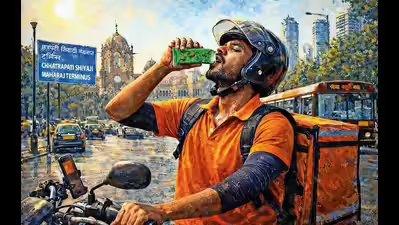
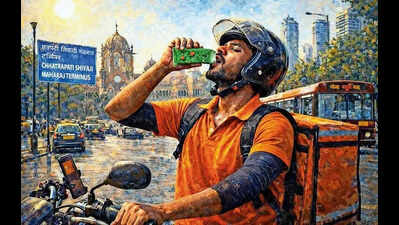
Mumbai’s average temperatures have increased over the past three decades, while the frequency and intensity of heatwaves have also risen. Coastal humidity adds to our discomfort and the current surge in concrete development is pushing up local temperatures. With the state govt recently issuing a heat management advisory for the informal sector, Joeanna Fernandes and Sharmila Ganesan talk to outdoor workers about how they cope as they go about their day. I throw away 5% of stock weeklyLook at these papayas, they’ve over-ripened in the heat,” says Versova vegetable seller Ramesh Ojha. “I lose three to five fruits every week if they don’t sell quickly,” he adds. “Tomatoes, bananas and cucumbers spoil just as fast, while leafy vegetables wilt and dry out sooner than they should.” He has to throw away 5% of his stock on a weekly basis, he says. For the past few years, 32-year-old Ojha has wheeled his handcart to the same spot along Panch Marg. Buildings outnumber trees here, but what he loses in shade he makes up for in customers. When possible, he retreats to the shaded carport of a nearby building to escape the heat and rest his swollen feet. The building also gives him drinking water—he guzzles 3-4 litres a day. Ojha avoids working afternoons. “I’m here from 7.30am to 9pm, with a break from 2 to 5pm when I go home to rest,” he says. While he’s away, he secures his wares under a tarpaulin. “As protection from thieves, if not the sun,” he says.Glucose sachets run out quicklyAt 11.30 am, the water cooler outside a South Mumbai dark store is already half empty. Around it, delivery riders sit or sleep on flattened cartons alongside stray cats. Among them is young Aijaz Ansari (name changed), ready to set off on his e-bicycle dressed in a full-sleeved T-shirt and a cap he bought for the summer. His shift officially runs from 4 am to 4 pm, but can stretch longer. Every season is difficult, says Ansari, but at least they get incentives to work during monsoon rains. Summer months offer no such cushion.This April has been especially punishing. The company distributes glucose sachets, but supplies run out quickly, he says. The water booth is refilled only once a day, so he spends out of pocket on bottled water. “There is not even a restroom here,” says Ansari, who sleeps outside the store. Sometimes, he lugs heavy deliveries up several flights of stairs in buildings without lifts. By the time he climbs back down, he’s drenched in sweat and another order is waiting.Ansari tries to avoid taking orders between 1-4 pm but that means losing income. He earns Rs 15 per kilometre, delivering parcels within one- to two-kilometres on a rented bike. Recently, he and other riders demanded better pay. The response, he says, was a warning that their IDs could be deactivated. I cool off under a tree after lunchThe temperature has an inverse relationship with Rakesh Yadav’s income: the higher it rises, the lower his earnings fall. “By approximately 25% in the summer,” says the migrant from Jaunpur, Uttar Pradesh, as he drives through what feels like a brick wall of heat from Bandra West to Andheri East on a weekday afternoon. A makeshift curtain strung across the lower half of his windshield offers his cellphone—his livelihood tool—some protection, but there’s little he can do to shield himself. “The most I can do is cool off in the shade of a tree for an hour or two after lunch,” says Yadav, who works from morning to night most days. A plastic one-litre water bottle wedged near his feet helps. But he limits himself to two litres a day, because he is diabetic and has urinary incontinence. “If I drink more water, I urinate more often. How can I do that during a ride?” It’s bad enough that business slows in summer, but Yadav takes an additional hit on ride-hailing apps where a high supply of autos combines with low demand to drive down rates by up to 30%. “It’s like the share market,” he says.