








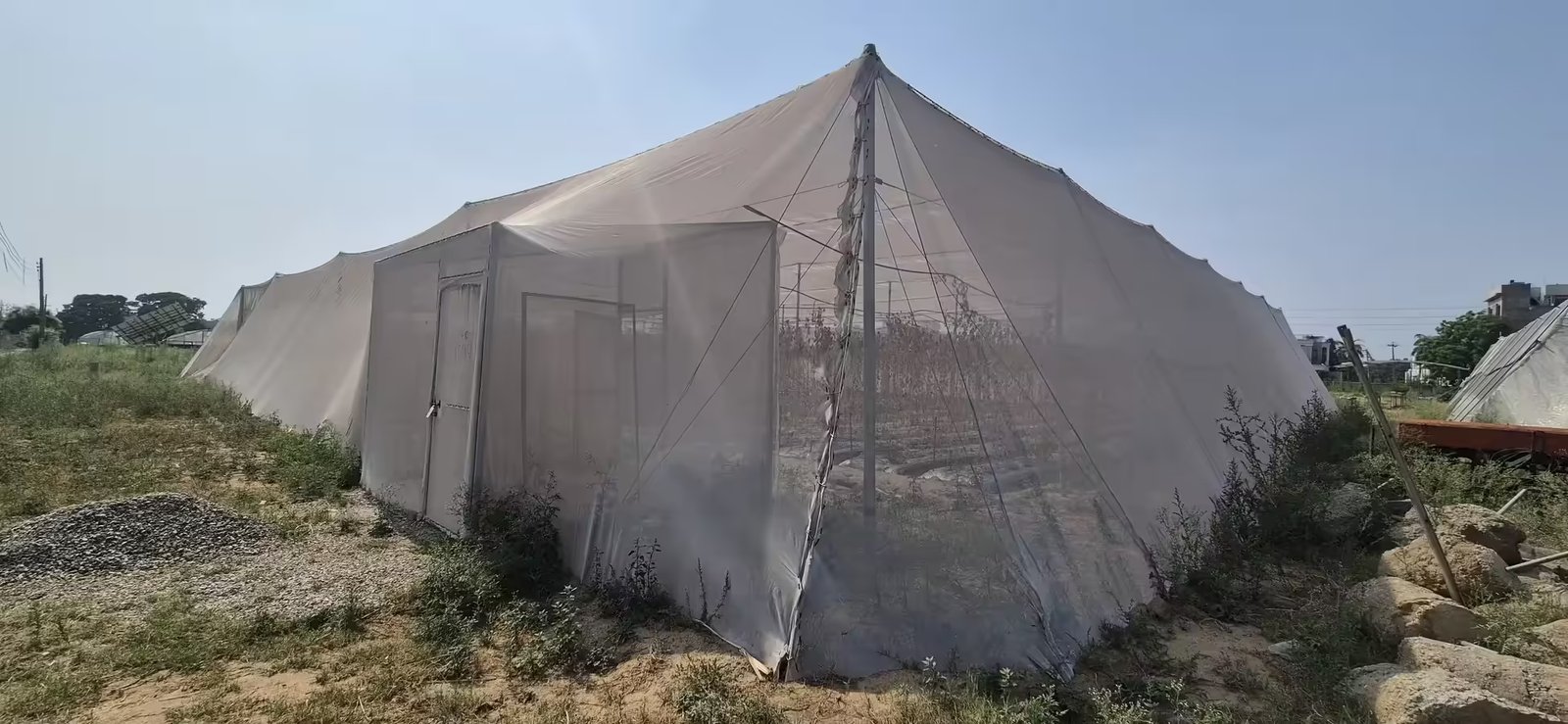
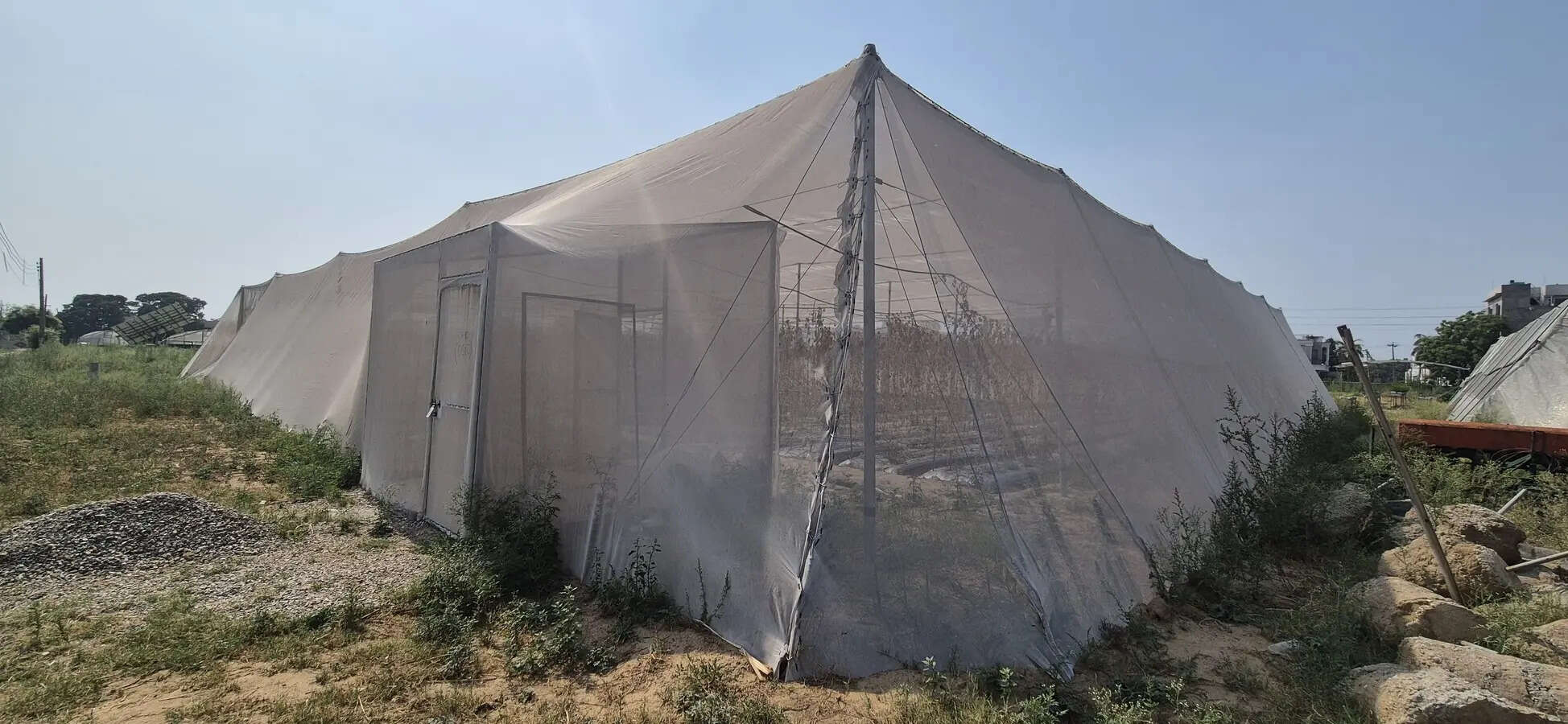
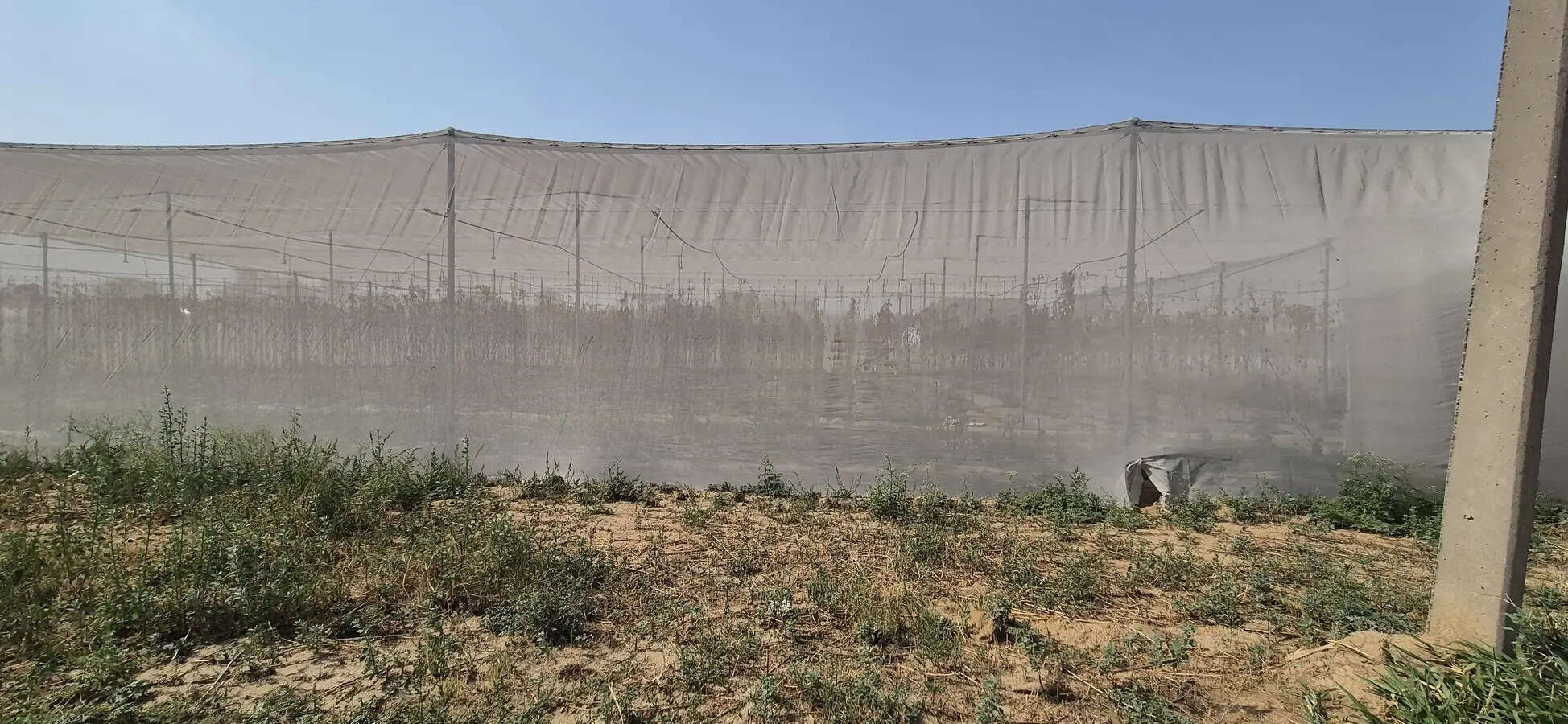
Ludhiana: Scientists at the Punjab Agricultural University are studying the viability of flat insect-net structures as an alternative to conventional dome-shaped polyhouses, with preliminary results indicating that the technology could be better suited to Punjab’s climatic conditions.The study, being conducted for the first time by the university, concerns the suitability of polyhouses in regions that experience extreme temperatures. While polyhouses have been widely promoted for protected cultivation and can provide favourable growing conditions during the winter months, experts say they are often less effective during Punjab’s intense summer season.According to scientists, temperatures inside dome-shaped polyhouses can rise to very high levels during peak summer, despite the shade offered by the plastic covering. The excessive heat can create stress conditions for crops and affect plant growth, making year-round cultivation under such structures challenging in the state’s climate.To overcome these limitations, researchers at PAU have set up flat insect-net structures and are evaluating their performance under local conditions.Unlike conventional polyhouses, these structures are covered with insect-proof nets rather than plastic sheets, allowing greater movement of air while still providing protection against pests.Scientists involved in the study say one of the biggest advantages of the insect-net structures is improved ventilation and aeration.The free flow of air helps maintain a more favourable microclimate around the crop and prevents excessive heat build-up during hot weather.At the same time, the nets provide shade and act as a barrier against many insect pests, reducing crop damage and the need for repeated pesticide applications. Another important benefit is their ability to allow natural rainfall to reach the crop.During the monsoon season, rainwater is blocked by the plastic covering of conventional polyhouses, whereas the insect-net structures permit rainwater to enter. Agricultural experts say rainwater is generally considered beneficial for plant health and can contribute to better crop growth under certain conditions.Dr. Nilesh Biwalkar, Associate Professor in the Department of Soil and Water Engineering at PAU, said the results obtained so far from the study have been encouraging.”The study and the observations recorded during the first season have been promising. The insect-net structures have shown potential in maintaining a more suitable environment for crops while also providing protection from insects,” he said.The structures are also significantly cheaper than conventional polyhouses. The cost of establishing an insect-net structure is around half that of a standard polyhouse, making it a more affordable option for farmers looking to adopt protected cultivation.Researchers further pointed out that farmers can avail subsidies for insect-net houses, similar to those available for polyhouses under government-supported horticulture development schemes. This could help encourage wider adoption if the technology continues to perform well under field conditions.Experts note that conventional polyhouses remain suitable in parts of Maharashtra and other regions that do not experience the same degree of summer heat and weather extremes as Punjab. However, for Punjab’s conditions, flat insect-net structures may offer a more practical, economical and climate-resilient alternative.Scientists expect that the findings will help determine whether insect-net cultivation systems can emerge as a viable replacement for conventional polyhouses for a range of horticultural crops in Punjab.
Attachment
Attachment