











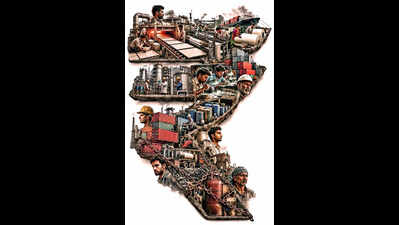



Ahmedabad/Surat: The long shadow of the West Asia crisis has reached Gujarat’s micro, small and medium enterprises (MSMEs) as the coming financial quarters could bring cost pressures, weaker margins and uncertainties over exports for industrial clusters in Morbi, Surat, Vadodara and Ahmedabad.A latest MSME report by Crisil Intelligence says the conflict could shave nearly 100 basis points off MSME revenue growth this fiscal while compressing operating margins by 50-100 basis points across sectors. Gujarat’s export-oriented and energy-intensive manufacturing clusters are among the most exposed. Surat’s textiles and gems and jewellery sectors, Ahmedabad’s dyes and pigments industries, Morbi’s ceramic factories and Vadodara’s chemical units could see the sharpest impact due to rising costs of energy-linked raw material, and trade disruptions.Industry insiders say the pressure is already visible in the rising prices of gas, petrochemical derivatives and imported inputs. Add to these, concerns over weakening export sentiment in Middle East markets. Observers say the challenge for Gujarat’s MSMEs is two-fold: rising costs on one side and limited pricing power on the other. Unlike larger companies, smaller businesses have less flexibility to absorb prolonged volatility in prices of energy and raw material, disruptions in shipping routes and reduced export demand.To help MSMEs cushion the impact, the Union govt has approved an expanded Emergency Credit Line Guarantee Scheme (ECLGS 5.0). The scheme’s effectiveness depends on how quickly credit reaches smaller businesses that are already dealing with shrinking margins and uncertain demand, insiders say.Not All’s Crumbling In Morbi, For Now

Morbi is just beginning to a see a slow revival as inventories have exhausted
Morbi’s ceramic industry, which accounts for over 80% of India’s tile production, could be among the worst-hit. The Crisil report notes that 80-85% of the production in the cluster runs on gas, and significant exports are to Middle Eastern markets, which are now in a conflict zone. Yet, amid these challenges, operations are beginning to get stable.Manoj Aervadiya, president, Morbi Ceramics Association, said, “Gas prices have nearly doubled from around Rs 47 per cubic metre in Feb to Rs 88 per cubic metre now, including taxes. This has increased production costs. Fortunately, manufacturers have been able to pass on the costs to customers because with pipeline stocks exhausted, there is new demand.”It’s still not a smooth road. Manpower shortage is preventing units from reaching full production capacity. “Demand is good, for the time being, but the future looks uncertain. Input costs have increased substantially and the current labour shortage is not enabling the industry to go full throttle. As a result, while large units are still sustaining themselves, smaller units are under-utilising their capacities,” said former MCA president K G Kundariya.Manufacturers say temporary shutdowns had sharply reduced inventories across the supply chain and created fresh demand once production resumed. This, they say, have allowed ceramic companies to pass on the higher input costs to consumers without margins being significantly affected. According to industry estimates, Morbi has around 800 ceramic units, and exported products worth nearly Rs 22,000 crore in FY26.————–Chemical Units May Have To Redraw Margin Lines
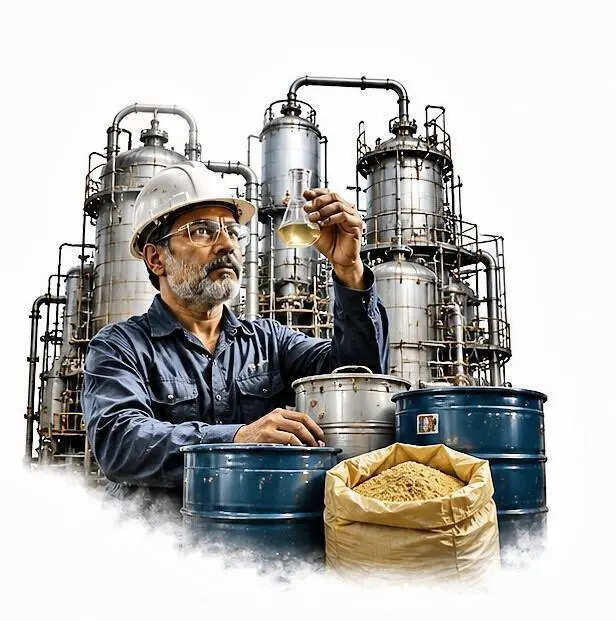
The West Asia conflict has increased the prices of key chemicals that feed Gujarat’s key sectors
The West Asia conflict threatens to put Gujarat’s chemicals and dyes ecosystem in the red as MSMEs in Vadodara and Ahmedabad battle rising input costs, higher freight rates and working capital stress amid weak demand. Manufacturers say the sector is heavily dependent on imported petroleum-based feedstock and sulphur-based raw materials. Prices have risen steeply in recent months due to the geopolitical crisis, shipping disruptions and the rupee’s depreciation against the dollar. Crisil Intelligence has projected a 150-250 basis point margin contraction for Vadodara’s chemical MSMEs this fiscal. Ahmedabad’s dyes and pigments sector too could face a similar pressure.“The rupee’s depreciation has sharply increased import costs. Prices of sulphur prices have risen from around Rs 17 a kg to nearly Rs 105 a kg in the last two-three months,” said Bhupendra Patel, chairman, Chemexcil, Gujarat region.Industry representatives say sulphur and petroleum-linked derivatives are critical inputs for sulphuric acid manufacturing, which in turn feeds dyes, agrochemicals and pharma intermediates. Prices of Oleum 23, Oleum 65 and chloro sulphuric acid have also surged.Manufacturers put the estimated hike in production costs for sulphuric acid and allied products at nearly 20%. Another blow is the subdued demand at home and internationally, which has restricted the industry’s ability to pass on the cost. “Demand is weak, and capacity utilisation has come down to nearly 50%. There is a working capital crisis,” Patel added, urging a special support package for MSMEs.Manufacturers of dye intermediates, inorganic chemical, pesticide and pharma APIs with units in the Nandesari industrial belt too have reported a tighter situation caused by rising marine gas oil (MGO) prices and costlier freight and container charges. “Buyers insist on lower prices while raw material and fuel costs continue to rise. We are focused on protecting revenues and surviving this phase,” said Bharat Shah, president, Nandesari Industries Association.Costs Surge, Demand Weak Strain Textiles Sector
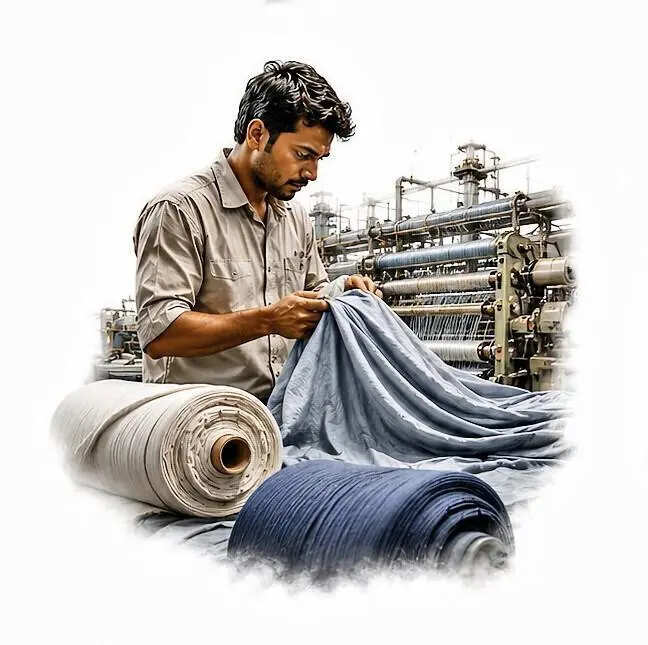
Textile exporters say global trade route disruptions and US tariffs have dented export orders
The story is no different for Surat’s textiles and garments sector: rising cost of raw material and fuel, weak demand and export disruptions due to the war. Prices of raw material like yarn and coal have risen by nearly 30% in recent months, largely due to shipping disruptions arising from the conflict. There is little hope they will be easing any time soon,” said Jitu Vakharia, president, South Gujarat Textile Processors’ Association (SGTPA).Textile exporters say global trade route disruptions and US tariffs have dented export orders. At home, inflationary pressures have weakened demand. “Logistical bottlenecks and absence of insurance for shipping vessels too have severely affected dispatches, resulting in losses for exporters,” said Nikhil Madrasi, president, Southern Gujarat Chamber of Commerce and Industry (SGCCI). Production has dipped by 15% in some units because of migrant labour exodus back home after the cooking gas shortage hit.Diamond Business Not That Glittery

The sector was already reeling under weak demand in the US and China, sanctions on Russian rough diamonds and disruptions arising from the Russia-Ukraine conflict. The West Asia war hit emerging Gulf markets that Indian exporters were targeting
Already grappling with a prolonged slowdown in demand for natural diamonds, Surats gems and jewellery units are facing fresh uncertainty amid the West Asia tensions. Industry players say the business of cutting and polishing natural diamonds is down by nearly 30%, with fears of a deeper slowdown as trade sentiment further weakens. Key trading hubs including Surat, Mumbai, Dubai and Antwerp are facing the brunt.Manufacturers say falling prices and subdued demand have made diamantaires cautious about purchasing rough stones and booking fresh orders. The sector was already reeling under weak demand in the US and China, sanctions on Russian rough diamonds and disruptions arising from the Russia-Ukraine conflict. The West Asia war hit emerging Gulf markets that Indian exporters were targeting. This has dampened hopes of recovery.“The impact on the diamond cutting and polishing industry became deeper as the US-Iran is a continuation of existing global factors. Natural diamond manufacturing and trade is slow, and imports of roughs are dropping. But lab-grown diamonds (LGD) are helping the majority of workers present keep their jobs,” said Vallabh Lakhani, founder of Kiran Gems. However the contribution of LGDs in value remains under 10% compared to natural diamonds.Industry data shows that gross exports of cut and polished diamonds (CPD) fell by 8% to $12.15 billion in FY26. The decline continued into the current fiscal, with CPD exports dropping 19% year-on-year to $890 million in April, while March exports declined 27% to $839 million. Overall, gems and jewellery exports declined 3% to $27.7 billion in FY26.Photo Quotes: