









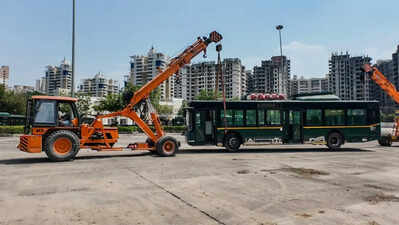
Noida: Noida Authority has begun redeveloping the Sector 90 depot ahead of the June 15 launch of its city bus service, with workers clearing old NMRC buses, cleaning the grounds, pruning trees and repainting buildings.Two cranes were deployed on Wednesday to remove buses left at the depot since the NMRC city bus service, which once operated 50 routes, was discontinued during the Covid lockdown and subsequently terminated.A total of 100 new electric buses are expected to arrive on June 6, with trials beginning June 10. A designated portion of the depot has been earmarked for the development of a charging station to support the electric fleet. Two buildings on the campus will serve as an administrative block and a rest house for drivers and helpers.A dilapidated IGL fuel station within the depot will be dismantled.Noida additional CEO Satish Pal, along with other officials, inspected the depot on Wednesday and directed concerned departments to expedite the redevelopment work and ensure its completion before the launch of services, which coincides with the start of commercial flight operations at Noida International Airport.Noida has floated a tender worth Rs 8.26 crore for redevelopment of the depot. The project includes civil, architectural and site development work aimed at transforming the facility into a modern transit hub. Once completed, the facility will strengthen Noida’s public transport infrastructure and support the city’s transition towards cleaner and sustainable urban mobility, officials said.The bus service will connect Noida with Noida International Airport, Greater Noida, Greater Noida West and Ghaziabad at a maximum fare of Rs 30.
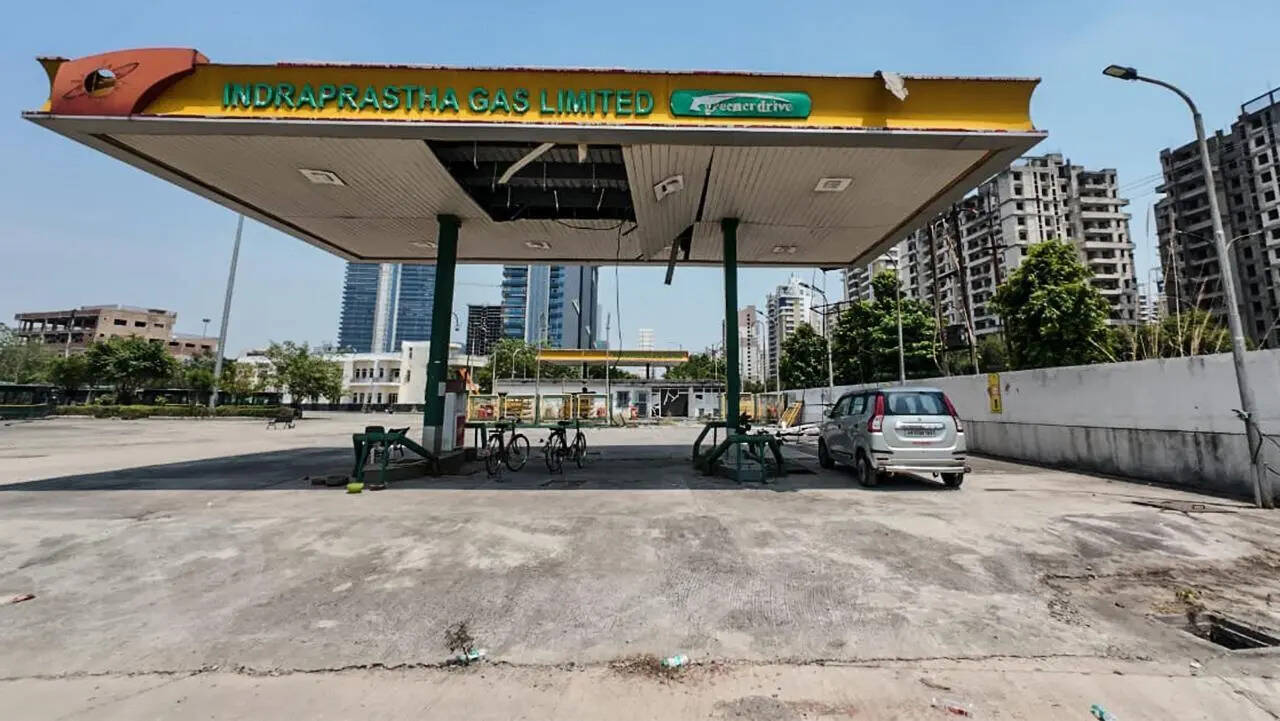
The defunct IGL fuel station inside Sector 90 depot will be dismantled
In 2016, NMRC launched a feeder bus service across 11 routes covering Noida, Greater Noida and Greater Noida West. The service was suspended following the Covid outbreak in March 2020 and was formally terminated in Dec that year.NMRC is believed to have incurred losses owing to low ridership on the routes. Since then, the buses have remained parked inside the depot campus and gradually fallen into disrepair.The prolonged absence of maintenance resulted in severe deterioration of the fleet. Several buses developed rust on their bodies and critical mechanical components, while many tyres became damaged and cracked after remaining stationary for years. Window panes and windscreens of several buses were shattered, exposing the interiors to dust, rain and weather-related damage.Some buses were earlier seized by banks and financial institutions as part of loan recovery proceedings, while 18 buses that remained parked at the depot were removed on Wednesday to create space for the incoming electric fleet, an official said.