









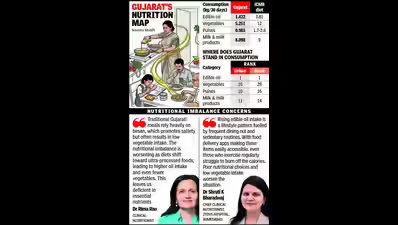
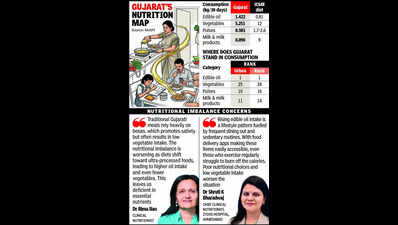
Ahmedabad: Gujaratis may love their fafda, gathiya, and farsan, but new govt data suggests the state’s appetite for oil is now far above healthy limits. A new analysis by the Union ministry of statistics and programme implementation MoSPI) shows Gujaratis, in both rural and urban households, consume more edible oil than residents of any other state. But while oil intake is high, vegetable consumption remains quite low nationally.The data compares household food consumption patterns with nutrition guidelines issued by the Indian Council of Medical Research (ICMR), and the findings point to a widening imbalance in daily diets.According to the data, urban Gujarat residents consume 1.422kg of edible oil per person every 30 days — the highest among all states and Union territories. Rural Gujarat, too, topped the list with 1.2kg per person every month. Both figures are significantly higher than the ICMR-recommended limit of 0.81kg.At the same time, vegetable intake remains worryingly low. Urban Gujarat residents consume only 5.251kg of vegetables per person every 30 days, less than half the recommended 12kg. Rural Gujarat consumes even less at 4.789kg. Nationally, urban Gujarat ranked 25th in vegetable consumption, while rural Gujarat ranked 28th.Doctors say the numbers reflect rapidly changing food habits, rising dependence on processed and fried foods, and increasing snacking culture across age groups.“People today often replace proper meals with snacks because of hectic schedules. Packaged foods are available for as little as Rs 5, and quick-commerce apps have made fried and processed food available within minutes,” said Dr Manoj Vithalani, a medical practitioner from Ahmedabad. “This is directly contributing to rising cases of obesity, diabetes, hypertension and heart disease.”Pulse consumption in Gujarat remained moderate but still below ICMR recommendations. Urban Gujarat ranked 10th nationally with pulse consumption at 0.983kg per person every month, while rural Gujarat ranked 16th at 0.828kg.Milk consumption was relatively stronger. Urban households consumed 8.098kg of milk and milk products per person every 30 days, while rural households consumed 6.655kg. However, both figures remained below the ICMR recommendation of 9kg.Health experts warned that high oil intake combined with poor vegetable consumption is creating long-term health risks, especially among younger people.“Eating out and app-based food ordering have become routine, but there are very few genuinely healthy options,” said Dr Shruti Bharadwaj, chief clinical nutritionist at Zydus Hospital. “Poor dietary habits and hectic lifestyles are key reasons behind rising cases of high cholesterol and triglycerides among younger people. The study factors in only edible oil and does not account for widely consumed items like ghee and butter. We are consuming more calories than we burn, and even among those who exercise, dietary imbalance often remains. With nuclear families and demanding professional lives, ordering food has become routine. Planning meals is crucial in such situations.”