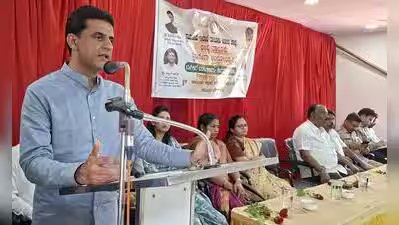










Bengaluru: As forged medical documents and AI-powered fraud emerge as a growing threat to health insurance programmes, policymakers, startups and researchers gathered at Indian Institute of Science (IISc) Bengaluru as part of a two-day Auto-Adjudication Hackathon Showcase 2026, to develop automated systems capable of detecting fake claims under Ayushman Bharat Pradhan Mantri Jan Arogya Yojana (AB PM-JAY).Officials said the rapid rise of AI tools has increased the possibility of fabricated clinical notes, manipulated diagnostic reports and fake patient records entering insurance workflows. Reused patient photographs for multiple ICU claims, altered watermarks, ghost identities and suspicious treatment patterns were also identified as emerging fraud trends. “We started observing this trend recently. Before the problem becomes too large to handle, we need systems capable of identifying such fraud patterns,” said Jyoti Yadav, joint secretary (PMJAY), NHA. According to NHA CEO Sunil Kumar Barnwal, AI-enabled anti-fraud systems introduced over the past two years have already helped prevent fraudulent claims worth nearly Rs 690 crore.The hackathon focused on three major problem statements. The first dealt with clinical document classification and compliance with Standard Treatment Guidelines (STGs). Team Nirnaya, led by Vinay Babu Ulli, won the category for developing an AI-supported system capable of reading healthcare claim documents and assessing treatment guideline compliance. The second category focused on radiological image-based condition detection and report correlation. Team BiltIQ AI, led by Harish Kumar, won for developing tools to assist interpretation of radiological images within healthcare claims workflows. The third category addressed document forgery and deepfake detection. Team Sopa Claims, led by Praveen Sridhar and Snehal Joshi, won for building AI-based systems detect forged documents.Barnwal said AB PM-JAY currently covers over 60 crore beneficiaries and has facilitated treatment worth Rs 1.8 lakh crore for over 12 crore people in the past seven years. “Every day, we process nearly 40,000 claims. The objective is to make claim processing automated, transparent and less dependent on manual intervention,” he said. He added pilot AI-based systems for dialysis and cataract claims have reduced processing time drastically, with nearly 90% of such claims being cleared within four hours compared to 15-20 days under manual scrutiny.