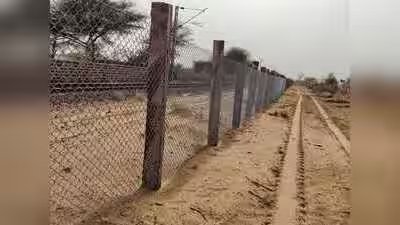











Jaipur: Rajasthan and Madhya Pradesh have agreed to resolve their long-standing dispute over 871 hectare along the inter-state border in accordance with the recommendations of Central Empowered Committee (CEC) and Supreme Court’s decision.The agreement was reached during a video conference between Rajasthan Chief Secretary V Srinivas and his Madhya Pradesh counterpart Ashok Barnwal Thursday. The dispute concerns land adjoining Mandsaur district in Madhya Pradesh and Jhalawar district in Rajasthan.The disputed 871 hectare fall in Ghughwa forest block of Singhpur village. Rajasthan maintains that the land is part of its reserved forest, notified in 1961, and falls within its territorial jurisdiction. The dispute escalated after nearly 130 hectares were reportedly leased to a private firm for a 100 MW captive solar power project linked to a drinking water scheme in Madhya Pradesh.Rajasthan alleged that land levelling and other non-forestry activities were carried out despite objections from its forest officials and a stop-work notice. Its forest department also registered an FIR against alleged encroachers and raised the matter with Madhya Pradesh authorities. Rajasthan has opposed any non-forest activity on the land until the boundary and revenue records are conclusively settled.Madhya Pradesh, however, has contested Rajasthan’s claim, asserting that the land falls within Mandsaur district. It has cited revenue records, historical survey maps, GIS data, joint boundary measurement records and GPS-tagged photographs to substantiate its position. MP has also pointed out that local elections in the area have traditionally been conducted by its administration.During Thursday’s meeting, Srinivas said the disputed area was classified as forest land on the Union govt’s Parivesh portal. He stressed that the matter should be decided on the basis of all relevant documents and facts, in accordance with Supreme Court’s directions and CEC’s recommendations.He also emphasised that the social and economic interests of stakeholders in both states must be protected while resolving the sensitive issue. Maintaining cordial relations and effective coordination between the two states was equally important, he said.Both chief secretaries presented their respective positions and agreed to abide by CEC’s recommendations and Supreme Court’s decision to settle the dispute.