






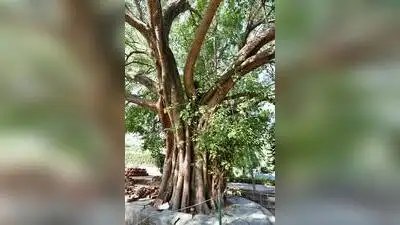
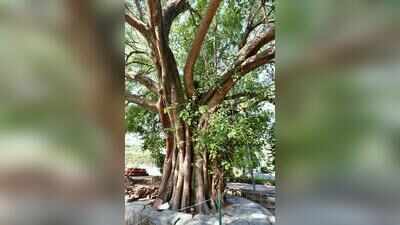
Bengaluru: In a city increasingly defined by sprawling elevated corridors where motorists barely have a moment to exchange a fleeting ‘Hi’ and sleek commercial buildings where eyes are glued to screens, the humble `Ashwatha Katte‘ remains a rare, welcoming pause. Rooted in tradition and community, it continues to offer something the modern city often takes away: a place to stop, meet and belong.Built around a Peepal tree, these platforms are more than religious or heritage structures. They are everyday public spaces where neighbours exchange news, friends engage in free-wheeling conversations, children can spend time, and informal commerce can take root. Those routine encounters help build social capital: the trust and connections that bind a neighbourhood.This is one of the central findings of a study by urban designer Kiran Keswani and IIM-Bangalore professor Suresh Bhagavatula, whose book The City Beneath the Tree, published by Permanently Black, examines Bengaluru’s Ashwatha Kattes. Their research covered 20 kattes and nearly 400 interviews, and found strong public affection for the spaces. “We started our work on Kattes with the assumption that they were part of the past, but the more we looked at them, the more we realised that they were very relevant to the present day as well,” Kiran Keswani says.Often dismissed as relics of the past, the Kattes of Bengaluru are in fact vibrant public spaces that continue to play a crucial role in shaping the social and cultural fabric of the city, argues Suresh Bhagavatula. They define kattes as living urban commons which can function as gathering spaces, support local economic activity and preserve collective memory. They call for a recognition of Kattes as sustainable and relevant public spaces, rather than simply as heritage structures.Endangered by developmentSuresh says many kattes are in danger of being destroyed by the rapid urban development. Some are being displaced, while others are being ‘beautified’ through steel fencing and are being covered in excessive amounts of tiling. However, unless the areas around kattes remain accessible, the interactions that sustain them could fade. Kiran and Suresh advocate for an urban planning model that incorporates natural elements and shared community spaces such as Ashwath kattes in the urban landscape“The future of commerce does not have to be a mall. Cities of the future need to create opportunities for people to meet, talk and build relationships. As Bengaluru continues to grow, there is a need for more public spaces that foster interaction and protect trees. The future of cities is not just glass and steel, but also the shade of a tree,” said Suresh Bhagavatula, IIM-B professor, Entrepreneurship scholar and social networks expert.“Whether we are discussing Metro systems, last-mile connectivity or walkability, one thing is clear: cities do not offer enough opportunities for people to pause. If city planners prioritise mobility, then perhaps one way to advocate for kattes is to position them as natural pause points and social connectors within those networks,” added Kiran Keswani, urban designer, chronicler of Bengaluru’s public spaces.