






BENGALURU: Prashanth Prakash is a Padma Shri recipient and founding partner of Accel India, and has helped shape Bengaluru’s startup ecosystem. As co-founder of the UnboxingBLR Foundation, he is also focused on making Bengaluru a more liveable city.
You grew up in Bengaluru and have witnessed its transformation into a global tech hub. What are your fondest memories of Bengaluru during your childhood?
Cycling to school with my friends on the roads of Bengaluru around Lalbagh, something that would be very dangerous to do these days but was a leisure activity for my friends and me back then.
How was the Bengaluru tech scene during the early days of the internet?
A borderless world and Bengaluru as the IT capital of the world: The internet was the technology that made the world truly borderless.The world started recognising the powerhouse that India’s talent is, and India’s wave of outsourcing began, with Bengaluru at the centre of it — starting with processes (BPOs and call centres), then moving to engineering (IT services) and then knowledge work (GCCs). This is the version of Bengaluru that I remember, before its metamorphosis into the startup capital of India.First-of-a-kind startups: The evolution of tech-first startups in India (and Bengaluru) started as an improvement and reimagination of models that had scaled in other parts of the world. One of Accel’s earliest investments was Flipkart — Amazon had created a fundamentally new business model and already proved its success.Flipkart was India’s version of Amazon — there was so much thinking and so much work needed to make it a good fit for India. I still remember being impressed by Sachin’s and Binny’s thinking around this and their relentless execution.Then, we began to fundamentally innovate on business models; Indian founders started building ideas that had no precedence in any part of the world.To give you an example — Rentomojo allows its consumers to rent furniture and appliances, a model that has never existed anywhere in the world. Today, there are several such examples of companies — more recently quick commerce and quick services…
Bengaluru is the problem solver for the world. However, the city couldn’t apply the same problem-solving approach to address its traffic and planning woes. Any comment?
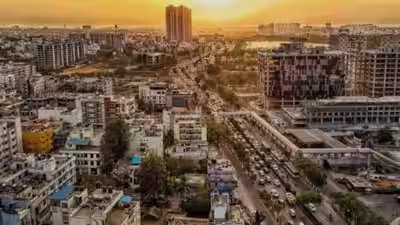
Bengaluru’s growth over the past few decades has been so explosive that this city could not plan for infrastructure growth to keep pace. In other words, Bengaluru’s growth outran its planning.In Unboxing Bengaluru — which I cofounded to tell Bengaluru’s story and strengthen its culture, civic life and innovation — we wrote openly about the fault lines of unplanned, poorly managed growth.The truth is that it is easy to pin this problem on everyone else, but we simply can’t keep treating this as someone else’s problem.It is also important to unpack why this challenge could be existential. Bengaluru’s moat is talent, and that talent is mobile. If the city stops being liveable, the very people who are the moat leave. Bengaluru does not have a permanent edge.I also think that we can learn from cities that successfully retrofitted liveability into a megacity:Take Beijing as an example. A decade ago, it was one of the most polluted megacities on earth. After it declared a war on pollution in 2014 — hard targets, coal-to-gas switching, factory relocation, vehicle controls, tens of billions of dollars — its annual PM2.5 fell from roughly 90 micrograms in 2013 to about 33 by 2021.More than halved, in under a decade, on an already-built city of 20 million.Shenzhen is also a good example and shows you can flip a polluting system fast — it made all 16,000-plus of its city buses electric by 2017, the world’s first fully electric fleet, cutting bus CO2 by about half.
You’ve worked with entrepreneurs who are Gen X , Millennials, and now Gen Z. What are the traits that connect them all?
This is the most exciting and energising part of my day-to-day job as a venture capitalist. Across all generations, we continue to see founders who are incredibly passionate about what they are solving, obsess every day over problems that they are looking to solve and challenge established norms in their execution.Their ability to think differently and build next-generation solutions is refreshing. Somehow, each generation seems to do more and be better than the last; this is what gives me energy today to keep looking forward and learn from the new generation of leaders.AI is here, and nobody is sure if it’s a boon or bane. What is one important pivot that India’s tech capital should make?It is a strange world that we are living in today and several divergent facts/conclusions about AI are true and coexist at the same time.On one hand, there has been a recent wave of scepticism given the stock market crashes in the last few weeks in parts of Asia. Some have dubbed neoclouds as an uninvestable business – a category that was very exciting even a few weeks ago.On the other hand, Anthropic filed its S-1 ahead of an IPO this year — where we got to see some incredible numbers such as 14x revenue growth (H1 2026 vs H1 2025), $6.6M revenue per employee, and most importantly, compute costs at 50% of revenue.What is clear is that we are at the beginning of a technology cycle that will permanently shift the world. Several interesting companies have already started to emerge at the application layer – solving for population-scale problems, which were previously impossible considering India’s demographic.I believe that India will continue to see many more innovations in the consumer AI space. For Indian enterprises, the most important thing is to embrace change and continuously adapt/redefine business models.This is the only way that they can retain their competitive position. No one can put it better than Andy Grove, the long-serving CEO and co-architect of Intel: “Only the paranoid survive”.Robots wheel and dawdle through the alleys of Silicon Valley to do laundry, dishes and light cleaning. Where do you see them operating in Bengaluru in the near future?We are still early in the physical AI cycle, probably at the point generative AI and LLMs were 3-5 years ago, and I am excited to see how this will play out and how the world will be changed.My hope is to see robots replace humans for physically intensive and gruelling work and also anything that involves an element of danger. This could be sanitation, power line maintenance, construction or maintenance work done from heights, heavy lifting and loading at factories.On a lighter note, I would hope to see robots deployed in Bengaluru to finish some of the roadwork that is still unfinished.
If you could reimagine B’luru 20 years from now, what would your ideal city look like?
Infra:A city that does not need a car (Namma Metro, suburban rail, electric BMTC buses)Footpaths that are walkable with a focus on accessibility even for the specially abledA truly smart city, with tech and AI serving the cityLiveability:Garden City again – the city’s gardens and tree cover restoredThe city’s lakes restored and connectedSafety for everyoneCulture:Events, spots and infra that tell its authentic story and celebrate its rootsTech and startup museums