







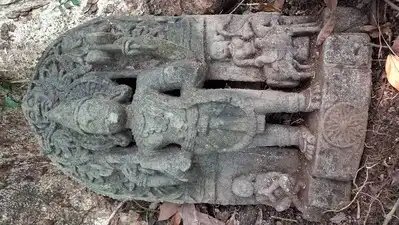
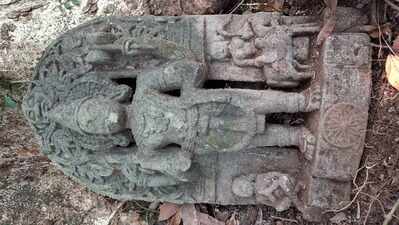
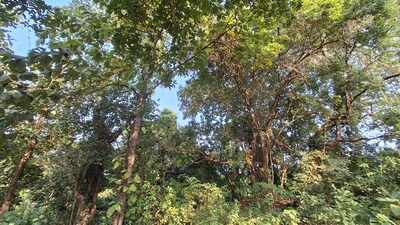
Keri: A centuries-old taboo in the village of Advoi in Sattari taluka has helped protect a sacred grove and its stone sculptures of the deity, Ravalnath.The village’s name is believed to have evolved from the Kannada word ‘Adavi’, meaning trees and other plants in a large, densely wooded area. This reflected Advoi’s landscape a century ago, when it was heavily forested. After Goa’s Liberation, however, large tracts of forest in Advoi were cleared — except for the sacred grove. That patch survived because of the long-observed taboo against setting foot there. In Advoi, breaking a taboo was believed to invite the ancestors’ wrath, so no one dared violate the traditions passed down over generations and followed it without question.The sacred grove is still characterised by indigenous species, including Schleichera oleosa (kosam), Haldina cordifolia (hedu), and Tectona grandis (sagvan), and other trees and shrubs.“Near the temple of Kelbai is an area known as Kirkire, where ‘Padyapurvazachi pashans’ (stone sculptures) lie inside the grove. For ages, we were told by our ancestors not to visit it or perform any ritual or worship. On account of this, no one dares to enter it and fell any tree,” says Bhimrao Desai (77), of Desaiwada in AdvoiAnother resident, Dhanjay Desai, adds, “We have continued to maintain the age-old tradition, and this has helped in the protection of the sacred grove, where we can experience the soothing environment.”Inside the grove are two broken stone sculptures of Ravalnath. Archaeologist Varad Sabnis says the Ravalnath sculpture is significant for its artistic representation, noting that the depiction of a ‘chouri’ bearer seated on a horse is particularly interesting. He dates the sculpture stylistically to the 16th–17th century.Sabnis also says an important area for further study is the relevance and association of Ravalnath within the village’s cultural setup. Such research could help establish cultural links with the Ravalnath sculptures found in Advoi’s sacred grove. He points to the need to study folk beliefs and folk memories to understand how sculptures of Ravalnath came to exist inside the grove when there is no temple dedicated to Ravalnath and no worship of Ravalnath is practised in Advoi today.