






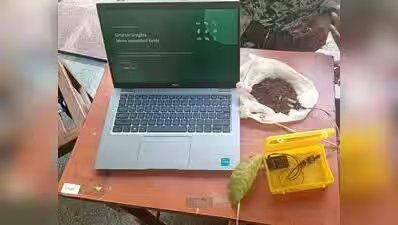
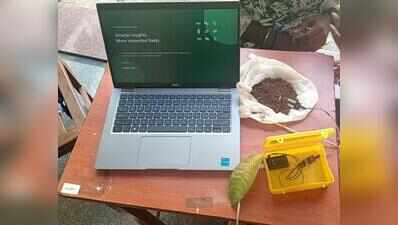
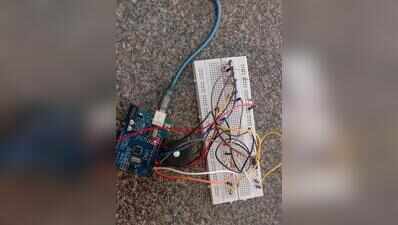
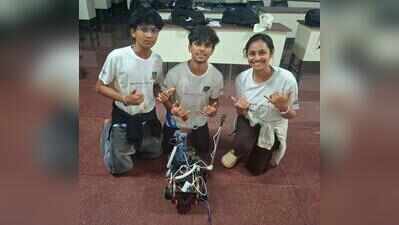
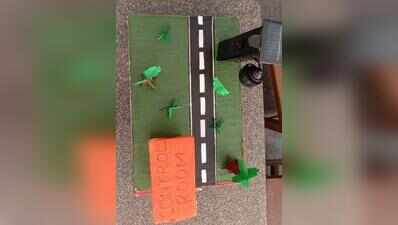
Mangaluru: What if a dustbin could sort your garbage in seconds, a photograph could help save a farmer’s crop, or a streetlight could guide a woman to safety without even needing a mobile network? For young innovators from Dakshina Kannada, these are no longer just ideas but working prototypes that put technology to work on everyday challenges.These innovations were among the highlights of Synergia’26, the three-day annual innovation festival hosted by Sahyadri College of Engineering and Management at Adyar, where high school and pre-university students showcased projects using artificial intelligence (AI) and the Internet of Things (IoT) to address civic, agricultural, public safety and defence challenges.Taking on the city’s waste management problem, five Class 12 students from St Aloysius Pre-University College — Arol Sequeira, Ashfar Abdul Khader, Alwin Sijo, Thejaswi K and Prithvi D Suvarna — developed ‘EcoBin AI’, an automated waste segregator. Using computer vision, load sensors and a four-quadrant rotary carousel, it classifies plastic, metal and paper in 1.2 seconds and isolates contaminated waste. Users can scan a QR code to earn redeemable points. “Automating segregation at the point of disposal prevents cross-contamination and keeps dry recyclables clean,” said team lead Arol.At Padua Pre-University College, students Shaina Lisha Monthero, Diganth U Poojary, Glanston D’Souza and Deekshitha R P presented ‘Agrisense’. The platform uses soil-moisture sensors and machine learning to identify crop diseases from leaf photographs with 97% accuracy. It also recommends crops based on soil and weather conditions and offers multilingual treatment advice.Women’s safety in poorly connected areas inspired ‘Thameri – Safety Beacon Network 2.0’, developed by four students of Sharada Shubhodaya Vidyalaya, Moodushedde. Its solar-powered streetlights work without mobile networks or Wi-Fi. Pressing an emergency button activates nearby sirens, alerts control rooms and illuminates safe routes. “The system guides people towards the nearest safe zone,” said team member Nihal C A.Meanwhile, Team Quantumbots of Carmel Pre-University College, Modankap, showcased ‘Border Suraksha Kawach’ and the ‘Mushak Rover’. The low-cost system detects human intrusion along unfenced borders and allows soldiers to deploy a remotely operated rover with a 360-degree live camera from a safety bunker.Shortlisted among the top 100 entries for the national-level Young Scientist of India event in Chennai on Nov 19, the team hopes to enter the top 20 with an upgraded system featuring thermal night-vision cameras and drone detection, team leader Krishna said.BOX1. EcoBin AI: Uses computer vision, load sensors and a four-quadrant rotary carousel to segregate plastic, metal and paper in 1.2 seconds2. Agrisense: Combines soil-moisture sensors with machine learning to detect crop leaf diseases from photographs with 97% accuracy.3. Thameri: Solar-powered streetlights designed for poorly connected areas work without mobile networks or Wi-Fi. An emergency button activates nearby sirens, alerts control rooms and guides people towards the nearest safe zone4. Border Suraksha Kawach (BSS): A low-cost system that detects human intrusion along unfenced borders, helping soldiers monitor vulnerable stretches5. Mushak Rover: Enables soldiers to deploy a teleoperated rover equipped with a 360-degree live camera from a secure bunker, reducing their exposure to potential threats