







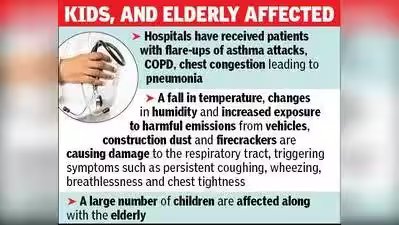
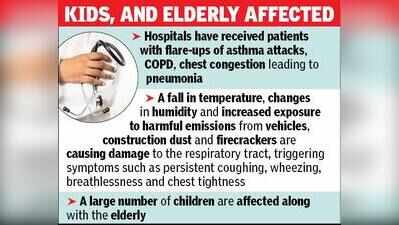
Kolkata: The number of admissions due to pneumonia and respiratory ailments has doubled during the last fortnight compared to the corresponding period of last year, leaving ICUs fully occupied across Kolkata hospitals. A slight drop in temperature and occasional rain have been the only noticeable weather changes but they have already led to the sharpest spurt in lung ailments across Kolkata in recent years.Several hospital ICUs are now packed with pneumonia and other respiratory patients like COPD, which is unusual in early Nov, said physicians. CMRI Hospital has its respiratory ICU filled to capacity with 22 patients and a ‘significant spillover of patients to other ICUs and wards’. “We have received a deluge of respiratory patients in the last seven days which is unusual since air quality hasn’t fallen significantly this year and neither has the temperature dropped sharply. Yet, we have patients with severe pneumonia, COPD and asthma. A significant number are in a serious condition with comorbidities which have forced ICU admission. More are coming in every day, which is alarming. While the majority are above 50 years of age, around 40% are younger,” said Raja Dhar, pulmonology director at CMRI.Charnock Hospital has 18 respiratory patients now admitted, including several in the ICU. Most of these patients have viral pneumonia triggered by influenza, said Charnock pulmonology head Soumya Sengupta. “Rather than an early spurt, this year we had an unusual influenza outbreak which has continued unbroken since June. This has been leading to occasional spurts in lung ailments like now we have a spike. Essentially, this is a post-puja spike triggered by easy and fast transmission of communicable viruses during the festival. In terms of the weather, we are yet to see a significant change other than continuing rain which may have been playing a part in this,” said Sengupta.He added that Charnock has also admitted several dengue patients including a pneumonia patient who tested positive for dengue. “It’s unusual to have the two viruses simultaneously,” added Sengupta.There has been a significant increase in admissions for lung-related ailments at Fortis Hospital Anandapur. “The seasonal transition, fluctuating temperatures, increased particulate pollution and circulating viral infections can collectively aggravate respiratory conditions. Fine pollutants such as PM2.5 penetrate deep into the lungs, irritating the airways and worsening asthma, chronic obstructive pulmonary disease (COPD), bronchitis and allergies,” said Sushmita Roychowdhury, director, pulmonology, Fortis Hospital.Techno India DAMA Hospital has eight to 10 patients across age groups in its wards and ICU. Most are elderly, said medical superintendent MS Purkait. “We have admitted children, senior citizens, pregnant women and individuals with underlying respiratory or cardiovascular conditions,” added Purkait.BP Poddar Hospital has received 18 patients in OPD with aggravated respiratory symptoms, predominantly among individuals in their mid-50s and above. “Cases largely involve acute exacerbations of COPD, chronic bronchitis and bronchial asthma, and pneumonia. Of these, four patients required hospitalisation, including one in the ITU,” said Rik Banerjee, consultant pulmonologist, BP Poddar Hospital.Pneumonia is increasingly becoming a concern in Kolkata, particularly as the city moves into the cooler months following a period of fluctuating weather, viral infections and elevated pollution levels, said Shyam Krishnan, consultant pulmonologist at CK Birla Hospitals, CMRI Hospital.“Recent reports from Kolkata hospitals have highlighted a rise in lung disease admissions, with some hospitals reporting increases of 6%–10% compared with the previous year. While these figures reflect the broader respiratory disease burden and should not be interpreted as pneumonia-specific data, they underline the need for greater vigilance. Kolkata’s air pollution adds another layer of concern. Fine particulate matter can irritate the airways, aggravate existing lung conditions and compromise respiratory health, making infections more difficult to manage, particularly in vulnerable individuals,” said Krishnan.Children under five, adults above 65, and those with diabetes, heart disease, chronic lung conditions or weakened immunity were vulnerable, added Krishnan. “Symptoms such as persistent fever, cough, rapid or difficult breathing, chest pain and unusual weakness should not be dismissed as an ordinary seasonal infection. Older adults may sometimes present with confusion or sudden deterioration rather than a prominent fever.”