









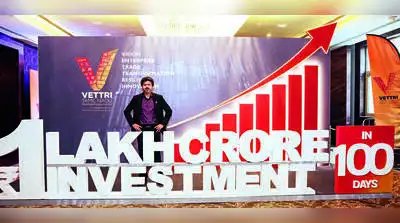

Policy continuity has been one of Tamil Nadu’s biggest strengths in attracting investments, with changes in govt rarely disrupting the state’s industrial trajectory. Successive AIADMK and DMK govts have sustained this momentum.Six months into the C Joseph Vijay-led TVK govt, early indications are that this continuity remains intact. Fresh investment commitments, efforts to speed up approvals and plans to improve industrial infrastructure point to an administration keen to establish its credentials with investors.“The six months are a constructive start, with the Investment Promotion Commission, constituted on Nov 3, being a key step. It can issue binding directions to departments on clearances and incentives for large, strategic investments and support existing businesses in expanding,” says Nithin Chandra, senior partner at Kearney.Positive BeginningP Ravichandran, chairman of CII Southern Region points to the govt’s zero-tolerance of corruption, greater administrative accountability and an open-door approach to resolving business bottlenecks. Support for traditional sectors such as textiles, leather and micro, small and medium enterprises is important for sustaining employment across established industrial clusters.TN has long had one of the country’s strongest bureaucracies. Institutions such as Guidance Tamil Nadu have helped investors navigate approvals and establish operations, ensuring continuity across changes in political leadership.Industry representatives say many legislators in the TVK govt are debutants who need time to understand industry requirements. The bureaucracy must therefore remain proactive and engage closely with businesses, especially as neighbouring states become increasingly aggressive in competing for investments.The govt’s most visible achievement so far is its investment pipeline. According to industry minister S Keerthana, TN got investment commitments worth more than `1.02 lakh crore through 104 MoUs in its first 100 days, with the potential to generate more than 1.2 lakh jobs. “The quality of the mix matters as much as the size,” says Keerthana, adding that the govt is working to translate commitments into manufacturing capacity and employment. The state is also formulating a new industrial policy, which the minister describes as an employment policy.Nearly 100 MoUs were signed at the Aug investors’ conclave. Significant is that 54 of them are outside the state’s four core industrial districts. “This could spread employment opportunities and create business for local suppliers. However, success will depend on reliable utilities, skill of the workforce and market access. Planned worker accommodation and childcare facilities will help employees take up jobs and remain in them,” says Chandra.Investment announcements alone, however, cannot establish the success of a six-month-old govt. Vidya Mahambare, director of research at Great Lakes Institute of Management, cautions against drawing conclusions early.“Six months is too short a time to judge any govt, and even shorter for investors to make long-term commitments,” she says. Companies investing today are often acting on groundwork undertaken over several years. The more relevant question is whether Tamil Nadu continues to feature among investors’ preferred destinations.Sustaining that position will require addressing persistent business concerns, including access to power and water, their cost, and availability of workers, says Mahambare.Speed, infra matterThe TVK govt has sought to make administration more responsive. Keerthana says it has introduced a 21-day timeline for applicable regulatory approvals and established the Tamil Nadu Investment Promotion Commission to facilitate large and strategic investments through better coordination among departments. These measures aim to reduce time and uncertainty in setting up operations. The govt must also demonstrate that its anti-corruption stance and open engagement with industry translate into predictable decisions at every level of administration.Ravichandran wants the administration to move from intent to institutionalised execution. He has proposed a govt-industry implementation task force, co-chaired by cabinet ministers and CII leadership, that would meet every two months to resolve project bottlenecks, monitor MoUs and enforce implementation timelines.Competition intensifiesTamil Nadu’s challenge is not simply to attract more investment, but to secure projects that generate durable employment, deepen local supply chains and create opportunities for its educated workforce, while staying competitive with increasingly assertive neighbours, particularly AP under Chandrababu Naidu.“TN should compete on the total cost and certainty of doing business. A location becomes attractive when its plants, suppliers, workforce and customers are well connected,” says Chandra.Mahambare advises assessing investments by the jobs they generate per rupee invested, their suitability for educated young workers and their ability to bring smaller local firms into supply chains.Ravichandran highlights three priorities: expanding exports of textiles, auto components, leather and processed agricultural products; attracting investments in emerging technologies; and modernising Sipcot and Sidco industrial parks. Better common effluent treatment facilities and access to competitively priced renewable power could also lower costs for existing manufacturers.The coming months must show measurable progress: MoUs translating into investments, projects becoming operational, jobs reaching more districts and improvements in infrastructure and operating costs. Policy continuity provides the foundation, but execution will determine whether Tamil Nadu can sustain its industrial lead.