








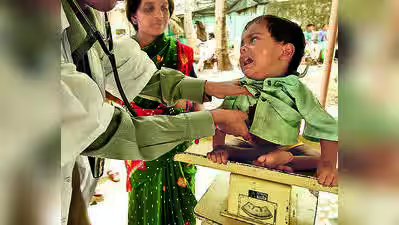
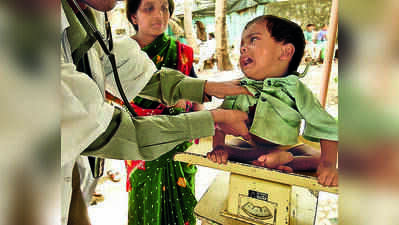
Noida: The latest National Family Health Survey (NFHS-6) data for 2023-24 have presented a mixed picture of health indicators in Noida and Ghaziabad, with improvements in maternal healthcare, vaccination coverage and hypertension levels, but a sharp deterioration in child nutrition.In Noida, the proportion of children under five years classified as underweight more than doubled, from 21.9% in NFHS-5 (2019-21) to 46.8%. Stunting, or children having low height for their age, rose from 25.5% to 40.1%, while wasting, which means a child is too thin for their height, increased from 12% to 21.1%. Severe wasting more than doubled from 3.5% to 7.3%.Stunting, underweight and wasting are primary signs of undernutrition in children under 5 years. The survey suggests that nutritional outcomes among children have worsened considerably in the district over the two survey rounds.Ghaziabad also recorded a rise in underweight children, from 23.4% to 31.8%, and wasting, from 17.1% to 22.6%. Severe wasting rose from 3% to 4.1%. However, stunting declined from 28.2% to 24.8%.The survey shows that only 8.5% of children aged 6 to 23 months received an adequate diet, compared with 6.9% in the previous survey. In Ghaziabad, the proportion declined from 6% to 5%. The indicator measures whether children receive the required diversity of food and minimum meal frequency according to their age and breastfeeding status.Both districts registered improvements in early breastfeeding and full immunisation. The proportion of children breastfed within an hour of birth improved from 33.4% to 48.8% in Noida and from 18.4% to 38.2% in Ghaziabad.However, the prevalence of diarrhoea among children below five increased in both districts. In Gautam Budh Nagar, it rose from 4.7% to 7.2%, while in Ghaziabad it increased from 4.7% to 6.3%.Maternal healthcare indicators showed some improvement. In Noida, the share of pregnant women who made at least four antenatal care visits rose from 52.7% to 61.6%. Consumption of iron and folic acid supplements for at least 100 days during pregnancy rose from 34.1% to 42%, while those consuming them for at least 180 days increased from 19.5% to 26.7%.In Ghaziabad, the number of mothers receiving a check-up in the first trimester rose from 77.2% to 83.6%. Consumption of iron and folic acid supplements for at least 180 days increased from 22.6% to 40.1%. Births attended by skilled health personnel rose from 88% to 91.2%.The survey suggests that child vaccination coverage also improved in both districts. The proportion of children aged 12-23 months who were fully vaccinated increased from 68.2% to 72% in Noida and from 68.5% to 71.8% in Ghaziabad. Coverage of the three-dose pentavalent vaccine increased from 86.4% to 94.4% in Noida and from 79.1% to 79.8% in Ghaziabad.The survey also recorded improvements in some adult health indicators, particularly hypertension. In Noida, the proportion of women with elevated blood pressure or taking medication to control it declined from 16.4% to 9%, while among men it fell from 20.9% to 10%. Ghaziabad saw a similar decline, with the corresponding figures falling from 19.3% to 10.9% among women and 24.5% to 12.9% among men.However, diabetes prevalence rose in Ghaziabad, where the share of women with high or very high blood sugar levels, or on medication to control them, increased from 17.9% to 21.6%. Among men, it rose from 20.2% to 20.8%. In Noida, the same indicator declined from 14.8% to 12.3% among women and from 17.2% to 13.6% among men.The survey showed that the share of women with at least 10 years of schooling rose from 51.9% to 52.8% in Noida and from 55.2% to 56.8% in Ghaziabad. Internet use among women climbed from 63.4% to 79.9% in Noida and from 64.2% to 80.5% in Ghaziabad.“The increase in the percentage of Severely Acute Malnourished (SAM) and Moderately Acute Malnourished (MAM) children is largely due to the expansion and improvement of the screening process. The Poshan Tracker was introduced in 2021, following which the identification and tracking of malnourished children improved significantly. Earlier, several cases may have gone undetected due to gaps in screening and identification. With more extensive screening, a larger number of children are now being identified and recorded. Moreover, the NFHS-6 data pertains to 2023-24 and also captures the post-Covid impact, which could have contributed to the observed increase in malnutrition levels,” said a senior health official from Integrated Child Development Services (ICDS) of Uttar Pradesh.