








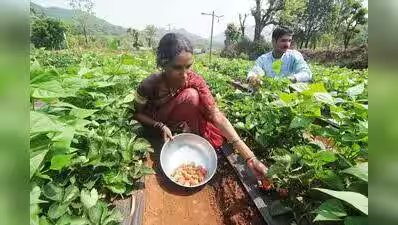
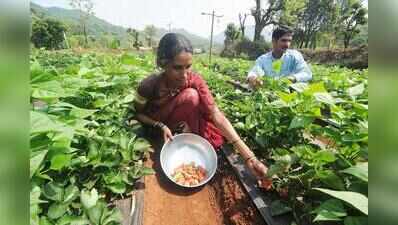
Pune: Strawberry cultivators in Mahabaleshwar and Panchgani, two neighbouring hill stations that produce 80% of the fruit in the country, are about to enter a very uncertain winter. If it turns out to be a particularly warm one, it could devastate the region’s signature crop and the seasonal tourism that has grown around it for years.Anxieties are already running high. Daytime temperatures remain well above normal in the two towns. Borewells have dried up; scores of homes are reporting water shortages. The Mahabaleshwar region, which includes Panchgani, received only 3,564mm of rainfall this monsoon compared to its usual average of 5,438mm. By Sept-end, the two towns – favoured holiday destinations for lakhs of tourists every year – were put on Maharashtra’s list of drought-affected zones, for the first time in recent history.SD Sanap, an IMD scientist, says the region’s weather patterns may change in the coming weeks. “But this is an El Nino year, which is characterised by higher-than-usual daytime temperatures. Mahabaleshwar is not exempt from the rule,” he adds.The deficient monsoon has forced strawberry growers to scale back. Govt data shows cultivable area in Mahabaleshwar this year is down a staggering 40%, to just over 280 hectares from the usual 720. It’s a similar reduction in Panchgani.“Our farm wells and borewells are on the verge of completely drying up,” says Maya Lende, tehsil agriculture officer in Mahabaleshwar. “Farmers fear they may not have sufficient water by Jan or Feb next year, when the strawberry season peaks. That’s why they haven’t planted more.”Strawberry is a complex crop, with substantial upfront costs. Each acre requires Rs 2-4 lakh to cultivate and plants are replaced every season, with farmers buying young saplings instead of seeds. Plantation starts in Sept and continues till Dec.After purchase of saplings, farmers have to invest in labour, land modifications and irrigation upgrades, without fully knowing what the weather will be like for four critical months.“That is why strawberry is risky,” says Prakash Jadhav from a village near Panchgani. “The crop offers good returns if conditions are good, but in weather like this, it becomes a gamble. Many are now worried about their yields, including me,” he says.Babasaheb Bhilare, president of the Strawberry Growers’ Association of India, says the situation this year is “unprecedented”. “This is going to be our toughest season,” he says. “Rain has been pretty scant since Aug. Now with groundwater levels falling in villages, farmers have scaled back operations. A severe water scarcity threatens what is our main cash crop of the year.”Production shortfalls could impact incomes in at least 30 villages in Mahabaleshwar and Panchgani, where strawberry is grown in substantial volumes. Roughly 6,000 households are reliant on the crop.“I don’t expect even 10% profit from the crop this year. Many of us may only recover what we have invested,” says Sanjay Bhilare, a strawberry farmer in Mahabaleshwar.And if strawberry collapses in warm weather, so will winter tourism to the region, which, according to estimates, can generate Rs 500 crore in a good year for local businesses. Data shows the Nov-Feb period, which coincides with peak strawberry season, represents about 45% of the 15 lakh visitors the region receives annually.“The entire economy of this town runs on three factors: cool weather, plenty of strawberries and lush forest cover. This year has been bad news on all three fronts,” says Ganpat Parthe, a strawberry farmer who also runs an agri-tourism business in Mahabaleshwar.“People from other states come here for the full ‘strawberry experience’; they get to pick them and eat them. They also buy jams, syrups and other products. This is the agri-tourism ecosystem we have established and not a lot of places in the country offer such an escape,” he says, adding that several hundred homestays, restaurants and allied businesses – all dependent on tourists – face uncertainty.“All we can do is hope for a good winter. The weak monsoon has already dried up the forests. Tourist numbers have dropped,” he says.Regular visitors say they too hope for a turnaround. “Mahabaleshwar’s weather and strawberry farms are indeed the big draws,” says Pune resident Kuldeep Singh, who’s planning a trip to the region soon. “We like buying fresh strawberries directly from farmers. We like visiting the fields. I hope the weather improves, for everyone’s sake.”Amit Kardile, another frequent visitor, says hill-station-like weather, combined with the locally grown produce, make Mahabaleshwar rather special. “We go there to escape the city heat. Strawberry farms are part of the attraction, especially for families with children. If the fruit is scarce and the weather is warm, it may affect what we experience,” says Kardile.Satara district agriculture officer Bhagyashree Farande says she fears 2026 could bring the perfect storm. “Mahabaleshwar’s strawberry economy has long relied on the combination of suitable weather, sufficient water and a steady stream of tourists. This year, with cultivation already down and groundwater falling, farmers fear all three elements could come under strain at the same time,” she says.