







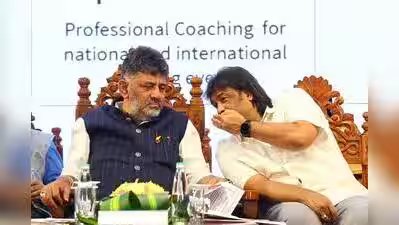
Bengaluru: The state govt’s proposal to involve private schools in adopting govt schools to improve enrolment, learning outcomes and student retention has drawn criticism from educationists, parents’ groups and teachers’ representatives. They argue it amounts to shifting the state’s constitutional responsibility to private players.On Wednesday, chief minister DK Shivakumar, addressing a programme organised by the department of school education and literacy, urged private school managements to take up govt schools and contribute to their development. He suggested that private schools could provide teachers, school buses, laboratory equipment and computers. Schools that help develop govt institutions could also append their names to them.“If you cannot spend Rs 5-10 crore on constructing buildings, depute your skilled teachers to govt schools. Provide 10 teachers from your school and pay their salaries. Do not sell off unused private school buses; give them to govt schools,” he said.However, educationists questioned the rationale behind the proposal, arguing that govt cannot outsource its responsibility to provide quality public education through school-adoption arrangements.“The state cannot sign away its constitutional responsibility through a school-adoption MoU. Article 21A and the Right to Education Act, 2009, place a binding obligation on govt to ensure free, compulsory and quality elementary education. Any arrangement that uses ‘adoption’ to surrender public control or dilute that obligation is an abdication of constitutional duty,” said development educationist Niranjanaradhya VP.He also flagged a potential conflict of interest if private school operators or corporate entities are allowed to manage govt schools while remaining subject to regulation by the education department. He called for transparency in the proposed MoUs, protection of public ownership and adequate govt funding.Sijo Sebastian, joint secretary of Voice of Parents, said voluntary contributions could supplement govt spending but should not replace it. “A govt that can find thousands of crores for roads, railways and airports should not have to rely on voluntary donations to provide basic school infrastructure and teachers. Children’s fundamental rights should come first in the budget, not last,” he said.Teachers object to remarksShivakumar’s comments on teacher accountability, along with remarks by his daughter on the efficiency of govt school teachers, also drew objections from teachers’ representatives.A statement signed by at least 12 academicians, including Prof A Murigeppa, state president of the Save Public Education Committee, accused govt of unfairly blaming teachers for the decline in education quality.The statement said the CM had highlighted govt school teachers’ salaries, ranging from Rs 70,000 to Rs 1.5 lakh, while questioning the quality of education, without acknowledging the role of govt policies and systemic deficiencies. It said recruiting adequate teachers and addressing shortcomings in public schools remained the govt’s responsibility.AP Ranganath, MLC from the Bengaluru Teachers’ constituency, said govt school teachers were frequently burdened with administrative and other non-teaching duties, leaving them with less time for classroom instruction. He said the state should relieve teachers of unnecessary responsibilities and create an environment conducive to teaching and improving learning outcomes. Questioning teaching quality while assigning teachers non-teaching duties amounted to shifting the blame for administrative failures, he added.Call for clear frameworkSome educators, however, said private schools could contribute constructively if govt established a clearly defined framework. They suggested consultations with private schools to identify practices that could be replicated in govt institutions. A few schools could first be developed as prototypes before successful models were replicated elsewhere.If the state intends to pursue public-private partnership models, it should formulate a comprehensive policy with strong safeguards and accountability mechanisms, including per-student payments to participating institutions, an educator said.