









Through its courtyard, shrines, and annual community feast, the magnificent Mhamai Kamat house in Panaji not only remains lived-in, but also preserves a city’s memory and devotion

A short walk from the old Adil Shah Palace in the heart of Panaji stands a mansion that has watched the city change for nearly 250 years. Heritage watchers call the Mhamai Kamat house the last authentic example of Hindu domestic architecture in the state capital. Similar homes nearby have vanished under concrete apartment blocks. This one endures — not as a museum, but as a lived-in house where a family still prays, eats, gathers, and feeds the city.
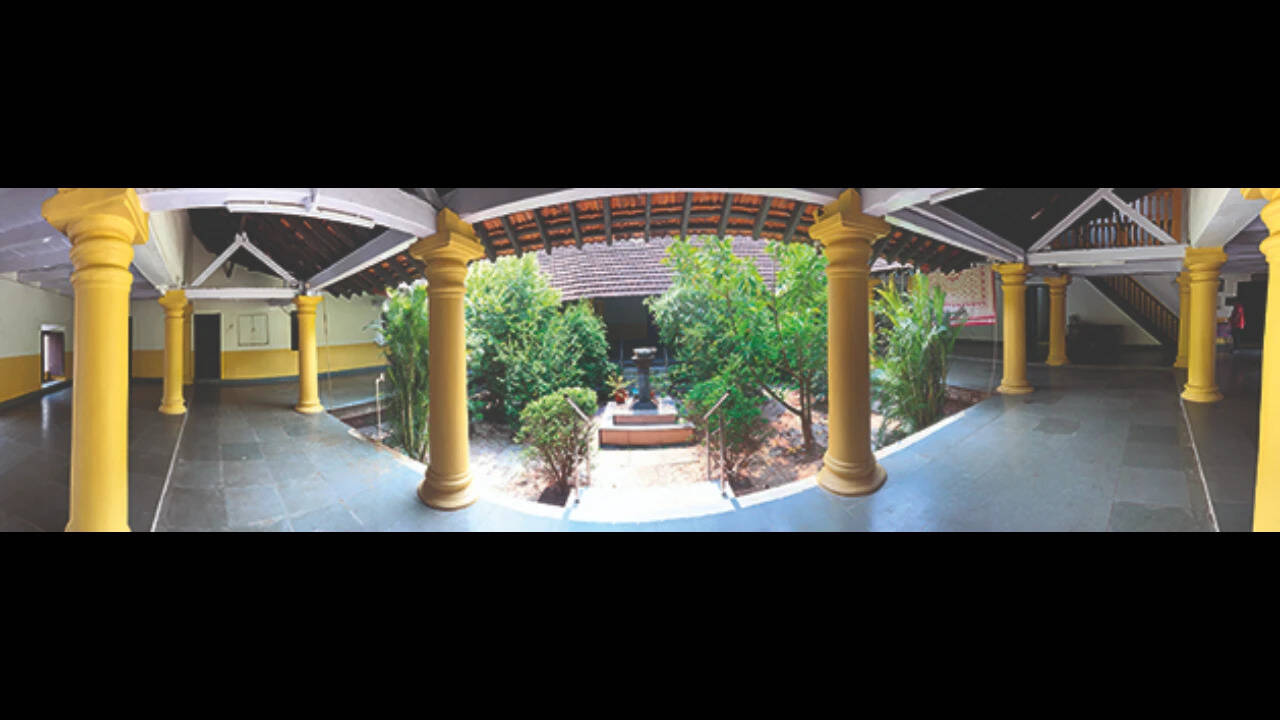
Mhamai Kamat house in Panaji
The home is built around a rajangan, an open central courtyard wrapped by seven corridors. It’s the kind of plan architecture students study, but here it is simply daily life. Ancestors’ portraits survey the space from the walls; old wooden chests (petti) sit where they always have. Damodar Ghanekar, who calls himself the “great-grandson of the house”, points to the way the house remembers itself. If someone is said to be “sitting on the petti”, everyone knows which one. The logic of the place is unbroken: A spot for everything, and everything still in its spot.The family name is Kamat. ‘Mhamai’ is believed to come from devotion to the goddess Mahamaya. Once landowners, the Kamats grew into one of the three biggest broking houses on India’s west coast, serving as intermediaries between neighbouring princes and Portuguese authorities. Local lore says the doors were never locked: They can be bolted only from inside, so someone always had to be home. When the business declined, the family handed over old account books and letters to the Xavier Centre of Historical Research at Porvorim, where scholars still consult them.
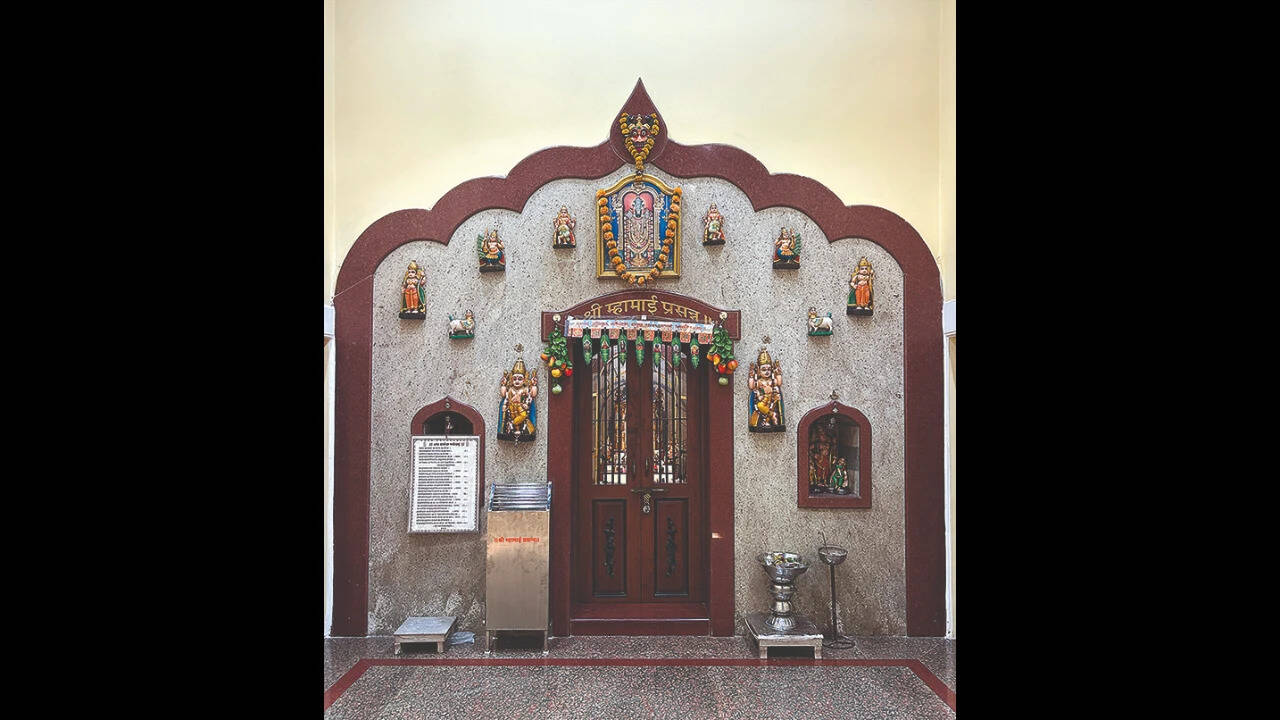
The ‘deva kudd’, or puja room styled on the lines of the sanctum sanctorum of a temple
The house is quieter now than in its busiest years. Shripad Amonkar, who describes himself as a “grandson of the house”, says that around Goa’s Liberation, close to 100 people lived here. As families expanded, many moved out. Today, 10 to 12 people remain under the same roof.Maintenance is shared. A family trust meets the costs through contributions. Some features have changed with time: The cowdung flooring has given way to cement and Kota stone. A well still sits inside, a reminder that the house was built to sustain a household, not just impress visitors.
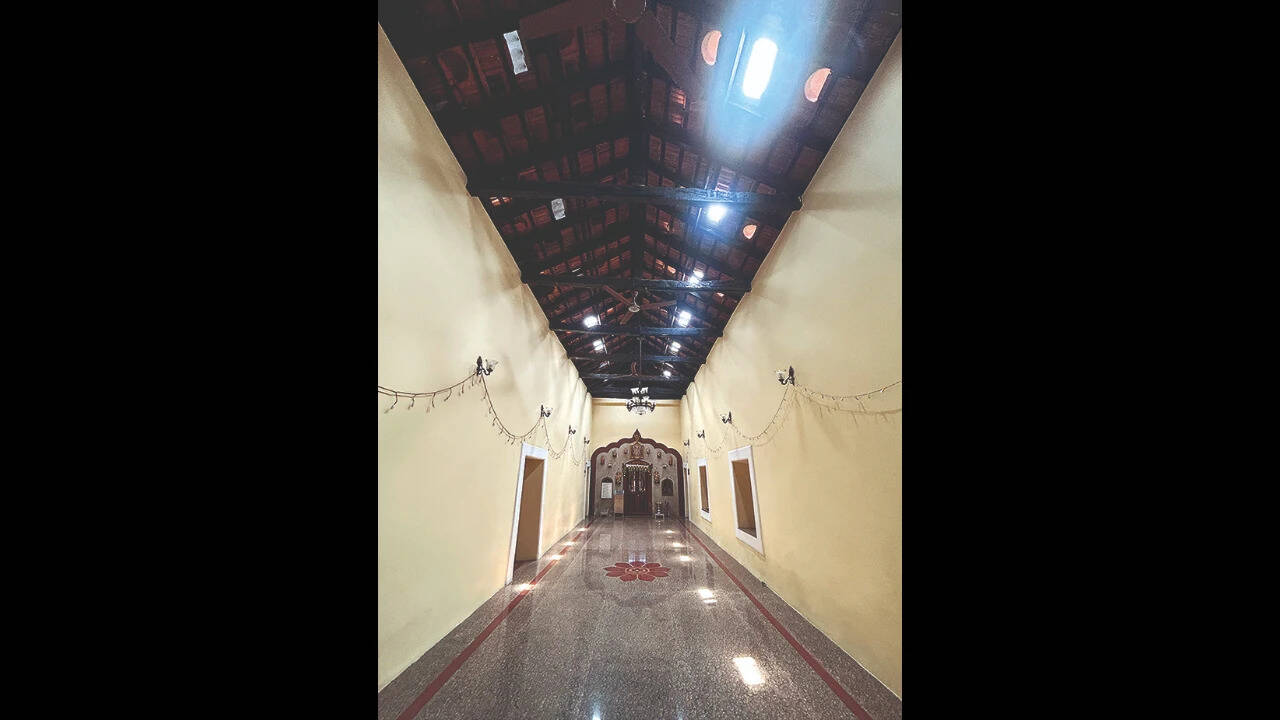
The corridor on an upper storey now used to house antique items
At its spiritual core is the ‘deva kudd’, a prayer room with an altar modelled on a temple sanctum. A ‘bhatji’ (priest) comes twice a day to worship the saligram on the altar. There are also shrines to Dattamaharaj and to the Brahmin — the snake.
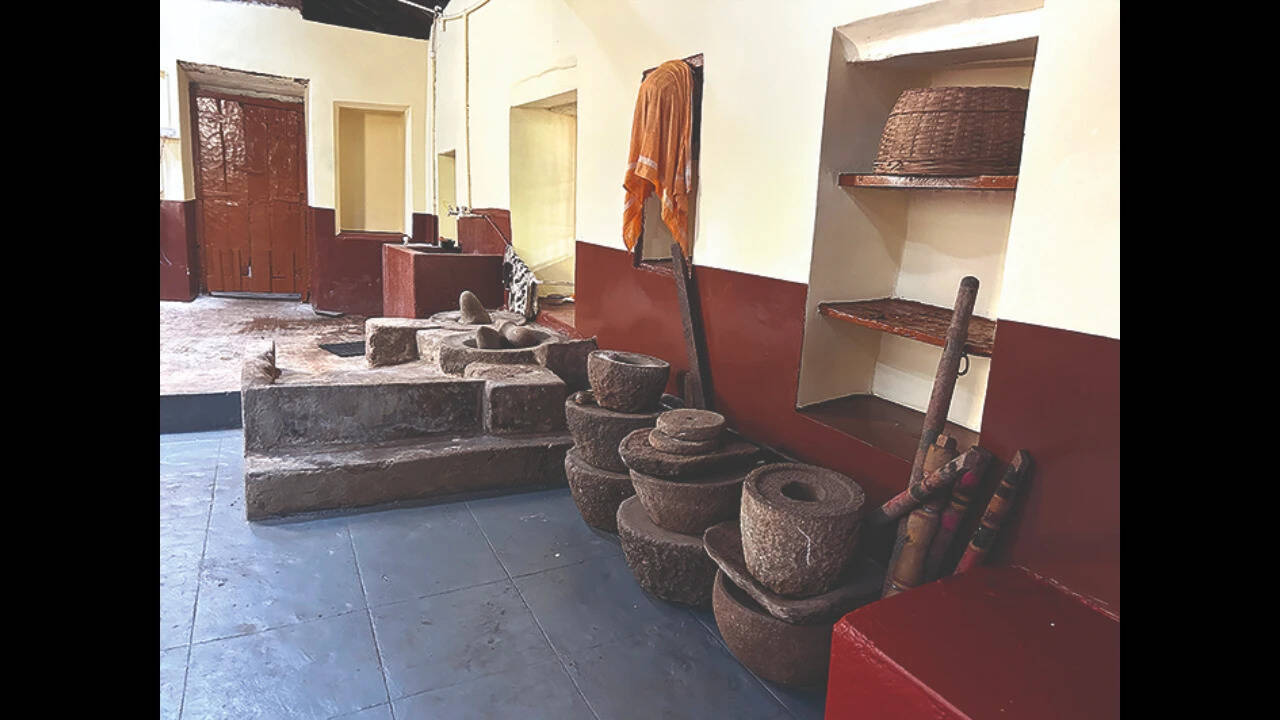
Grinding stones and mortar and pestles of various shapes and sizes in the home’s original kitchen
The house’s most public day is Anant Chaturdashi. The prayer room is decorated, an image of Lord Anant is placed before the sanctum, and the family brings out its prized right-handed conch, studded with pearls, gems and gold. Left-handed conches are common in temples, Ghanekar says; this one is rare and treated as sacred.
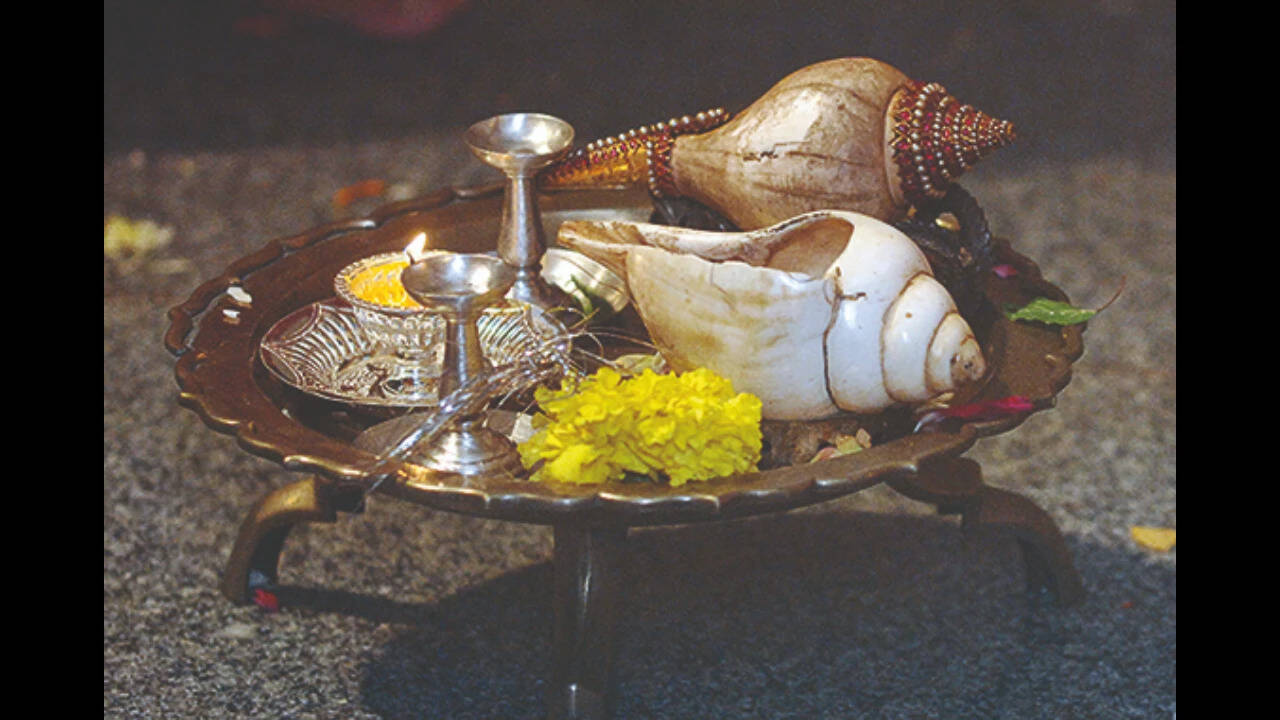
The right-handed conch is worshipped on the day of Anant Chaturdashi
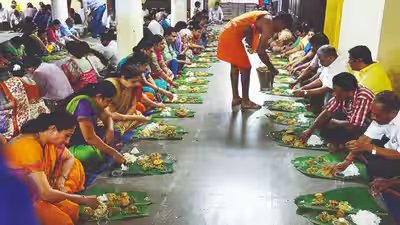
Family tradition links it to the 17th century, when the Mandovi river came close enough for ships to anchor near the house. A Kamat ancestor is said to have found the conch on a Portuguese captain’s desk — used as a paperweight — and carried it home to worship as Vishnu.That same day, the house becomes a community kitchen. Food is cooked on firewood over four large mud chulhas, and close to 1,500 people arrive for ‘mahaprasad’ (community meal) — no personal invitations, only a public notice in a Marathi daily. Many come with vows, especially women praying for children. If a child is born, the family returns the next year to offer thanks.
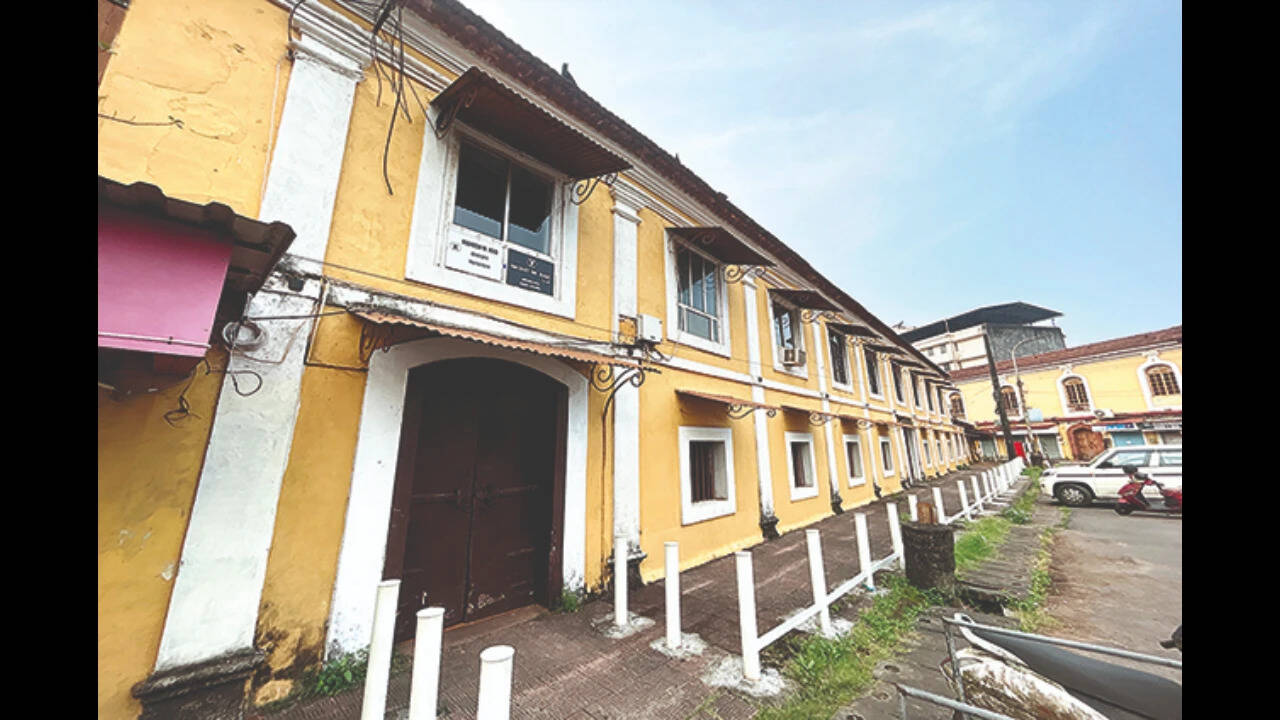
The facade of the Mhamai Kamat house overlooking the Adil Shah palace (old secretariat)
In the middle of Panaji, the property could tempt any developer. Amonkar’s response is blunt: “Only a fool would think of this house as real estate. There is divinity in every corner of it.”