








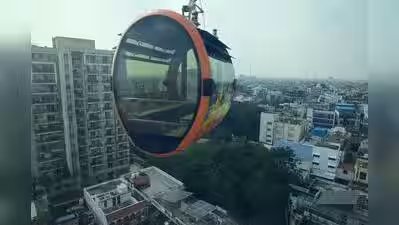
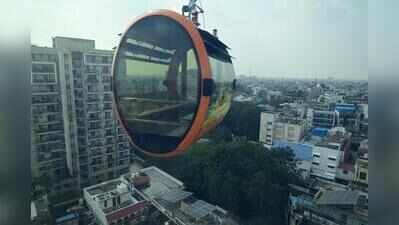
Varanasi: For a city where centuries-old lanes struggle to keep pace with the growing demands of modern mobility, the answer now lies above the roads. Kashi, one of the world’s oldest living cities, is preparing for a new chapter in urban transport with India’s first public transport ropeway — an aerial transit system that promises to take commuters above its traffic-choked streets, crowded markets and bustling neighbourhoods. Connecting the busy Varanasi Cantt railway station area with key city locations towards Godowlia, near the Kashi Vishwanath corridor, the project is set to offer residents, pilgrims and tourists a faster, cleaner and more reliable alternative to road travel.The transformation could be particularly significant for the Cantt area, one of the city’s busiest transport hubs, where trains, buses, autos, e-rickshaws and private vehicles converge throughout the day. From here, routes towards central Varanasi pass through dense commercial and residential neighbourhoods, where road widening is difficult and traffic often crawls. By taking the aerial route above these congested streets, the ropeway is expected to help passengers bypass traffic bottlenecks and ease pressure on the city’s surface transport network.With cabins arriving at regular intervals, passengers will be able to board with minimal waiting time and cover one of the city’s busiest stretches in just a few minutes. For visitors arriving by train, it will provide a direct and comfortable link towards central Varanasi. For residents, students, office-goers, traders and daily commuters, it could emerge as a dependable alternative, particularly during peak hours.Built to modern safety and operational standards, the ropeway features well-designed stations, comfortable cabins, automatic doors, smooth boarding systems and passenger-friendly facilities. Accessibility for elderly passengers and differently abled users is an important part of the travel experience, supported by clear signage in Hindi and English.Beyond the convenience of a quicker commute, the project is also set to change the way people experience Varanasi. Instead of negotiating crowded roads at street level, passengers will glide above rooftops, markets, temples and bustling neighbourhoods, offering them a rare elevated perspective of the city. While it will not replace the charm of walking through its narrow lanes or exploring its old bazaars, it will provide a practical alternative when time, comfort and safety take priority.Urban ropeways require considerably less land than Metro corridors or major road expansion projects, making them particularly suitable for a heritage city where every street carries cultural and commercial significance. The electric-powered system will also support cleaner mobility by helping reduce fuel consumption, emissions and roadside congestion.By improving access to temples, ghats, markets, hotels and transport hubs, the ropeway is expected to benefit local businesses and make commuting easier during festivals and peak tourist seasons. Its success, however, will depend on seamless access to stations, efficient crowd management and effective integration with autos, buses and pedestrian routes.As Varanasi balances its historic identity with the demands of a rapidly growing city, the urban ropeway represents a significant step towards smarter and more sustainable mobility. More than just another mode of transport, it promises to offer a new perspective on Kashi — one where its centuries-old heritage meets the possibilities of modern urban mobility.